 ADHD OS
Hate the Pomodoro Timer? Build a Dopamine-Friendly Focus System for Neurodivergent Brains
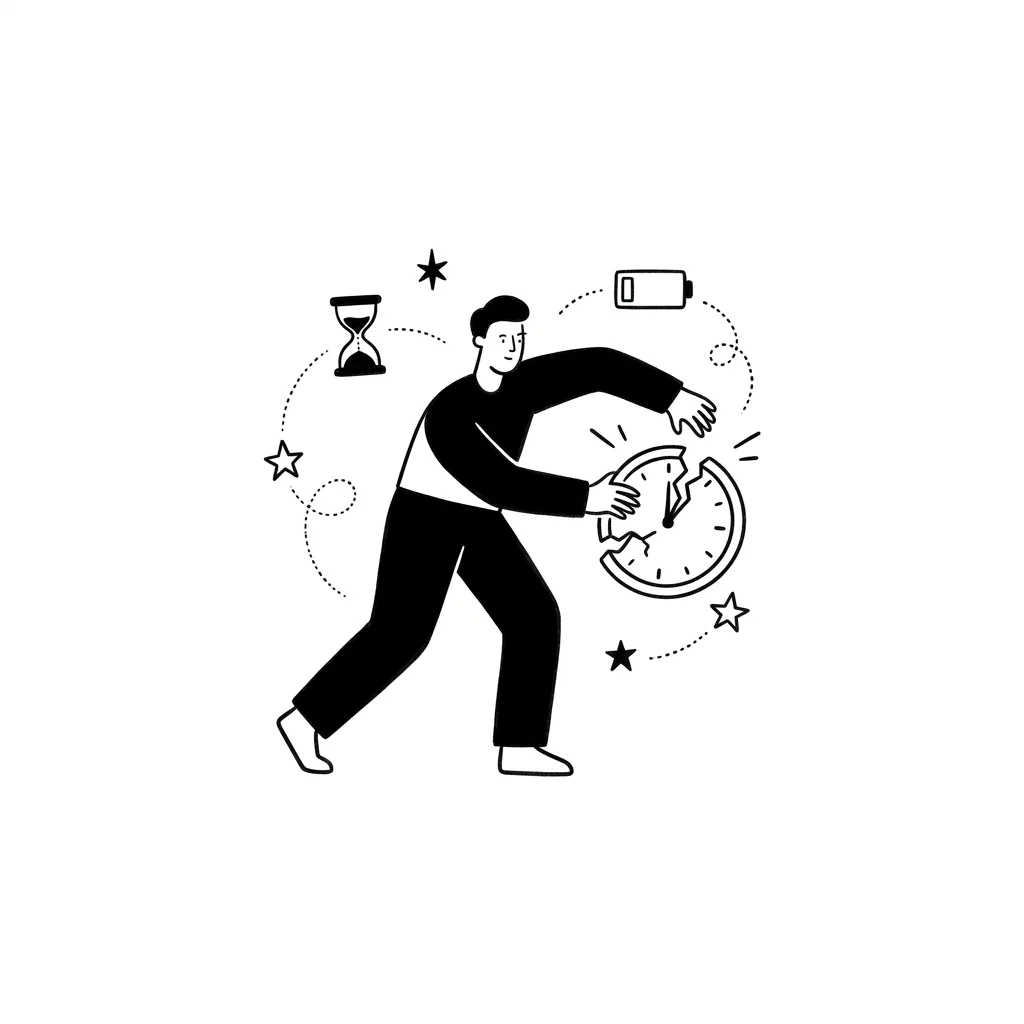
The Pomodoro technique is often a recipe for failure when you have ADHD. Forced 25-minute interruptions snap you out of hard-won hyperfocus, and 5-minute breaks easily morph into hours of scrolling. This article explores a dopamine-friendly focus method built around time visualisation and micro-transitions.
1. Why the 25-Minute Countdown Punishes Your Brain
You set a timer, promising yourself 25 minutes of uninterrupted work. However, the first 15 minutes are spent battling mental noise. By minute 20, you finally find your footing and sink into flow—only for the timer to loudly buzz.
You stand up to rest. To fill the five minutes, you pull out your phone. Two hours later, you are still staring at social feeds, drowning in guilt.
This is the task-switching bottleneck. Pomodoro assumes smooth transition, but it actively harms ADHD neurology:
Due to Dopamine Receptor Hyposensitivity, ADHD brains burn massive cognitive energy just to cross the activation threshold. Once we bypass Executive Dysfunction and enter deep hyperfocus, the mechanical interruption of a countdown timer shatters the neural networks established by our Prefrontal Cortex. Additionally, time blindness makes “five minutes” an unquantifiable concept, turning a short break into a slippery slope toward procrastination.
2. Crafting a Dopamine-Friendly Focus Loop
Hustle culture and meritocracy love to push “time boxing” and extreme self-control. They suggest that squeezing your attention into strict intervals is the key to efficiency. But this mechanical approach ignoring your biological rhythm only guarantees executive exhaustion and leads straight to Autistic Burnout / Autistic Shutdown.
If you are using Stimulant Medication (such as Methylphenidate) or undergoing Cognitive Behavioral Therapy (CBT), your priority should be task flexibility, not rigid constraints.
Here are two adjustments to rebuild your routine:
Step 1: Transition to “Focus Until” Modes
Ditch the pressure of decreasing digits. Countdowns generate unnecessary adrenaline-fueled anxiety. Instead, use a tool like ADHDOS’s Focus Clock. By setting a visual target like “Focus Until 3:00 PM”, your brain gets a gentle, visual representation of time passing. If you are in flow, follow your energy and keep going. Rest when your body tells you to, not when a buzzer commands it.
Step 2: Use the “Energy Menu” to Bridge Breaks
When you do decide to rest, protect your attention. Open your Energy Menu and select a micro-action that requires zero decision-making—like three shoulder rolls, drinking some water, or tossing a piece of trash. This low-energy replenishment keeps your motor running without pulling your attention into the phone trap, providing a gentle bridge to restart.
3. Survival Baseline: The Power of Good-Enoughism
If your executive function is flatlining and you cannot even open a task card, be gentle with yourself. Unload your tasks into the Brain Dump and tell yourself: “Resting today is an active investment in my executive function for tomorrow.”
Quick Q&A
Why does the Pomodoro timer make my ADHD symptoms worse?
It creates high switching costs by cutting off hyperfocus just as you enter it. It also assumes ADHD brains can easily return to tasks after a break, which is notoriously difficult under executive dysfunction.
How does the Focus Clock bypass countdown anxiety?
Instead of count-down alerts, it visualises time as an expanding color ring targeting a specific hour. This offers a soft, non-intrusive boundary that allows your brain to transition naturally.
References & Citations
- Barkley, R. A. (2012). Executive Functions: What They Are, How They Work, and Why They Evolved. Guilford Press. PubMed Reference - Details executive deficits and the failure of traditional time management in ADHD.
- Volkow, N. D. et al. (2009). Evaluating Dopamine Reward Pathway in ADHD. JAMA. PubMed Link - Outlines the reward-deficit model that drives ADHD task switching difficulties.
Recommended Reading
Stuck in a Couch Lock? How to Use an "Energy Menu" to Hack Your ADHD Brain Back to Life
Stuck in screen-time loops and feeling guilty? Discover why To-Do lists fail for ADHD and how to build a low-friction Energy Menu based on 4 brain chemicals.
How to Manage ADHD Hyperfocus and Escape the Autistic Burnout Loop
Science-backed strategies to manage ADHD hyperfocus, rebuild time perception, and prevent exhaustion using visual tools.
Stuck in "Waiting Mode" All Day? How to Visualise Time and Escape the ADHD Waiting Trap
Why an upcoming meeting paralyzes your whole morning. Read the neurobiology of ADHD time blindness and learn how to break the waiting mode using visual tools.