 ADHD OS
How to Manage ADHD Hyperfocus and Escape the Autistic Burnout Loop
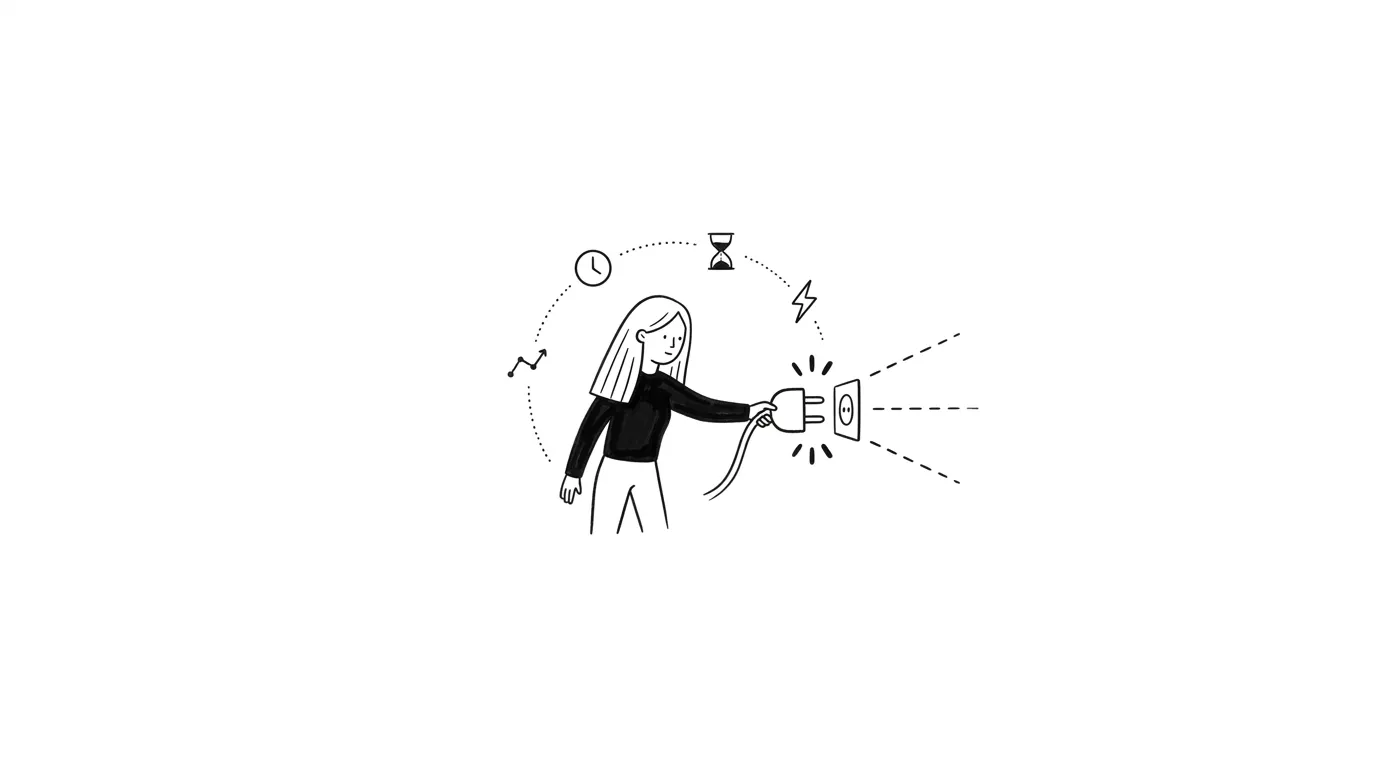
Hyperfocus is not a superpower of extreme self-discipline; it is a neurological state of dysregulation. This guide explains the biology of hyperfocus and provides actionable, low-friction strategies—such as visual scheduling and physical grounding—to help you exit intense flow states without crashing.
1. Why “Being Unable to Stop” Isn’t About Willpower
It’s 2:00 AM. The clacking of your keyboard is the only sound in the silent room. Your throat is parched, your bladder is screaming for a break, yet your fingers keep typing. Your brain desperately whispers, “Just one more sentence. Just fix this last detail.”
This state is clinically known as ADHD Hyperfocus. Self-help gurus often brand this as a “superpower” or the “ultimate form of focus.” In reality, neurobiology tells a different story. It is a sign of regulatory impairment in the Prefrontal Cortex.
Due to Dopamine Receptor Hyposensitivity, ADHD brains are chronically starved of dopamine. When we stumble upon a highly stimulating activity or one with rapid feedback loops, the prefrontal cortex—the brain’s executive manager—essentially locks all attention onto that single source. Once this loop begins, it triggers severe Executive Dysfunction, making it incredibly difficult to shift attention to anything else.
Hyperfocus is often blind and unregulated. We remain trapped in it until we collapse from physical exhaustion, extreme dehydration, or sensory overload, ultimately sliding into Autistic Burnout / Autistic Shutdown.
2. Ditching the Hustle: The Art of “Gentle Decompression”
Meritocracy and hustle culture love to glorify these high-energy, unsustainable states. Books on “extreme discipline” tell you that the longer you focus, the more successful you are. If you crash from executive exhaustion after failing to exit a flow state, they blame your lack of focus management.
This is nothing short of neurobiological gaslighting. For individuals using Stimulant Medication (such as Methylphenidate) or undergoing Cognitive Behavioral Therapy (CBT), hyperfocus is not a gift—it is an expensive energy loan.
To exit this state without guilt or physical depletion, try these three low-energy steps:
Step 1: Ditch the Countdown, Visualise Your Exit
Why does the traditional Pomodoro technique fail for ADHD? The sharp 25-minute alarm abruptly breaks deep flow, and the 5-minute break is too easily hijacked by social media. Instead, use a tool like ADHDOS’s Focus Clock. Instead of stress-inducing countdown digits, it offers a “Focus Until” visual progress color block. This helps the prefrontal cortex physically “see” time draining, providing a gradual transition period for your brain.
Step 2: Unload Your Mind, Don’t Just Stop
Forcing yourself to jump straight from hyperfocus into sleep or chores often fails because your brain is still firing off ideas. Instead of suppressing them, quickly dump these thoughts into your Brain Dump inbox. Tell yourself: “These ideas are safe. I can process them tomorrow.” This cognitive unloading makes switching tasks much easier.
Step 3: Ground Your Body
During hyperfocus, we often hold our breath or hold physical tension in our shoulders. When exiting, open the Breath Orb and follow its gentle expansion for three deep breaths. Lowering your heart rate calms the sympathetic nervous system and pulls your energy levels back to a safe baseline.
3. Survival Baseline: Unfinished Doesn’t Mean Unsuccessful
When hyperfocus fades, looking at an unfinished task list can trigger Rejection Sensitive Dysphoria (RSD): “Why couldn’t I just finish it?” “I wasted another day.”
If you fall short of your perfect plan, accept that your energy is spent for the day. When self-doubt overwhelms you, open the Cognitive Reframer (Reframer) to translate perfectionist thoughts like “I should have finished the whole report” into self-compassion: “I completed the hardest part today. Going to rest now is how I protect my executive function.”
Quick Q&A
If hyperfocus gets things done, why should I try to exit it?
Hyperfocus is an unregulated drain on your brain's resources. Staying in it for too long, especially late at night, depletes your dopamine reserves, leading to executive dysfunction or Autistic Burnout the next day. Over time, this leads to chronic physical tension.
What if I am in deep flow and refuse to stop when my Focus Clock expires?
This is a symptom of executive dysfunction making transition difficult. Do not fight it with pure willpower. Use the Brain Dump to park your active ideas, stand up for just 10 seconds to grab water, and use the Breath Orb to physically ground yourself.
References & Citations
- Barkley, R. A. (2012). Executive Functions: What They Are, How They Work, and Why They Evolved. Guilford Press. PubMed Reference - Outlines the biological mechanisms of time perception and executive deficits.
- American Psychiatric Association. (2013). Diagnostic and Statistical Manual of Mental Disorders (5th ed.). DSM-5 Standards - Classifies attention dysregulation and executive impairments in neurodivergent populations.
- Volkow, N. D. et al. (2009). Evaluating Dopamine Reward Pathway in ADHD. JAMA. PubMed Link - Demonstrates the correlation between dopamine receptor hyposensitivity and executive task-switching difficulties.
Recommended Reading
Beyond the Deficit: 3 Cognitive Superpowers of the ADHD Brain
ADHD is more than distraction and procrastination. Crisis-mode clarity, cross-domain associative thinking, and interest-driven hyperfocus are real cognitive advantages backed by neuroscience. Learn how to leverage them—and how AI tools can amplify these strengths without becoming a new trap.
Stuck in Late-Night Hyperfocus? How to Gently Unplug Your ADHD Brain and Go to Sleep
Stuck in a midnight hyperfocus loop and cannot close your laptop? Learn the neurobiology of late-night focus and how to design a gentle sleep landing strip.
Stuck in "Waiting Mode" All Day? How to Visualise Time and Escape the ADHD Waiting Trap
Why an upcoming meeting paralyzes your whole morning. Read the neurobiology of ADHD time blindness and learn how to break the waiting mode using visual tools.