 ADHD OS
Why Traditional Habits Fail ADHD: Building a Low-Friction, Dopamine-Driven Routine
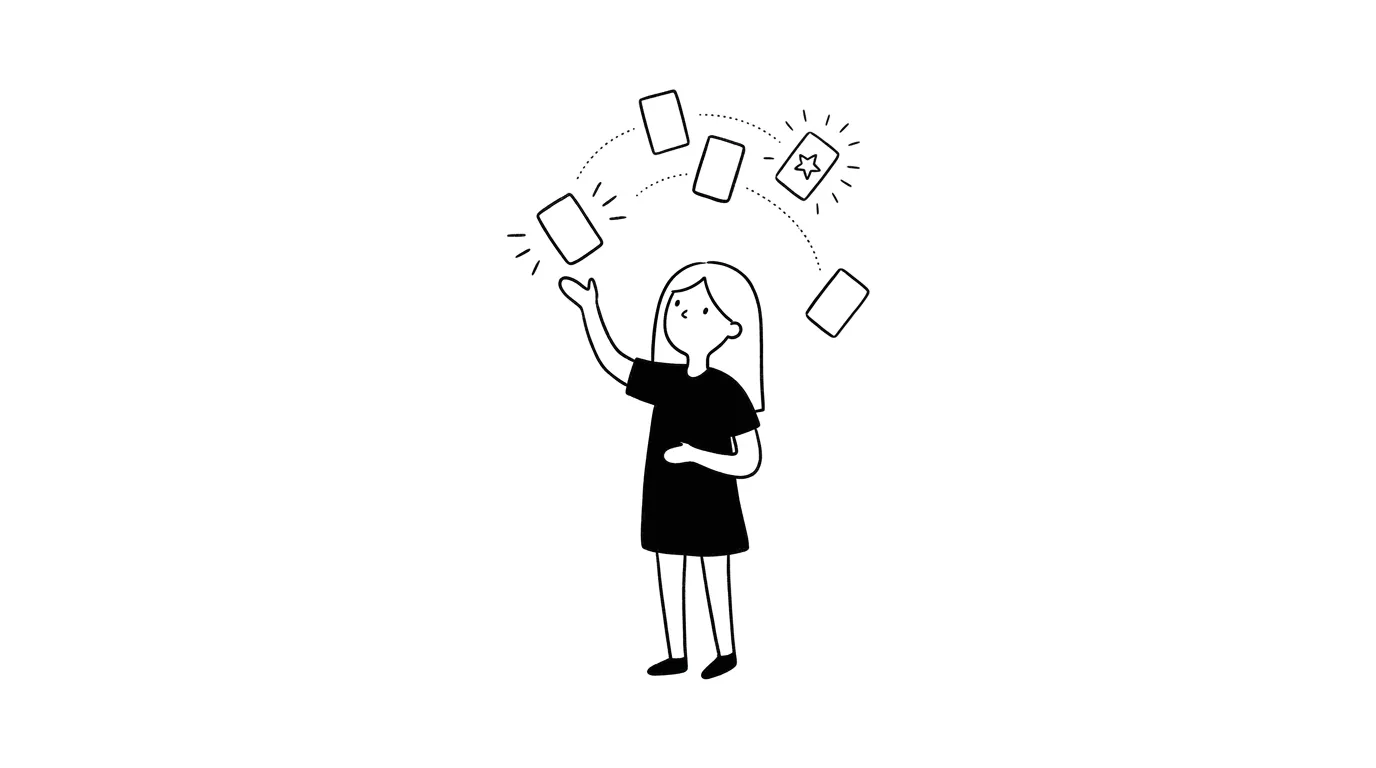
If you have failed at daily habit trackers like those in “Atomic Habits,” please stop blaming your willpower. An ADHD brain is interest-driven; when novelty fades, repetitive habits feel like physical torture. We must break free from the obsession with consecutive streaks and adopt a flexible, dopamine-infused “Dopamine Menu” instead.
You bought a bestselling habit-building book, drew grids on your calendar, and promised yourself: “I will memorize 30 words every day” or “I will run at 7:00 AM daily.”
Week one: Fueled by novelty, you did beautifully. Week two: The novelty faded. Memorizing words felt dry, and you missed a day. Week three: Staring at the broken streak on your calendar, you felt intense shame and frustration. Ultimately, you threw the plan out of the window.
This script has played out countless times. We blame our weak willpower and lack of self-discipline. But by looking at our collective experiences, we realize: Traditional habit systems try to force a dopamine-deficient brain to run on a neurotypical operating system.
Why Do Traditional Habit Systems Fail Us?
Classic habit models (like “Atomic Habits”) promote a “cue-craving-response-reward” loop. They assume that if you repeat a behavior for enough days (e.g., 21 or 66 days), it will automatically enter “frictionless autopilot.”
But this ignores the neurobiological differences of an ADHD brain:
- High Dopamine Threshold: A neurotypical brain receives a tiny but stable drip of dopamine upon completing a mundane but important task (like washing dishes or tracking expenses). Our brains are nearly numb to these tasks, and the prefrontal cortex struggles to find activation energy.
- Interest-Driven vs. Importance-Driven: Our brains run on four primary fuels: novelty, urgency, challenge, and interest. Traditional habit-building relies on “repetition” and “stability,” stripping away all novelty and turning habits into mental torture.
- The All-or-Nothing Shame Loop: We are prone to perfectionism. The moment we miss one day, the habit feels “dead” in our minds, leading to self-blame and eventual abandonment.
What is a “Dopamine Menu”?
Since we cannot run like precise clocks, let us restructure our habits into a “Dopamine Menu.”
The core philosophy is: Do not force yourself to do the same dry task at the same time every day. Instead, categorize your routines into different “dishes” based on energy levels and pick what fits your brain’s current charge.
A standard Dopamine Menu includes:
- Starters (Low Energy, Quick Spark): Tasks taking 3 minutes to activate your brain when sitting at your desk frozen. Examples: three deep breaths, a quick foam roll, or random doodling on scratch paper.
- Mains (High Energy, Core Tasks): The heavy work you need to accomplish. Examples: writing 200 words of a document, or cleaning your desk for 10 minutes.
- Desserts (Frictionless Recharging): Instant rewards after finishing a task. Must be non-addictive. Examples: washing your face with warm water, drinking a sparkling water, or watering plants (no scrolling short videos!).
- Sides (External Offloading): Using physical tools to bypass willpower when your battery is at 0%. Examples: running the dishwasher, turning on the robot vacuum, or eating pre-packaged meals.
Three Steps to Design a Flexible Routine
Step 1: Modularize Habits and Allow “Swapping”
If your goal is to “exercise daily,” do not lock yourself into “running daily.”
Redefine it as “moving your body for 10 minutes” and build a modular shelf: run if you feel energetic today; stretch on the rug if you feel tired tomorrow; dance wildly to upbeat music in the living room if you are bored the day after. The form changes, but the core habit remains, fueled by novelty.
Step 2: Shrink the Activation Threshold to a “Ridiculous Degree”
Many habits die in the transition. For instance, “going to the gym” involves changing clothes, packing a bag, and commuting—too many steps draining your executive function.
Shrink the starting barrier to something you can do painlessly under two minutes:
- Reading habit: Open the book and read just one sentence.
- Organizing room: Pick up just one empty bottle and throw it away. Once the brain crosses the initial resistance, we often hyperfocus and continue. Even if we stop after one sentence or one bottle, it is still a win.
Step 3: Set Up Physical Anchors to Offload Memory
Do not store habits in your head or bury them inside apps.
If you need to take medication, place the bottle right next to your water glass. If you want to read, leave the book open in the center of your desk. Use visual prompts in your line of sight to trigger automatic responses, rather than relying on your prefrontal cortex to actively remember.
Quick Q&A
If I do not track habits daily, how will they ever stick?
For ADHDers, habits rarely become 100% automated like they do for neurotypicals. We must accept that we will always need physical cues. Instead of fighting for a "66-day streak," focus on building a "physical environment flow"—filling your home and workspace with anchors that trigger the next step. Sticking to a habit is about stabilizing your environment.
What if the Dopamine Menu itself loses its novelty over time?
This is completely normal. "Fading novelty" is a biological trait of our brains. When your menu stops exciting you, it is not a personal failure; it is just a signal that it is time to update the menu. Treat designing a new menu, changing stretching poses, or trying new background noise as a fun game. Changing the wrapping of your habits keeps your dopamine levels high.
How do I overcome the guilt of missing a few days?
Remind yourself: Interruption is a part of habit-building. ADHD life is not a straight line, but a spiral of waves. Missing a few days is not a "failure"—it is just a "pause." You do not need to wait for next month or next Monday. The moment you realize you fell off, restart painlessly in that very second. Allowing imperfection is the secret to long-term consistency.
Recommended Reading
Owning the Night: Understanding ADHD Delayed Sleep Phase and a Low-Friction Night Routine
Struggling to sleep at night and drag yourself up in the morning? It might not be screen addiction, but rather ADHD Delayed Sleep Phase Syndrome. Learn the neurobiology of night owls and a gentle, low-willpower wind-down routine.
The Kitchen is an Executive Function Test: A Zero-Brainpower Guide to Meal Prep
Shopping, washing, chopping, multitasking, and washing dishes... cooking is a brutal test of executive function. Learn how to drop traditional cooking rules and feed yourself with a low-friction, zero-brainpower prep system.
Feeding Your Brain: Using Sensory Seeking to Lock in ADHD Focus
Overly quiet and dry environments can starve an ADHD brain of stimulation, triggering distractions. Discover the neuroscience of sensory seeking and practical hacks to feed your senses and lock in focus.