 ADHD OS
The Kitchen is an Executive Function Test: A Zero-Brainpower Guide to Meal Prep
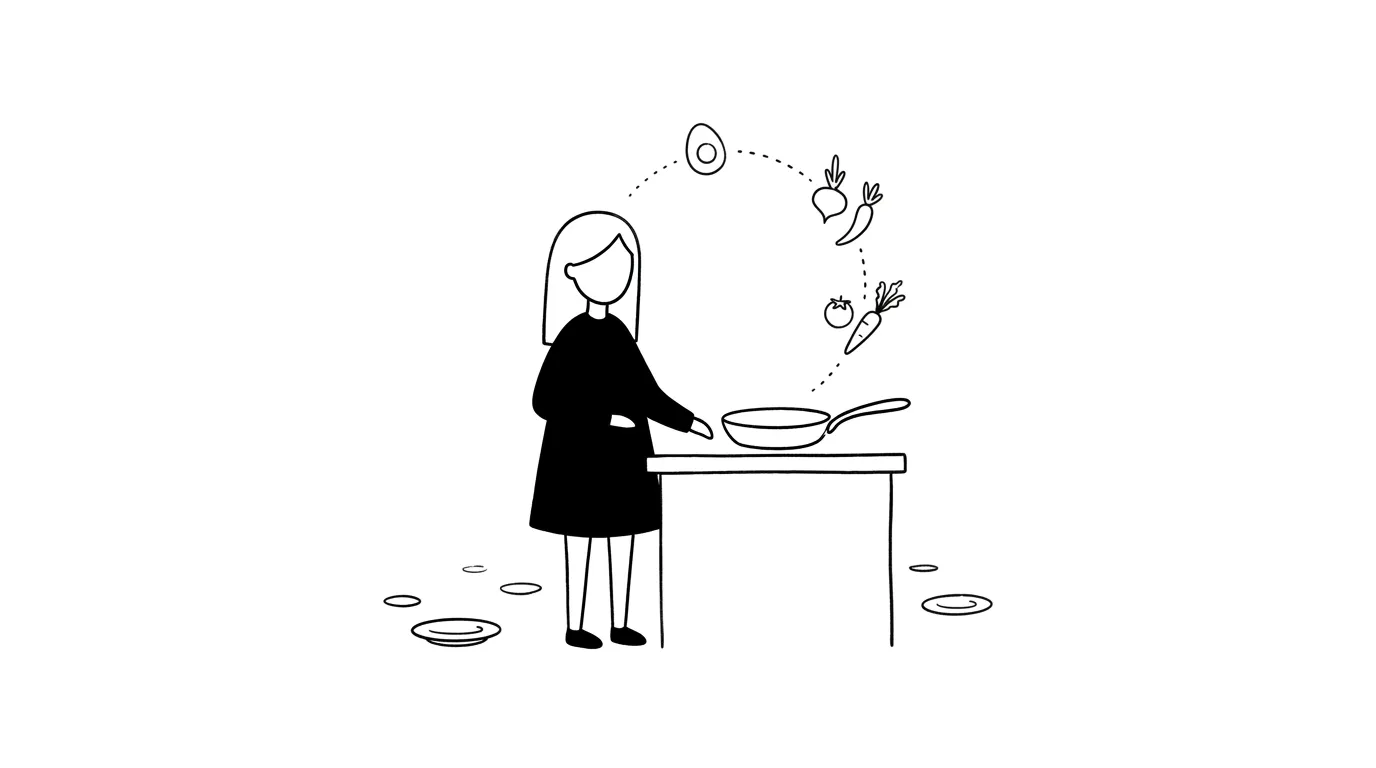
Faced with an empty stomach, ADHDers often freeze up because of the complex steps in cooking, resorting to takeout or skipping meals. Cooking is a high-cognitive load task for our prefrontal cortex. The secret to breaking this bottleneck is to reduce cooking friction, drop washing and chopping, and simplify “cooking” into zero-brainpower “food assembly.”
You look at the dirty dishes piled in the sink, then at the rotting spinach in the back of the fridge, and sigh.
You wanted to cook a decent meal, but the moment your brain started to plan the steps, it froze: you need to wash and chop, monitor two pots simultaneously to prevent burning, and face the greasy cleanup afterward. This chain of tasks drains your energy, leading you to order takeout while sinking into deep guilt.
For ADHDers, we know that the kitchen is the ultimate testing ground for executive dysfunction. Cooking is not an art; it is a brutal exam for our prefrontal cortex.
The Prefrontal Cortex “Grinder” in the Kitchen
It is hard for neurotypicals to understand why “making a simple meal” can trigger a crisis.
But biologically, cooking is a complex project:
- Multitask Decision Overload: Cooking demands monitoring multiple parallel timelines. Water boiling needs pasta; meat browning needs flipping; veggies wilting need removing. This constant attention switching is a disaster for our fragile focus.
- Lack of Immediate Dopamine: From washing greens to actually eating, there is a long “delayed reward.” To a dopamine-starved brain, this is a terrible trade-off.
- Out of Sight, Out of Mind: Fresh greens placed in the lower crisper drawer literally cease to exist in our minds. They remain invisible until they turn into a pool of black liquid weeks later.
To feed ourselves, we must drop the mental baggage of “fine dining” and societal rules. The ultimate goal of cooking is nutrition and energy intake, not showing off culinary skills.
The Zero-Brainpower “Three-No” Prep System
To lower the barrier to entry, we must simplify cooking into simple “assembly”:
Step 1: No Washing, No Chopping — Embrace Frozen Veggies
Discard the myth that frozen vegetables are unhealthy. Modern freezing preserves most nutrients. More importantly, it saves us.
- Frozen Pre-washed Veggies: Keep frozen broccoli, chopped carrots, and okra. They are washed and pre-cut. Pour out only what you need and put the rest back. They will never rot in the crisper drawer, and you bypass the executive drain of chopping.
- Pre-sliced Meat and Shelled Seafood: Buy pre-sliced beef, pre-portioned chicken, or peeled shrimp. Reduce prep friction to zero.
Step 2: No Frying, No Watching — Rely on Timers
Cooking on the stove requires you to stand there and watch. If you get distracted by your phone, the food burns.
- One-Pot/One-Pan Meals: Mix ingredients together, drizzle with olive oil and simple seasonings, and slide them into the oven or air fryer.
- Auto-Off Timers: The beauty of oven/air fryer timers is that they cut power automatically. Even if you wander off and hyperfocus on a puzzle in the bedroom, the food stops cooking on its own, eliminating fire hazards.
Step 3: No Washing Dishes — Foolproof Cleanup
Dishwashing is the biggest reason many ADHDers choose to go hungry instead of cooking.
- Foil and Liners: Line your baking sheets with heavy-duty foil and use paper liners in the air fryer. Toss the liners when done, leaving the machines completely clean.
- One-Bowl Rule: Eat from the same bowl you used to prep or mix. Choose microwave-safe, dishwasher-safe tableware and avoid anything that is “hand-wash only.”
Quick Q&A
Isn't ordering takeout easier? Why bother assembling meals?
Takeout is often high in sodium, sugar, and industrial oils. This diet triggers blood sugar spikes followed by steep crashes (a glucose rollercoaster), which directly worsens ADHD inattention and emotional dysregulation. Assembling frozen, pre-cut veggies at home takes 5 minutes, supports stable energy levels, and restores a sense of agency over your life.
I feel guilty eating microwave rice and frozen vegetables, thinking it is unhealthy. How do I cope?
Remind yourself: survival baseline comes before culinary excellence. For us, skipping meals or bingeing on snacks due to cooking exhaustion is far worse than eating frozen broccoli or sterile rice. Frozen veggies have no meaningful nutritional deficit compared to fresh ones. Drop the neurotypical standards of "wellness." The eating style that fits your brain is the healthiest option for you.
How do I stop fresh groceries from rotting in my fridge?
If you must buy fresh produce, remember this golden rule: flip your fridge upside down. Put perishable fruits and veggies on the door shelves or right in the middle row at eye level. Put stable soda cans, sauces, and jars in the bottom crisper drawer. Keep healthy foods in your immediate line of sight. Use the biological fact of "seen to exist" to prompt yourself to eat them.
Recommended Reading
“Stop Parenting Me”: Healing the Parent-Child Dynamic in ADHD Relationships
Forgetting chores, missed promises, and zoning out... How do ADHD couples break free from the exhausting parent-child dynamic? Discover the executive dysfunction behind relationship friction and practical, friction-free systems to rebuild partnership.
Why Traditional Habits Fail ADHD: Building a Low-Friction, Dopamine-Driven Routine
Traditional habit systems focus on consecutive streaks and daily repetition, which drains ADHD willpower. Discover why these systems fail a dopamine-deficient brain and how to build a flexible "Dopamine Menu" for your routine.
Owning the Night: Understanding ADHD Delayed Sleep Phase and a Low-Friction Night Routine
Struggling to sleep at night and drag yourself up in the morning? It might not be screen addiction, but rather ADHD Delayed Sleep Phase Syndrome. Learn the neurobiology of night owls and a gentle, low-willpower wind-down routine.