 ADHD OS
“Stop Parenting Me”: Healing the Parent-Child Dynamic in ADHD Relationships
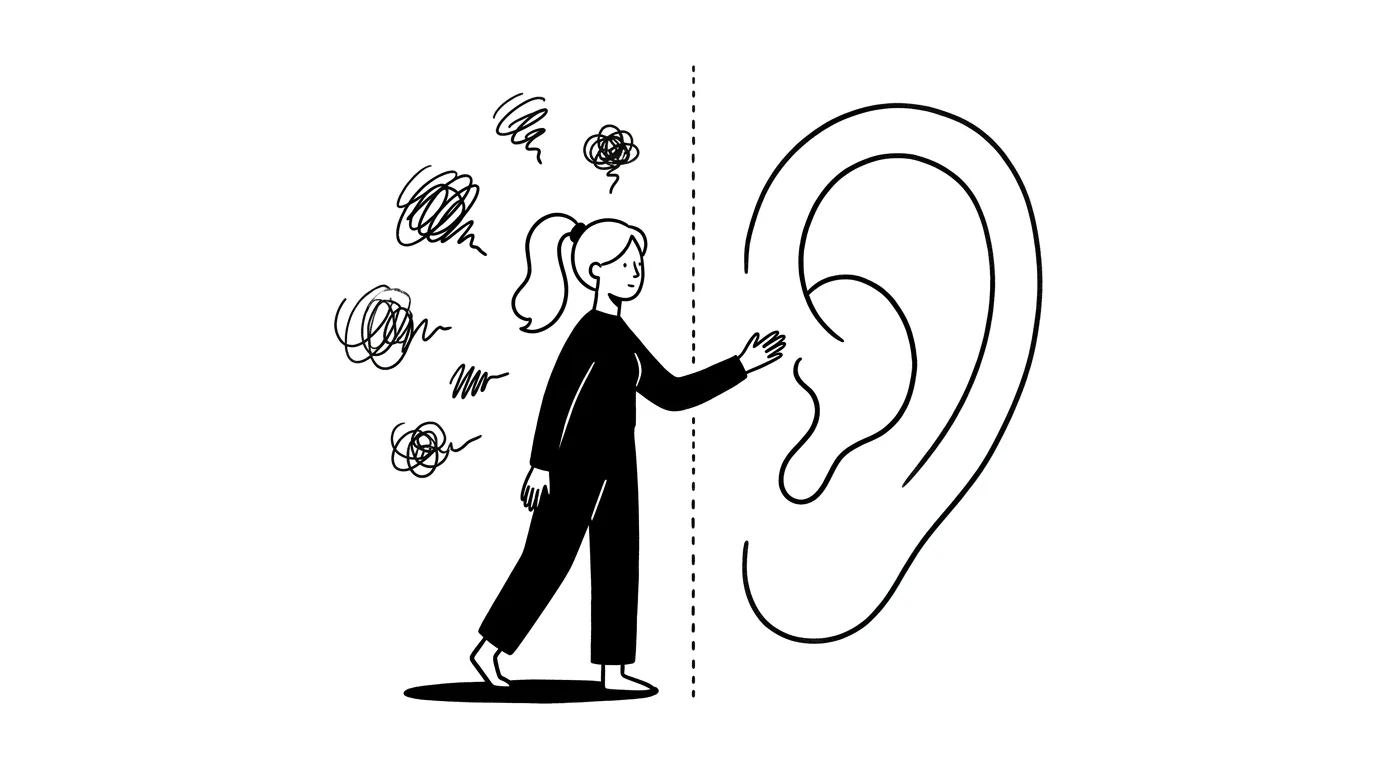
ADHD couples often fall into an exhausting cycle where one partner acts as a supervisor while the other withdraws in guilt. This “parent-child dynamic” is not a sign of a broken relationship, but rather the projection of executive dysfunction onto daily chores. Breaking free requires moving away from endless apologies and instead building collaborative physical systems that remove emotional judgment from daily routine.
Your partner opens the door and sighs.
The dishes from lunch are still piled in the sink, your shoes are scattered messily across the entryway floor, and you sit at your computer, consumed by guilt: “I fully intended to do the dishes. How did it get dark the moment I blinked?”
Then comes the familiar confrontation. They start to nag: “Why can’t you ever remember? Do you even care about this home?” You feel defensive and angry, like a student sent to the principal’s office, and you choose to shut the bedroom door and remain silent.
Among ADHDers, we often find our relationships quietly slipping into this exhausting loop of nagging and avoiding. To outsiders, it looks like laziness or indifference. But we know it is the shadow cast by executive dysfunction over our most intimate connections.
Why Do We End Up as the “Child” in Relationships?
For a non-ADHD partner, it is hard to comprehend why simple requests like “take out the trash” or “remember to pay the electric bill” are so difficult.
The root cause lies in executive dysfunction:
- Impaired Working Memory: If our attention is hyperfocused on something else when our partner speaks, their words register only as background noise. They think we heard them, but our brain has already dropped the ball.
- Time Blindness: We have no concept of “in a minute.” To us, five minutes have passed; to our waiting partner, it has been five hours.
- Low-Dopamine Procrastination: Chores, bills, and grocery shopping are “zero-dopamine events.” The prefrontal cortex struggles to spark activation energy, leading to constant delays until negative emotions (an angry partner) finally force us to act.
Over time, the partner is forced to shoulder all planning and prompting, becoming the “parent,” while we become the “child” who needs constant supervision. The partner grows exhausted, feeling like they are dating a child; we feel micromanaged and stripped of autonomy. The love and intimacy in the relationship slowly wither away.
Why Promising “I Will Remember Next Time” Is Poison
After a conflict, to quiet the storm, we instinctively offer: “I am sorry. I promise I will try harder to remember next time.”
But this is a dangerous trap.
Because remembering is one of the least reliable executive functions of an ADHD brain. By making this promise, we are trying to fight their expectations with our weakness. The next time our working memory slips, we will likely forget again.
When the second and third slip-ups occur, the partner stops seeing it as “poor memory” and starts seeing it as a “careless attitude” or a “lack of love.” The promise becomes a bounced check of trust, and we sink deeper into self-doubt and learned helplessness.
Three Steps to Rebuild Partnership Without Friction
To break free from this dynamic, the core principle is: Stop relying on willpower to “remember.” Instead, replace verbal nagging with physical systems, stripping emotional judgment from daily chores.
Step 1: Translate Verbal Reminders into Physical Prompts
Never casually give instructions while an ADHDer is on their phone or working. Verbal requests float away easily.
- A Physical Whiteboard: Hang a whiteboard by the door or on the fridge. Write tasks down there. If the board is blank, the ADHDer can rest guilt-free; if there is writing, it serves as an immediate visual prompt.
- Physical Triggers for Actions: If you want your partner to take out the trash, hang the bag directly on the front door handle. Use the physical action of opening the door to trigger the behavior, rather than hoping their brain remembers.
Step 2: Establish “Friction-Free” Chore Ownership
Vague agreements like “sharing the housework” are a recipe for ADHD decision paralysis. Without clear boundaries, our brains stall trying to choose what to do.
- Complete Handover: For example, you own the dishes, and your partner owns the cooking. This means you own the entire dishwashing loop (wiping the table, cleaning the sink, putting dishes away) and decide when and how to do it. As long as the sink is clean before the next meal prep, your partner does not prompt or supervise.
- Relinquish Supervision: The non-ADHD partner must learn to step back and resist the urge to micromanage. Give the ADHDer room to find their own low-friction workflow.
Step 3: The Art of “Free Zones” vs. “Common Zones”
We all need a space where we can completely let go and be messy without guilt.
- The Messy Haven: Designate a drawer, a desk, or a specific room as the ADHDer’s absolute free zone. In this space, clothes can pile up and keys can lie scattered. The partner never cleans it or comments on it.
- Baseline Common Zones: Shared spaces like the couch and dining table must remain clear. If your items are left in common zones, the partner has the right to drop them into your “free zone” bin. It is a physical transfer, free of emotional scolding.
Quick Q&A
My partner feels that relying on whiteboards and reminders means I "do not care enough" about them, and that I am dating a system instead of them. How do I address this?
Explain honestly that using systems is not a sign of coldness, but rather a proof of how deeply we care about the relationship. Just as a nearsighted person wears glasses to see clearly, an ADHDer uses physical systems to see and participate in daily life. Outsourcing the executive load to a system preserves our limited energy so we can truly listen to our partner's emotional needs, rather than exhausting our love in petty daily friction.
When my partner nags me, I instinctively get angry or shut down completely. Why is that?
This is often driven by Rejection Sensitive Dysphoria (RSD). Growing up with constant criticism makes our brains highly sensitive to perceived blame. A casual complaint from a partner can be sub-consciously translated into: "You are a complete failure; you do not deserve love." To cope with this intense pain, the brain goes into defense mode—manifesting as anger to mask the shame, or total shutdown to escape the pressure.
What if both partners are neurodivergent (e.g., one ADHD and one Autistic)?
This is actually a great opportunity for synergy. Autistic partners often thrive on routine and structure, but may struggle with sudden changes; ADHDers are flexible but detest repetitive details. You can divide chores based on these traits. The Autistic partner can own highly structured, predictable tasks (like taking out the trash at a set time or organizing bills), while the ADHDer handles tasks requiring adaptability. The key is to view behavioral differences as wiring, not personal attacks.
Recommended Reading
The Kitchen is an Executive Function Test: A Zero-Brainpower Guide to Meal Prep
Shopping, washing, chopping, multitasking, and washing dishes... cooking is a brutal test of executive function. Learn how to drop traditional cooking rules and feed yourself with a low-friction, zero-brainpower prep system.
Frozen on the Couch with a Looming Deadline? The Micro-Step SOS Guide for ADHD Task Paralysis
Looming deadlines leaving you frozen in your seat, scrolling for hours in guilt? Break out of ADHD task paralysis with these physical micro-steps.
Forget the Finish Line: How the "Two-Minute Glide" Beats ADHD Task Paralysis
Stuck in ADHD paralysis? Learn how to use the "Two-Minute Glide" method and micro-actions to lower starting friction, trick your prefrontal cortex, and build momentum.