 ADHD OS
Waking Up in a Fog? How to Gently Boot Up Your ADHD Brain in the Morning
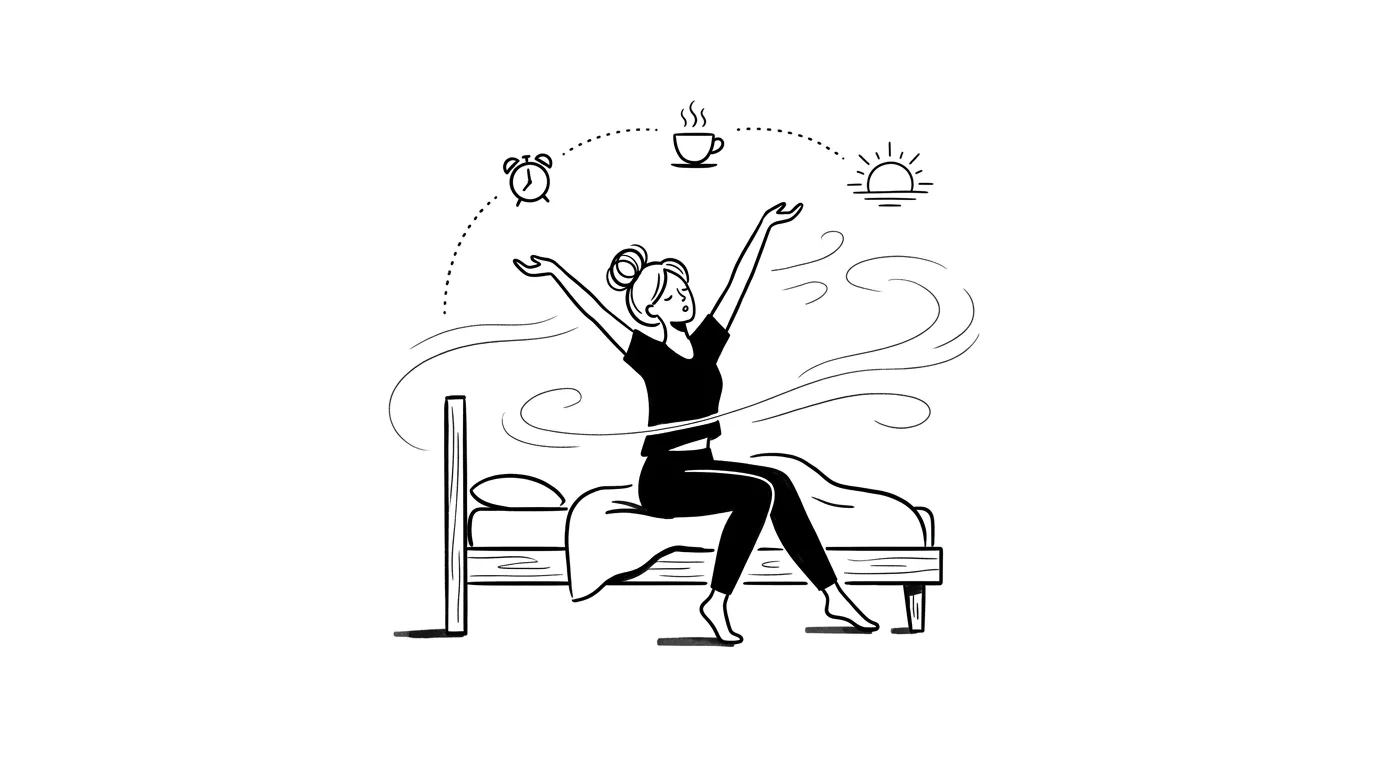
Have you ever had a heavy morning: your alarm rang multiple times, you finally opened your eyes, but your head felt filled with wet cotton? Lying frozen, moving to wash your face feels like a lunar mission. This prolonged morning fog is called sleep inertia. ADHD brains have slower cortisol awakening responses. Forcing instant alert state goes against your biology. Here is how to boot up somatic engines gently.
The alarm has rung for the fourth time. You use all your strength to open your eyes, but your vision is blurred, and your head feels filled with wet, heavy cement. You lie frozen, staring at the ceiling. You know you should get out of bed within 20 minutes to leave on time, but your body is lead. The simple acts of sitting up and reaching for socks feel impossible. You remain paralyzed until the last minute, when you spring out of bed in a panic, rushing out the door.
This morning paralysis is a daily battle for many with ADHD.
This is not a failure of character or time management. Neurologically, your prefrontal cortex is experiencing a severe boot-up delay.
The Neurobiology of Morning Low Arousal: Warming Up the Diesel Engine
In neurotypical systems, waking up triggers a rapid Cortisol Awakening Response (CAR). Cortisol levels spike, shifting brainwaves from slow Delta waves to fast, alert Beta waves, completing the boot-up process in 10 to 30 minutes.
In the ADHD brain, morning arousal is physiologically flat:
- Cortisol Awakening Response Lag: Our morning cortisol curve is flat. While others wake up alert, our cortex remains wrapped in sleep chemicals (such as adenosine), causing prolonged sleep inertia.
- Diesel Engine Boot-Up: A neurotypical brain lights up like a smartphone screen. The ADHD prefrontal cortex behaves like an old diesel generator. Forcing high RPMs before it warms up deadlocks the system.
Demanding logical choices (like planning your day) from an un-warmed prefrontal cortex drains your limited cognitive energy before your feet touch the floor.
Low-Friction Somatic Boot-Up: Warming Up the Somatic System
Instead of forcing wakefulness via raw willpower, practice energy-flow adaptation and somatic hacks to warm up the engine.
1. Retinal Light Signals: Flip the Master Switch
Light striking your retinas is the physical switch that stops melatonin (sleep hormone) secretion and signals your brainstem to boot up. When you open your eyes, forbid picking up your phone. Instead, open the curtains or turn on a bright bedside lamp. Even if you lie frozen, the light signals perform a silent warm-up on your prefrontal cortex in the background.
2. Deep Breathing with the Breath Orb: SOMATIC Oxygenation
Lie flat on your back and open the Breath Orb in ADHDOS. Sync your breathing with its visual contraction for 2 minutes. Morning brain fog is often worsened by shallow breathing and low blood oxygen. Rhythmic deep breathing increases oxygen levels, balances your autonomic nervous system, and shifts your prefrontal cortex into gear smoothly.
3. Morning Energy Menu Ramps: Forbid Thinking, Take Action Cards
Keep a list near your bed or open the Energy Menu in ADHDOS. During the first hour of your day, forbid making complex decisions. Only execute low-friction action cards:
- Serotonin Ramp: Go splash warm water on your face 3 times.
- Dopamine Ramp: Drink a large glass of warm water to rehydrate your circulatory system.
- Endorphin Ramp: Do 3 simple stretches while lying in bed. Align with your morning low battery. Pick a warm-up action card first to let your body lead your brain.
Quick Q&A
Why do I reach for my phone immediately after waking up and get sleepier?
Because a low-arousal brain desperately seeks quick dopamine to wake itself up. Scrolling apps provides cheap, instant stimulation, making you default to it. But this passive information bombardment drains your active working memory RAM, leaving you in brain fog for the rest of the morning.
What if I must address urgent tasks early in the morning?
Energy alignment rule is: 'no decisions before your brain boots.' If you must work, warm up with a 5-minute Energy Menu action card. Then partition the work into tiny dead steps (e.g., just formatting, just reading one paragraph). Minimize starting friction, reject perfectionism.
Why do I feel sleepy again after eating breakfast?
Eating refined carbs (like toast or cereal) spikes blood sugar, triggering an insulin surge that causes a rapid sugar crash (reactive hypoglycemia). This process also drives tryptophan into the brain to produce serotonin, making you drowsy. Focus on protein and water for your morning meal to avoid boot-up failure.
Recommended Reading
Time Blindness Messing Up Your Day? Visualizing Time for Chronically Late ADHD Brains
Cannot perceive how hours slip away? Or stuck in a painful "waiting mode" freeze before appointments? Discover hacks to tame ADHD time blindness.
Running Too Many Threads in Your Brain? Resolving ADHD Multitasking Paralysis
Brain spinning in multi-threaded overload while your body sits frozen doing nothing? Learn how to clear your prefrontal memory to break the freeze.
The Good Girl's Fawn Antidote: A Boundary Guide for Neurodivergent Women
Fawning, rejection sensitive dysphoria (RSD), and social masking often leave ADHD and autistic women burnt out. Here is a guide to building gentle, friction-free personal and workplace boundaries.