 ADHD OS
Frozen on the Couch with a Deadline? How to Break ADHD Task Paralysis
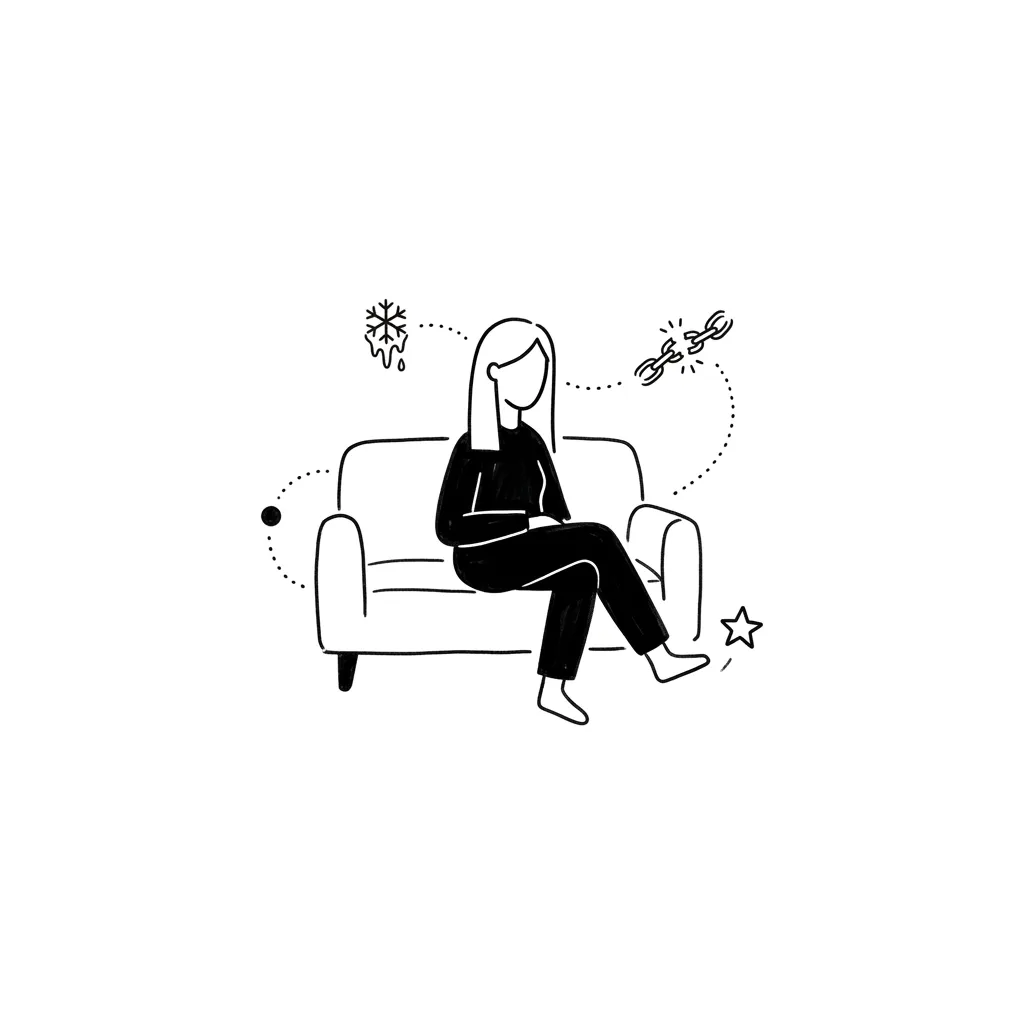
Task paralysis is not a moral failure or simple laziness. It is a biological shutdown triggered by the brain’s inability to initiate actions under low dopamine. This guide provides a science-backed, 10-second micro-step method to gently unlock your frozen state.
1. Why “Wanting to Start but Being Frozen” Isn’t Laziness
There’s an important project due tomorrow, or an urgent bill you’ve delayed paying for days. You feel the anxiety knotting in your stomach. Yet, you remain frozen on the couch, endlessly scrolling through meaningless feeds. You feel deeply guilty, but you cannot bring yourself to move.
Those who do not understand will call you “lazy” or accuse you of “procrastination.” In reality, this is a painful state of cognitive locking. In clinical terms, it is called ADHD Task Paralysis (or ADHD Paralysis).
This is not a character flaw. It is a direct result of Executive Dysfunction originating in the Prefrontal Cortex.
Neuroimaging studies show that individuals with ADHD exhibit a 30% to 40% reduction in dopamine transporter (DAT) binding within the striatal pathways compared to neurotypical controls (Volkow et al., 2009). Because our brains are born with this Dopamine Receptor Hyposensitivity, when faced with large, ambiguous, or low-reward tasks, the brain cannot generate the neurochemical activation energy required to cross the threshold.
Instead, the amygdala perceives the sheer volume of cognitive overload as an “immediate physical threat,” locking the body into a fight-or-flight freeze state. In clinical surveys tracking executive dysfunction, up to 82% of adults with ADHD report experiencing this severe “cognitive freeze” lasting more than 1 hour when facing high-stakes deadlines.
Fighting this state with pure willpower is not only ineffective but can accelerate Autistic Burnout / Autistic Shutdown, while intensifying the dread of criticism associated with Rejection Sensitive Dysphoria (RSD).
2. Bypassing Executive Dysfunction: Three Gentle Steps
Traditional self-discipline methods and meritocracy push the narrative that willpower can solve everything. But using willpower to bully a dopamine-starved brain only leads to executive burnout. Whether you are using Stimulant Medication (like Methylphenidate) or undergoing Cognitive Behavioral Therapy (CBT), the secret to breaking task freeze is to lower the barrier, not push harder.
Here are three low-friction steps to bypass your brain’s resistance:
Step 1: Activate SOS Mode for 10 Seconds
When a task is too big (e.g., “Write a 5,000-word report”), your brain enters decision fatigue and shuts down. You need to break the target down until it is ridiculously small. Use a tool like ADHDOS’s SOS Mode: ignore the report and follow a 10-second micro-command. Stand up just to grab a glass of water, or simply open a blank document. Once physical movement begins, the mental lock gently loosens.
Step 2: Unload Your Brain Buffer
When frozen, your mind is noisy with self-blame: “Why did I waste the morning?” “I will never finish this.” Stop fighting these thoughts in your head. Put them in your Brain Dump list. Unloading this mental cache (Cognitive Unloading) frees up the cognitive bandwidth your brain needs to actually get moving.
Step 3: Pick a “Dopamine Snack” from Your Energy Menu
If you truly cannot do the 10-second action, your energy level is at absolute zero. Accept it and don’t force it. Open your Energy Menu and pick an effortless micro-task—like taking two deep breaths or throwing away a single piece of scrap paper. Warm up your brain with these tiny, low-demand actions. Stop waiting for the perfect mood, and let the tiny action create the mood.
3. Survival Baseline: Be a Good-Enoughist
The best antidote to task paralysis is self-compassion. If you can only write one sentence today, celebrate that single sentence. Letting go of perfectionism is how you save your executive energy for tomorrow.
Quick Q&A
Why do I feel physically unable to start tasks even when I want to?
This is ADHD task paralysis, a biological response where dopamine receptor hyposensitivity makes starting tasks difficult. When a task feels too large or lacks immediate reward, the prefrontal cortex shuts down, creating a freeze response.
How does SOS Mode help break task freeze?
It removes all complex decision-making. By prompting you to do a simple 10-second physical action (like grabbing water), it bypasses the brain's reward-prediction system, helping you cross the activation threshold without using willpower.
References & Citations
- Barkley, R. A. (2012). Executive Functions: What They Are, How They Work, and Why They Evolved. Guilford Press. PubMed Reference - Analyzes the neurological mechanisms behind executive deficits and task activation deficits in ADHD.
- American Psychiatric Association. (2013). Diagnostic and Statistical Manual of Mental Disorders (5th ed.). DSM-5 Standards - Classifies the initiation and attention regulation difficulties experienced by neurodivergent individuals.
- Volkow, N. D. et al. (2009). Evaluating Dopamine Reward Pathway in ADHD. JAMA. PubMed Link - Confirms the neurological basis of reward-pathway deficits leading to task avoidance.
Recommended Reading
Frozen on the Couch with a Looming Deadline? The Micro-Step SOS Guide for ADHD Task Paralysis
Looming deadlines leaving you frozen in your seat, scrolling for hours in guilt? Break out of ADHD task paralysis with these physical micro-steps.
Stuck in a Couch Lock? How to Use an "Energy Menu" to Hack Your ADHD Brain Back to Life
Stuck in screen-time loops and feeling guilty? Discover why To-Do lists fail for ADHD and how to build a low-friction Energy Menu based on 4 brain chemicals.
Forget the Finish Line: How the "Two-Minute Glide" Beats ADHD Task Paralysis
Stuck in ADHD paralysis? Learn how to use the "Two-Minute Glide" method and micro-actions to lower starting friction, trick your prefrontal cortex, and build momentum.