 ADHD OS
Struggling with Unwritten Social Rules? Painless Workplace Communication Guide for ASD Adults
Do you dread vague requests at work: when a manager asks to “sync up on progress,” do you panic, overthink, and worry you missed something? Does writing a simple email take you half an hour of editing? For autistic (ASD) adults, unwritten social rules and blurry prompts cause massive sensory and cognitive overload. Here is how to use structured templates for coping hacks and cognitive unloading.
Your manager sends a message in the team chat: “Please sync up on your active project status before logging off.”
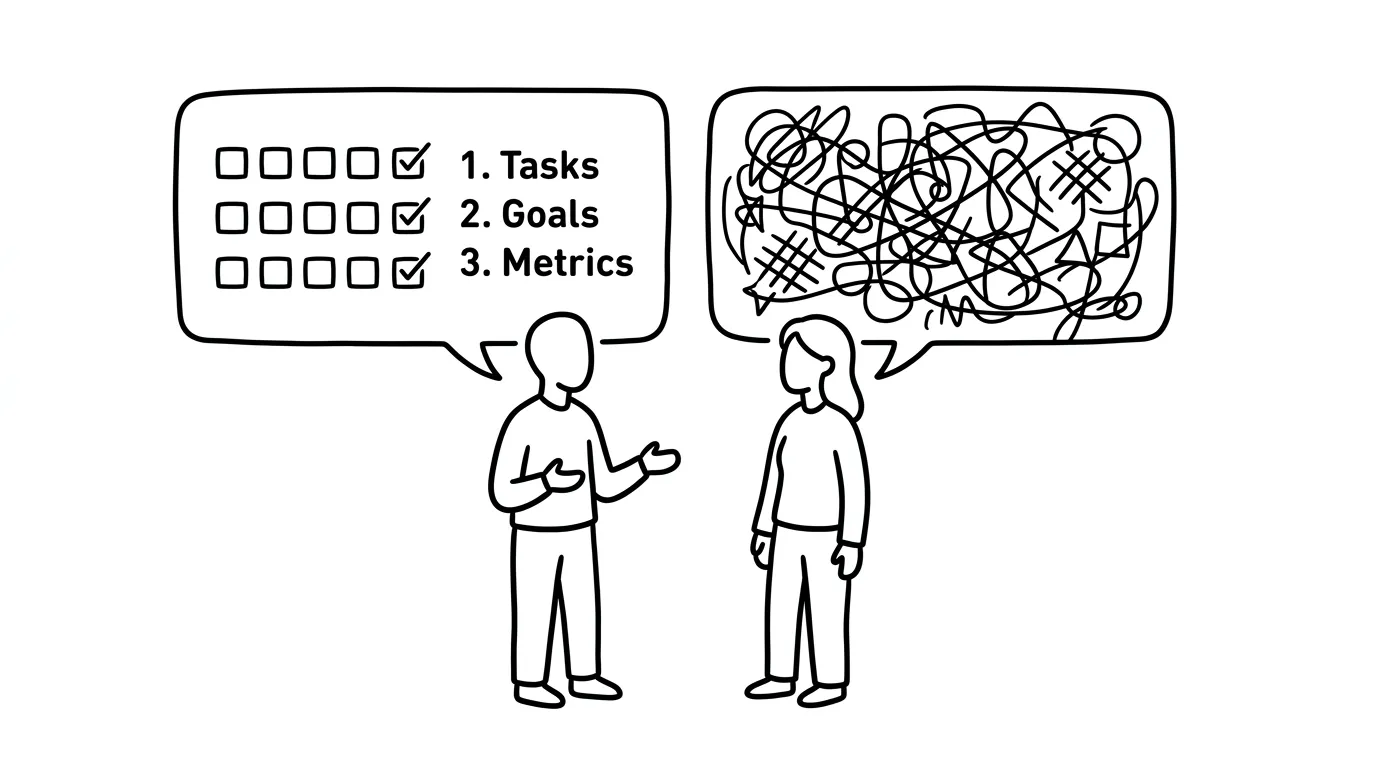
Looking at the message, your brain instantly triggers a high-energy alarm. You stare at the screen, caught in a loop of indecision: Does ‘status’ mean exact code changes, or a general percentage? Should I mention my current blocks? What tone sounds proactive without sounding boastful? You type, delete, and rewrite for 30 minutes. Meanwhile, your coworker spends two minutes sending three lines of text. By the time you send your message, you feel exhausted.
This is not a sign of bad communication skills. For autistic (ASD) adults, office interactions demand running a high-cost social simulation algorithm.
The Neurobiology of Workplace Socializing: The Double Empathy Problem
In psychology and developmental sciences, the Double Empathy Problem explains that autistic individuals and neurotypicals (NT) do not have communication “deficits”—they run entirely different information encoding systems:
- The NT Implicit Network: Neurotypicals possess intuitive pathways for social cues. They default to implicit hints, shifts in tone, and non-verbal subtext. Processing these messages demands zero conscious energy.
- The Autistic Factual Network: The autistic brain defaults to precise, fact-based communication. Vague directions like “sync up” or “use your judgment” force the prefrontal cortex to run heavy Social Cognition algorithms to guess the implied meaning.
Simulating NT communication on an autistic neural architecture burns your active RAM, leading to social burnout.
Structured Communication: Visual Filtering and Card Templates
To bypass this friction, stop trying to perform as a neurotypical social expert. Treat your daily communication as a physical process by using templates to enable cognitive unloading.
1. The 3-Step Status Update Template
When asked for a status update, do not write paragraphs. Use this fact-based format:
- [Completed]: List 1-2 objective deliverables (e.g., Finished draft of design file A).
- [In Progress]: List current tasks and target delivery dates (e.g., Auditing metrics sheet, expecting delivery Thursday afternoon).
- [Blocked/Need Help]: List blockers, or write None (e.g., Awaiting user metrics from team B). This clean, factual structure reads as professional and organized to NT managers, saving your energy.
2. Pinned Board Shields: Copy, Paste, and Move On
Requesting time off, following up on approvals, or declining scope creep are friction-heavy tasks. Keep standard card templates pinned to your ADHDOS Board. Forbid drafting responses under pressure; copy-paste only:
- Follow-Up: “Hi [Name], I am working on project A. Could you let me know when approval on project B is expected? This timeline dictates when we launch phase two. Thanks!”
- Time Off: “Hi [Manager], I plan to take Friday off. I will review urgent messages on Slack once at 5 PM that day. Thanks for approving!”
Using these pinned card templates unloads the cognitive cost of phrasing, preserving your battery.
Quick Q&A
What if my manager insists on vague verbal instructions that I struggle to decode?
Use the clarification loop. Say: 'To make sure we are aligned, I will summarize my understanding: you need me to send the draft to marketing by Tuesday morning, correct?' Guide the vague cues back to objective deliverables and dates.
Will I get isolated if I refuse to engage in small talk?
Build a reputation as a focused professional. Keep 2-3 exit lines in your Board (e.g., 'That sounds interesting! I have a deadline coming up, so I must head back to write. Catch you later!'). Clear boundaries beat pretending, protecting your battery.
Why do I feel a severe headache and need to hide after large team meetings?
This is sensory overload. Meetings involve tracking multiple faces, voice shifts, and social subtext. Your brain is computing massive amounts of data. Proactively schedule 10 minutes of sensory quiet: put on noise-canceling headphones, step away from the team, and wash your hands in cold water.
Recommended Reading
Afraid to Say No at Work? Overcoming HSP People-Pleasing and Workplace Exhaustion
Over-analyzing everyone at work and unable to say no? Discover how highly sensitive people (HSP) can set boundaries and reclaim energy.
Panic-Looping Over a "Got a Minute?" Message? Demystifying Rejection Sensitive Dysphoria (RSD) in ADHD
Does a vague critique or unanswered message throw you into intense panic and physical chest pain? Understand ADHD rejection sensitivity and how to land safely.
Social Battery Dead in 10 Minutes? The Gentle Art of Setting Boundaries and Saying No for ASD Adults
Feeling completely drained or unable to speak after socializing? Learn why ASD masking burns your energy and how to say no painlessly.