 ADHD OS
Panic-Looping Over a "Got a Minute?" Message? Demystifying Rejection Sensitive Dysphoria (RSD) in ADHD
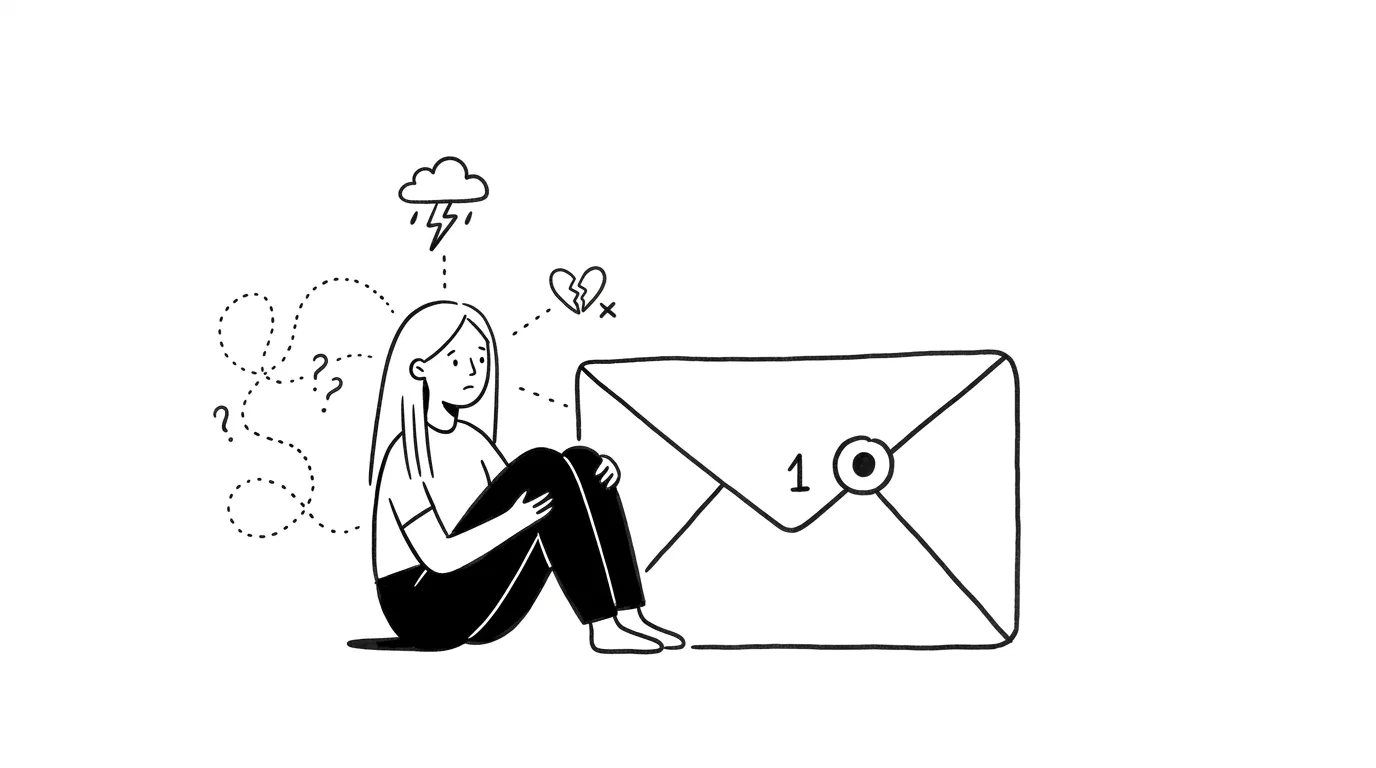
Have you ever had your boss send a vague “come to my office for a second” message, and before you even stood up, you had already visualized getting fired and ending up homeless? A simple look, an unanswered text, or a tiny correction can trigger intense pain. This is Rejection Sensitive Dysphoria (RSD) in ADHD. Here is how to offload emotional overload.
For many with ADHD, we navigate social spaces with an “allergic brain.”
We react to perceived rejection, disapproval, or coldness with intense, almost physical pain.
Even if there is no objective hostility (e.g., a colleague is simply tired and forgets to smile, or a manager just wants to double-check a routine report), your brain’s threat center (the amygdala) sound a red alert, deciding you have been rejected by the group.
This emotional storm can dry up all your executive battery in seconds, driving you into task freeze or social avoidance.
Stop calling yourself “overly sensitive.” RSD is a neurological sensitivity, not a personality flaw.
We must practice dopamine alignment to soothe our nervous system and utilize cognitive unloading.
3 Strategies to Decompress RSD Waves
When the emotional wave hits, trying to think your way out of it usually makes it worse. We need physical and cognitive anchors:
1. Separate Facts from Feelings: Use the Reframer
RSD is dangerous because it disguised anxiety as fact. Use the Cognitive Reframer in ADHDOS to separate fear from reality:
- Anxiety Brain: “They read my text and didn’t reply. They must hate me. I said something stupid.”
- Reframed Reality: “An unanswered text only means they are busy or forgot. I have zero proof they hate me.”
- Anxiety Brain: “The boss wants to see me. I am done for. I must have messed up.”
- Reframed Reality: “The boss meets dozens of people daily. This is routine. My personal worth is independent of work feedback.”
2. Social Insulation: Build Your Board Shields
Keep a few standard conversational templates in the ADHDOS Board. When someone gives you a vague reaction, copy-paste a safe reply (e.g., “Got it! Thanks!”). This unloads the cognitive stress of figuring out how to reply without looking awkward, preventing you from over-analyzing.
3. Somatic Cool Down: Warm Water & Breathing
RSD triggers real physical tension (cold hands, racing pulse). When your body tightens, step away from communication. Grab a warm cup of tea, hold it in your hands, close your eyes, and take a deep breath. This signals to your body that there is no physical danger, bringing down your nervous system’s alarm bells.
Emotions are weather; your brain is the sky. Weather changes, but the sky remains intact. Be gentle with your sensitivities, offload the mental clutter, and let the storm blow over.
Quick Q&A
Is RSD a psychological issue or a biological one?
RSD is primarily biological, linked to the neurobiology of ADHD. The prefrontal cortex struggles to modulate emotional signals from the limbic system, meaning feelings are amplified without a neural filter. It cannot be resolved by 'toughening up'; it requires physical and cognitive coping strategies.
How do I know if I am over-interpreting or if someone actually dislikes me?
You cannot judge accurately while emotions are high. The rule is: 'no conclusions until your heart rate drops.' Log your anxiety in a Brain Dump, store it for 24 hours, and re-evaluate only when your brain is rested. Usually, you will find it was just your amygdala playing tricks.
Recommended Reading
Struggling with Unwritten Social Rules? Painless Workplace Communication Guide for ASD Adults
Struggling to decode coworkers double meanings or spending hours drafting basic status updates? Reclaim your energy with structured templates.
Afraid to Say No at Work? Overcoming HSP People-Pleasing and Workplace Exhaustion
Over-analyzing everyone at work and unable to say no? Discover how highly sensitive people (HSP) can set boundaries and reclaim energy.
Running Too Many Threads in Your Brain? Resolving ADHD Multitasking Paralysis
Brain spinning in multi-threaded overload while your body sits frozen doing nothing? Learn how to clear your prefrontal memory to break the freeze.