 ADHD OS
Afraid to Say No at Work? Overcoming HSP People-Pleasing and Workplace Exhaustion
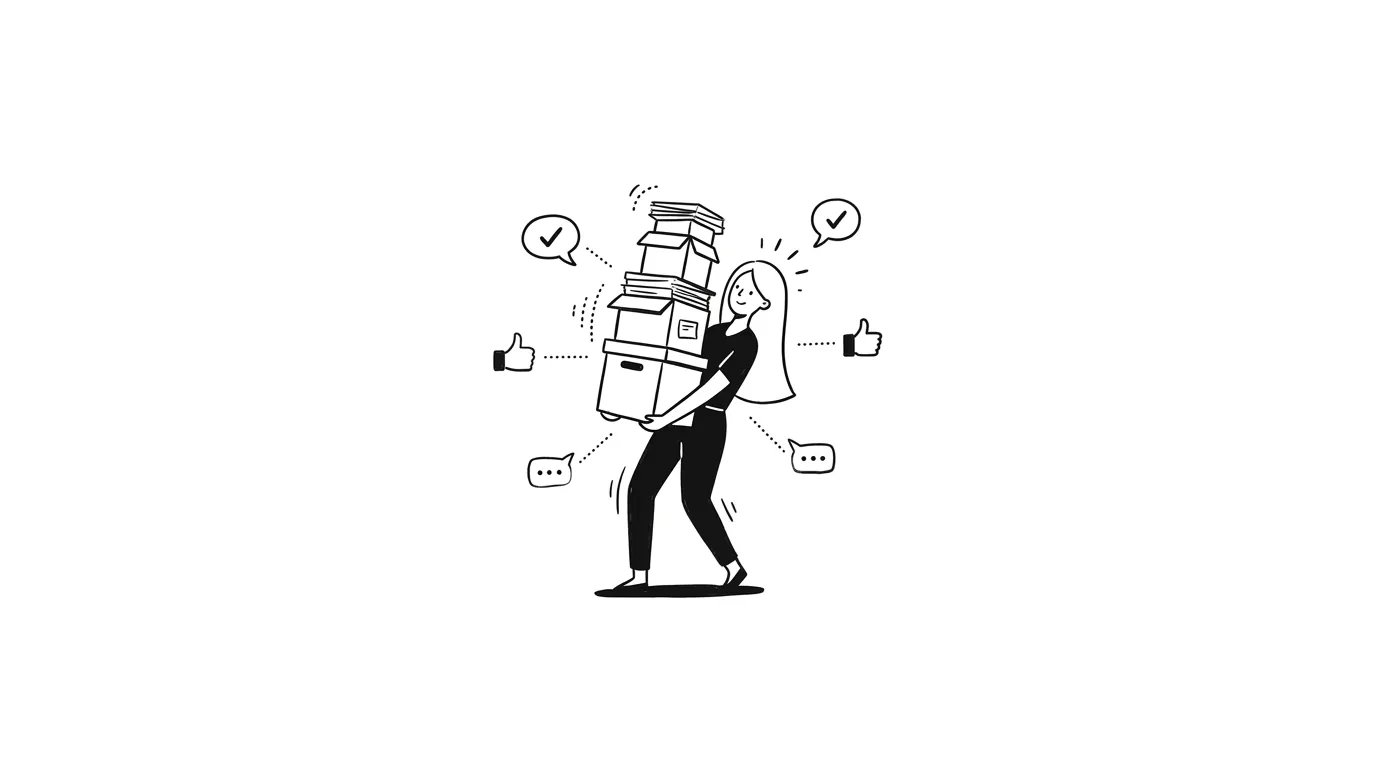
Do you feel like a nervous wreck at work: if your boss replies “OK” without an exclamation mark, you spend hours wondering if you are about to get fired? Or a colleague asks for a favor, and though you hate it, you say yes anyway and end up working late? This is people-pleasing exhaustion in HSPs. Your empathy is weaponized against you. Here is how to rebuild your shields.
You draft a long, polite message declining a last-minute request at work. You read it three times, feel the tone is too blunt, and delete it. You write another version explaining your reasons, read it, worry the excuses sound fabricated, and delete that too. Finally, you sigh, erase all your boundaries, and type: “Sure, I can take care of that.” As soon as you hit send, you slump in your chair, staring at your saturated calendar, feeling nothing but frustration and a sense of defeat.
This fear of saying no and over-analyzing others’ reactions is known as people-pleasing. For a Highly Sensitive Person (HSP), every workplace interaction is a high-cost emotional negotiation.
When Empathy Becomes an Overload: Mirror Neurons and Deep Processing
High Sensitivity is a biological neural trait. Neuroimaging (fMRI) studies show that HSP brains handle social scenarios using unique activation pathways:
- Mirror Neuron System Hyperactivity: Our mirror neurons are highly reactive. Entering an office triggers an automatic sweep of the emotional atmosphere, registering subtle cues—a manager’s sigh, a coworker’s tense shoulders, or a partner’s quiet impatience. We do not just see these emotions; we feel them in our own nervous system.
- Parahippocampal Gyrus Deep Processing: The HSP brain passes social details to the parahippocampal gyrus for deep analysis. A missing exclamation mark is decoded as: Are they angry? Did I make a mistake?
- Social Threat Vigilance: To quiet this uncomfortable social tension, we default to a “fawn” response—prioritizing harmony over our own well-being.
Your people-pleasing is not weakness; it is your brain detecting threat and driving you to use self-sacrifice to buy peace.
Building Your Shield: Somatic and Physical Boundary Management
Trying to force yourself to “act tough” is inefficient. Your mirror neurons will still make you feel uncomfortable when you decline requests. Instead, use physical, low-friction tools to lower the cognitive friction of setting boundaries.
1. Separation of Tasks: Use the Reframer to Calm Overthinking
When you worry that saying no will make people hate you, open the Cognitive Reframer in ADHDOS:
- Anxiety Brain: “If I decline this extra work, the client will think I am lazy and unprofessional, and they will hold a grudge.”
- Reframed Reality: “My current workload is saturated. Saying no preserves the quality of my active projects. Their reaction is their emotional task, not a measure of my professional worth.”
- Anxiety Brain: “My boss walked past without saying hi. I must have done something wrong.”
- Reframed Reality: “My boss might be tired, under-rested, or stressed about their own KPIs. I do not need to take responsibility for their shifting attention.”
2. Pinned Board Templates: Copy, Paste, and Move On
We often say yes because we cannot find the right words to decline under pressure. Do not waste executive energy composing replies on the spot. Keep standard decline templates pinned to your ADHDOS Board. When your social energy is low, forbid drafting. Copy-paste only:
- Declining Scope Creep: “Thanks for reaching out! This sounds like an interesting task. However, looking at my current commitments (Project A, Project B), I don’t have the capacity to take on new work this week. I appreciate you keeping me in mind!”
- Upward Prioritization: “Hi [Manager], received the new request. My calendar is currently booked with Projects A and B. If we need to integrate this task immediately, could you help me determine which of my current projects we should deprioritize? Thanks!”
Using these pinned Board cards as shields keeps you from draining your batteries over basic formatting, preserving your energy.
Quick Q&A
If I constantly set boundaries, won't I damage my promotion prospects?
Your career value is determined by your core outputs, not your compliance. Accepting everything and delivering compromised results is a far bigger career risk. Professionals who set boundaries and deliver high-quality outcomes hold much more bargaining power than a burnt-out 'yes-person' who is constantly overwhelmed.
I feel panic and heart palpitations whenever someone tags me. How do I stop?
This is a social threat response. Replying instantly makes you agree to things you regret. The rule is: 'take 3 deep breaths before opening.' Allow yourself to reply late. Reclaiming response delays is the first step to setting boundaries.
Will I get isolated if I refuse to engage in small talk?
Build a reputation as a focused professional. Keep 2-3 exit lines in your Board (e.g., 'That sounds interesting! I have a deadline coming up, so I must head back to write. Catch you later!'). Clear boundaries beat pretending, protecting your battery.
Recommended Reading
Struggling with Unwritten Social Rules? Painless Workplace Communication Guide for ASD Adults
Struggling to decode coworkers double meanings or spending hours drafting basic status updates? Reclaim your energy with structured templates.
Overwhelmed by a Tiny Setback? Emotional Dysregulation and Landing Techniques for HSP & ADHD
Does a minor frustration throw you into a catastrophic spiral? Understand neuro-divergent emotional dysregulation and learn somatic and cognitive landing tips.
Panic-Looping Over a "Got a Minute?" Message? Demystifying Rejection Sensitive Dysphoria (RSD) in ADHD
Does a vague critique or unanswered message throw you into intense panic and physical chest pain? Understand ADHD rejection sensitivity and how to land safely.