 ADHD OS
Exhausted and Hollow? How to Identify AuDHD Burnout and Unmask Safely
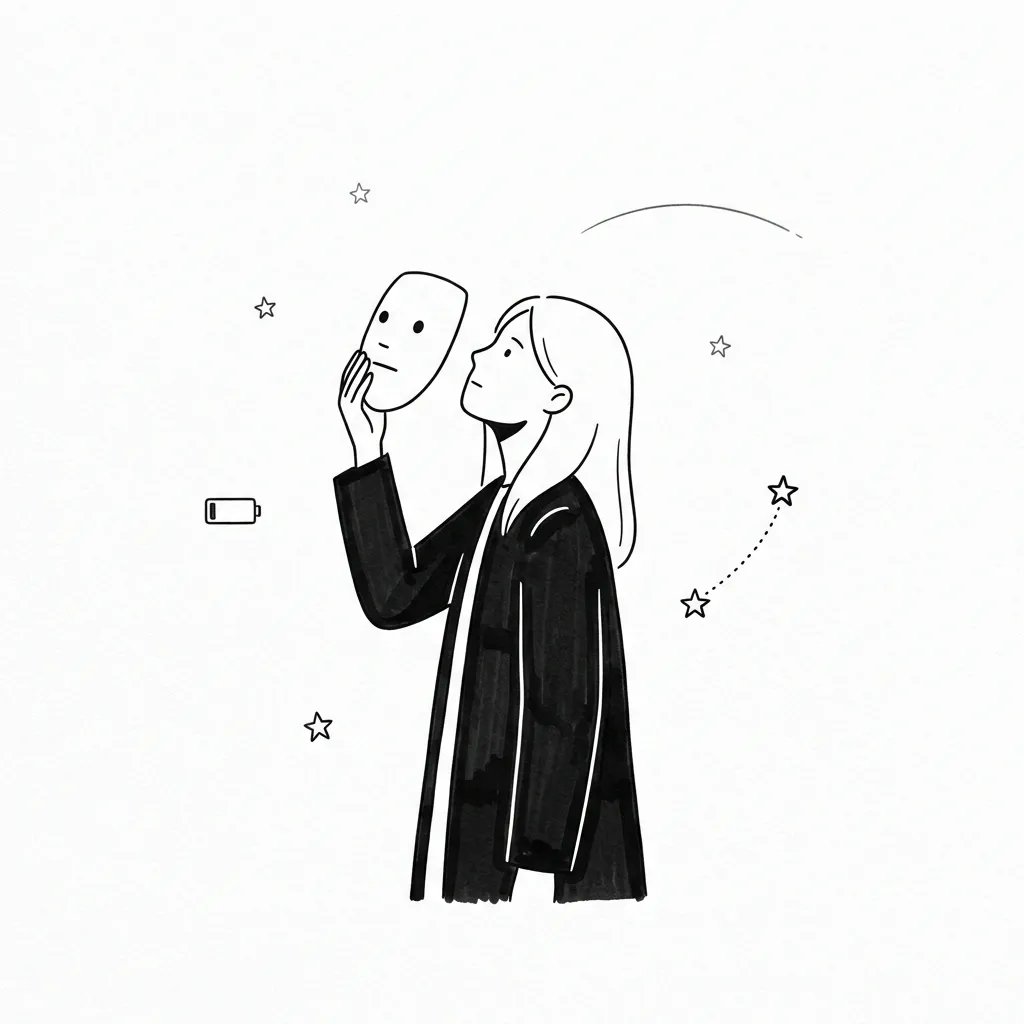
When the constant social masking of Autism meets the chronic executive dysfunction of ADHD, AuDHD individuals can fall into a devastating state known as autistic burnout. This is a total bankruptcy of physical and mental energy. To recover, simply “resting” is not enough; we must learn “safe unmasking.” This guide shows you how to recognize burnout warning signs, set up a personal unmasking sanctuary, and reset your nervous system using low-energy communication.
You just finished a seemingly perfect social gathering. You were witty, polite, nodded at the right times, and kept the conversation lively.
But the moment you get home and close the door behind you, you collapse onto the floor like an empty plastic bag.
You cannot move. Your brain feels like mush, and you can’t even make a decision as simple as “what to have for dinner.” To make matters worse, you become incredibly sensitive to everything: the refrigerator’s hum sounds like a drill, the window light hurts your eyes, and even saying a single word feels physically exhausting.
This state is not just “tiredness.” This is AuDHD burnout.
It is the product of Autistic social masking (forcing yourself to mimic neurotypical behavior to fit in) colliding with the chronic fatigue accumulated from fighting ADHD task paralysis.
To recover, we need a specialized guide designed for neurodivergent brains.
Step 1: Recognize the Unique Warning Signs of AuDHD Burnout
Often, we don’t realize we are entering burnout because we are so used to ignoring our bodies. But AuDHD burnout signals are clear and usually involve these dual traits:
- Plunging Sensory Tolerance: Noise, light, or the texture of clothing tags that you usually tolerate start causing physical distress or sudden rage.
- Regression of Social Skills: Suddenly, you don’t know how to interact with people. Eye contact becomes painful, and you might experience temporary mutism or stuttering.
- Loss of ADHD Management: Your focus vanishes entirely. The frequency of forgetting items doubles, and impulses to spend money or binge-eat rise significantly.
When you notice these symptoms, do not blame yourself for being “lazy.” This is your prefrontal cortex shutting down to protect itself.
Step 2: Build Your “Unmasking Sanctuary”
Recovering from burnout requires you to stop masking. But in a rule-based world, we cannot always let our guard down. Therefore, you must build a physical “Unmasking Sanctuary”.
This can be a corner of your bedroom, a space under a table draped with a blanket, or a bed with closed curtains. In this space, enforce these “no-pressure rules”:
- Sensory Minimalism: Put on your most comfortable earplugs or noise-canceling headphones. Turn off harsh lights and use a soft, warm nightlight instead. Wear your softest, loosest cotton clothes.
- Allow Stimming: When masking, we suppress our physical urges. In your sanctuary, let yourself rock your body, play with fidget toys, listen to the same few bars of a song on repeat, or roll around on the floor. These repetitive movements are physical ways for neurodivergent brains to discharge stress and reset.
- Zero Verbal Output: Mute all social notifications. Don’t speak, don’t watch complex shows. Watch familiar cartoons you’ve seen ten times, or simply stare at the wall.
Spending 30 to 60 minutes a day in this sanctuary acts as a deep degaussing for your nervous system.
Step 3: Write a “Low-Energy Communication Guide”
Often, we are afraid to “disappear” because of Rejection Sensitive Dysphoria (RSD). We worry that our partners, family, or friends will feel rejected by our silence, which makes us carry heavy guilt while trying to recharge.
Prepare a “low-energy guide” for the people close to you in advance. When you have energy, agree on a simple signal:
“When I say ‘my social battery is at zero,’ it means I need to stay in my room alone for a few hours without talking or making eye contact. It doesn’t mean I am mad at you or that our relationship is in trouble. My brain just needs to go offline. I will come out when my battery is charged.”
This allows you to disappear legally without spending valuable mental energy feeling guilty.
Drop the “Shoulds” and Embrace Reality
We are not machines built to run at full speed indefinitely.
For an AuDHDer, social masking might be a survival tool, but it shouldn’t be our permanent state.
Burnout is a reminder that you have worn the mask for too long, drifting too far from your body’s natural rhythm.
Let go of the expectations, take off the mask, and allow yourself to be a comfortable, neurodivergent individual in a safe space. Only when you accept your limits can your tired brain truly begin to heal.
Quick Q&A
How do I distinguish between common ADHD paralysis and deep autistic burnout?
Look at your response to 'novelty.' If it is common ADHD task paralysis, you might struggle with chores, but if a friend invites you to play a new game or go somewhere exciting, you will instantly feel energized. If it is autistic burnout, you will feel zero interest even in your favorite activities, and any new stimulation—even a happy one—will feel overwhelming or painful.
I feel childish or weird when unmasking and stimming. How do I stop this?
This shame is the result of years of social conditioning. Think of stimming (rocking, fidgeting, staring) as a natural physical reset, like a dog shaking off water. It isn't childish; it is a physical release of excess neurological charge. You can start with subtle movements, like rubbing a worry stone in your pocket, until your body feels safe.
What if I am burned out but still have to work and cannot take time off?
Implement 'micro-unloading' at work. Dim the lights at your desk or wear discreet earplugs. During lunch, skip socializing and find a quiet corner to close your eyes. Cancel all optional social plans after work and go straight home to rest. Do only what is necessary to get by at work, skipping pleasantries and conserving every ounce of energy.
Recommended Reading
Craving Routine or Seeking Novelty? 3 Ways to Balance the AuDHD Tug-of-War
Stuck between craving structure and seeking new dopamine hits? Discover how to balance the Autism and ADHD tug-of-war using flexible routines, dopamine menus, and baseline protocols.
Monotropic Charging: Using Your Special Interests to Recover from Autistic Burnout
Special interests are powerful neurodivergent refueling stations. Discover how to intentionally dive into your passions to recover energy without neglecting basic physical needs.
Stuck Between Novelty and Stability: Breaking the AuDHD Career Burnout Cycle
Why AuDHDers shine early in their careers then hit a wall. Design a "multi-thread sideline" to feed ADHD curiosity while maintaining Autistic career security.