 ADHD OS
Craving Routine or Seeking Novelty? 3 Ways to Balance the AuDHD Tug-of-War
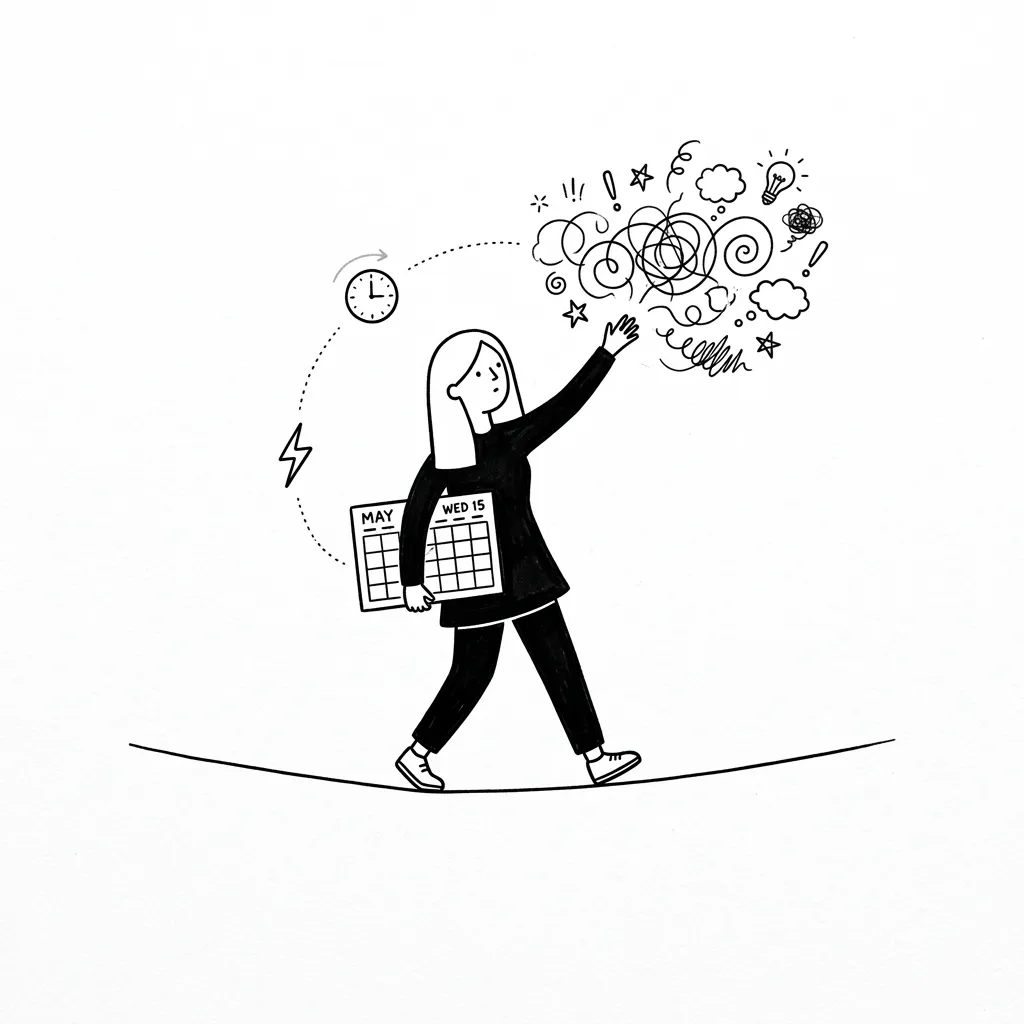
As an AuDHDer (Autistic + ADHDer), your brain hosts a daily tug-of-war: your Autistic side (ASD) craves order, predictability, and routine, while your ADHD side begs for novelty, stimulation, and dopamine. This internal conflict often leads to severe task paralysis. This post provides 3 practical compromise tools—“Flexible Routines,” “Dopamine Menus,” and “Survival Baseline Protocols”—to help calm the inner war and build a low-friction, balanced life.
You wake up with ambitious plans. You spend an hour charting your day down to the minute in a colorful planner, seeking order and safety—that is your Autistic side seeking predictability.
But the moment you sit down to execute the first step, your ADHD side screams: “This is boring! I don’t want to do this! Let’s check our phone or look into something else entirely!”
In the end, you go nowhere and do nothing. You sit paralyzed, watching time slip away, drowning in guilt and anxiety.
This is the daily life of an AuDHDer.
Two extremes live in our heads: one demands absolute certainty, while the other seeks chaotic novelty. They clash in our prefrontal cortex, resulting in a double loss. We miss out on the peace of routine and the joy of spontaneity, leaving us exhausted.
But this internal conflict is not unsolvable. We just need to stop forcing these traits to eliminate each other and instead establish a “peace treaty.”
Strategy 1: Replace Rigid Schedules with “Flexible Routines”
For AuDHDers, traditional time management is a disaster. If our Autistic traits don’t get a routine, sensory anxiety spikes. But if our ADHD traits are boxed into a rigid schedule, we feel trapped and rebel.
The solution: Establish “macro-fixed, micro-fluid” Flexible Routines.
Break your day into a few core “ritual anchors,” but do not attach strict times or rigid steps to them. For example:
- Morning Anchor: Wake up, drink a glass of water, and stand by the window for three minutes.
- Work Anchor: Put on noise-canceling headphones and play a specific white noise playlist before typing.
- Night Anchor: Put your phone in the living room and change into pajamas before turning off the lights.
How you fill the time between these anchors is up to your ADHD traits. Depending on your dopamine level, decide whether to start with task A or B, gameify your work, or listen to upbeat music while pacing.
The anchors give your Autistic side a sense of safety and control, while the micro-freedom keeps your ADHD side from feeling chained.
Strategy 2: Feed ADHD with a “Dopamine Menu”
When Autistic traits take over, we might make life so predictable that it feels like a train locked on rails. This suffocates the ADHD side, which eventually retaliates with “forced burnout.” To prevent this, we must feed our ADHD side safe dopamine.
Create a personalized “Dopamine Menu” by listing low-barrier activities that stimulate your brain:
- Starters (Under 5 minutes): Dance wildly to a fast-paced song; stand in the sun; eat a super sour candy.
- Mains (20-30 minutes): Take a walk with no destination; mold a small clay figure; read a fantasy chapter.
- Desserts (To be consumed in moderation): Watch funny short clips; browse gear forums.
When your ADHD side gets bored and restless, don’t wait for it to drag you into procrastination. Choose a “starter” or “main” from your menu instead.
Think of it as building a legal “playground” for ADHD inside the castle built by ASD.
Strategy 3: Activate Your “Survival Baseline Protocol”
On some days, the internal tug-of-war escalates into a full-blown war, draining your executive function to zero. You might fall into severe autistic burnout or ADHD paralysis.
During these low-battery moments, trying to “push through” is the worst thing you can do. You need to activate a “Survival Baseline Protocol”.
A survival baseline means dropping societal expectations and running on minimal energy:
- If washing dishes feels overwhelming, use disposable plates.
- If cooking takes too many steps, order simple takeout or eat bread.
- If you can’t go out to exercise, lie in bed and let yourself stare at the ceiling.
Tell yourself: Under a survival baseline, staying alive is the only goal. Drop all productivity demands. When you stop forcing yourself to please either side, your energy will slowly return.
The Art of Compromise
Accept that you are a “hybrid vehicle.” You are neither pure ASD nor pure ADHD.
When you stop trying to be a robot that follows a schedule or a creator who is always passionate, you’ll realize this polarization can be an asset.
The deep focus and systemizing mind of your Autistic side, combined with the intuitive jumps and curiosity of ADHD, can create amazing things in a low-friction environment.
Stop fighting yourself. Hold your own hands, and take it slow.
Quick Q&A
How do I tell if my Autistic routine needs aren't met, or if my ADHD is low on dopamine?
Pay attention to the type of anxiety you feel. If it's ASD, you usually feel overwhelmed, sensory overloaded, or want to hide in a closet and shut everyone out. You need to reduce stimulation and return to familiar, safe routines. If it's ADHD, you feel restless, bored to tears, and your brain is spinning but you don't want to do anything. You need low-barrier dopamine stimulation, like changing environments or stepping outside.
I try to make flexible plans, but if one step gets disrupted, I shut down. What should I do?
This is the 'all-or-nothing' rigid thinking common in ASD. Try building a 'Plan B' backup. For instance, define your 'morning routine' in two ways: a perfect version (stretch, make coffee) and a minimalist version (just drink water). Tell yourself that executing the minimalist version still counts as a win. This reframes a disruption as switching to Plan B rather than failing.
My family thinks I'm either extremely rigid or extremely lazy. How do I explain this?
Explain it as having different 'energy modes.' Tell them: 'My Autistic side is like an operating system that needs strict commands, and if they conflict, I freeze. My ADHD side is like a battery with unstable power, and when it is dry, I can't move.' Both are part of my neurology, and I need different ways to manage them.
Recommended Reading
The Good Girl's Fawn Antidote: A Boundary Guide for Neurodivergent Women
Fawning, rejection sensitive dysphoria (RSD), and social masking often leave ADHD and autistic women burnt out. Here is a guide to building gentle, friction-free personal and workplace boundaries.
“Stop Parenting Me”: Healing the Parent-Child Dynamic in ADHD Relationships
Forgetting chores, missed promises, and zoning out... How do ADHD couples break free from the exhausting parent-child dynamic? Discover the executive dysfunction behind relationship friction and practical, friction-free systems to rebuild partnership.
The Kitchen is an Executive Function Test: A Zero-Brainpower Guide to Meal Prep
Shopping, washing, chopping, multitasking, and washing dishes... cooking is a brutal test of executive function. Learn how to drop traditional cooking rules and feed yourself with a low-friction, zero-brainpower prep system.