 ADHD OS
The AuDHD Planning-Action Paradox: How to Break the Loop of Perfect Plans and Zero Action
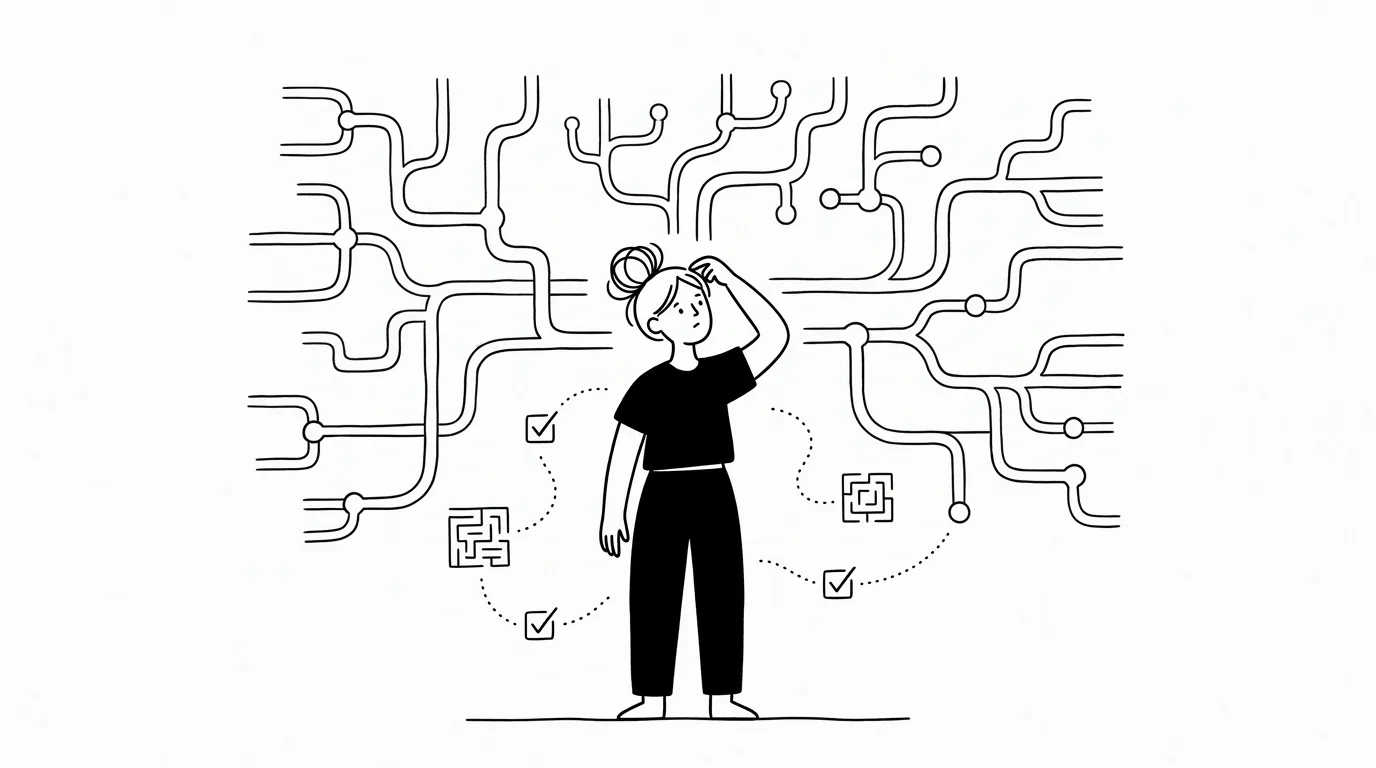
Have you ever been trapped in this frustrating loop: to tackle a task, you spend two hours crafting a gorgeous, step-by-step plan in Notion, broken down to the minute. Yet, the instant you finish and try to execute, your brain feels cast in lead. You find yourself scrolling social media or glued to the couch, unable to start. This paradox is incredibly common in AuDHD individuals. When the autistic need for structured perfectionism meets ADHD dopamine withdrawal, the action engine shuts down. This guide shows you how to build a low-friction “warm-up” protocol to escape the deadlock.
You sit down with high ambitions and open your laptop.
To conquer your procrastination, you decide to make a plan first.
As an adult with both autistic and ADHD traits (AuDHD), your ASD side quickly takes over, doing what it does best: systemizing. You list every step, foresee potential bottlenecks, and arrange your timeline with neat color-coded blocks.
Looking at this flawless schedule, you feel a brief sense of control and peace.
But the moment you try to cross off the very first task, your ADHD side starts screaming. It finds the schedule too predictable, boring, and utterly devoid of stimulation.
Dopamine levels in your prefrontal cortex plummet, sending you straight into severe task paralysis.
You end up staring at your perfect plan while mindlessly browsing social media for hours in a state of quiet panic.
1. Why the AuDHD Brain Freezes at the Finish Line
This “perfect plan, zero action” cycle is a friction unique to the AuDHD nervous system:
- ASD Anxiety Defense: The autistic brain detests uncertainty. To buffer anxiety, it builds massive, intricate plans. It feels safe only when it has mentally pre-run every scenario.
- ADHD Reward System: The ADHD brain runs purely on novelty and urgency. By the time the ASD side finishes planning, the task has lost all shiny newness. Instead, the long sequence of steps looms like a cognitive mountain, starving the brain of the dopamine needed for initiation.
Simply put: The ASD side uses detailed planning to find safety, but the plan itself becomes a terrifying monster that paralyzes the ADHD side.
2. Physical Separation: Keep Planning and Execution Apart
To break this cycle, the first rule is to physically sever the connection between planning and doing.
If you are in “Planning Mode” (managed by the ASD side), do not expect yourself to execute on the same day.
- Plan Today, Execute Tomorrow: Split planning and doing into different days or times. Group chores on Sunday, and on Monday, blindly pull one item with your noise-cancelling headphones on.
- Hide the Master List: Once your plan is complete, close the complex Notion page. When executing, only allow the current micro-step to exist in your field of vision (e.g., a tiny sticky note that says “Open document”). Do not let your ADHD side see the mountain of upcoming steps.
3. Launching Your “Warm-up” Protocol
When you feel physically stuck, do not command yourself to “write the report” or “clean the room.” Use low-friction physical cues instead:
🚀 The Micro-Step Launch
Rename your tasks to make them harmless and absurd:
- Instead of “Write thesis” → “Open Word and type three random letters.”
- Instead of “Go to the gym” → “Put my feet in my sneakers and stand for 2 minutes.” By dropping the initiation barrier to near zero, you bypass the brain’s dopamine gatekeeper. Once the physical momentum starts, ADHD hyperfocus can take over naturally.
🚀 The 5-Minute Hourglass
Place a physical 5-minute hourglass on your desk:
“I will work for only 5 minutes. When the sand runs out, if I am still in pain, I permit myself to close the laptop and lie down with zero guilt.” This permission to retreat reduces the ASD fear of feeling trapped, while the short duration satisfies the ADHD craving for low cognitive friction.
Do not try to move the mountain. Just pick up the smallest pebble near your hand.
Quick Q&A
What if I use the micro-step method and still freeze standing in front of my sneakers?
If micro-steps fail, it means your physiological energy is in a deep deficit (likely due to sensory overload or low blood sugar). Drop the plan immediately. Drink a glass of warm sweetened water or eat some chocolate, and lie down in a quiet room for 20 minutes. Rigid freezing is a biological warning; recovery and sensory deprivation are your only priorities.
If my plan gets disrupted even slightly, I panic and abandon everything. How do I plan?
Avoid rigid time-based schedules (e.g., 'Do X at 2 PM'). For AuDHD, a 'mystery box' approach works better: list 3 tasks for the day without ordering them. Choose whichever task catches your ADHD interest in the moment. Accomplishing any one of them satisfies the ASD need for order while respecting the ADHD dopamine flow.
Recommended Reading
Sensory Overload Meets Clutter? A Low-Friction Organizing Guide for AuDHD Spaces
Do things disappear from your mind once tucked into drawers? Yet leaving them out causes visual overwhelm? Explore this low-friction organizing guide designed for AuDHD.
Disconnected from Your Body? Designing a Low-Friction Physical Maintenance OS for ASD
Struggling to feel hunger, thirst, or fatigue due to hyposensitive interoception. Set up simple external feedback loops and safe food systems to preserve basic physical health.
Stuck Between Novelty and Stability: Breaking the AuDHD Career Burnout Cycle
Why AuDHDers shine early in their careers then hit a wall. Design a "multi-thread sideline" to feed ADHD curiosity while maintaining Autistic career security.