 ADHD OS
Disconnected from Your Body? Designing a Low-Friction Physical Maintenance OS for ASD
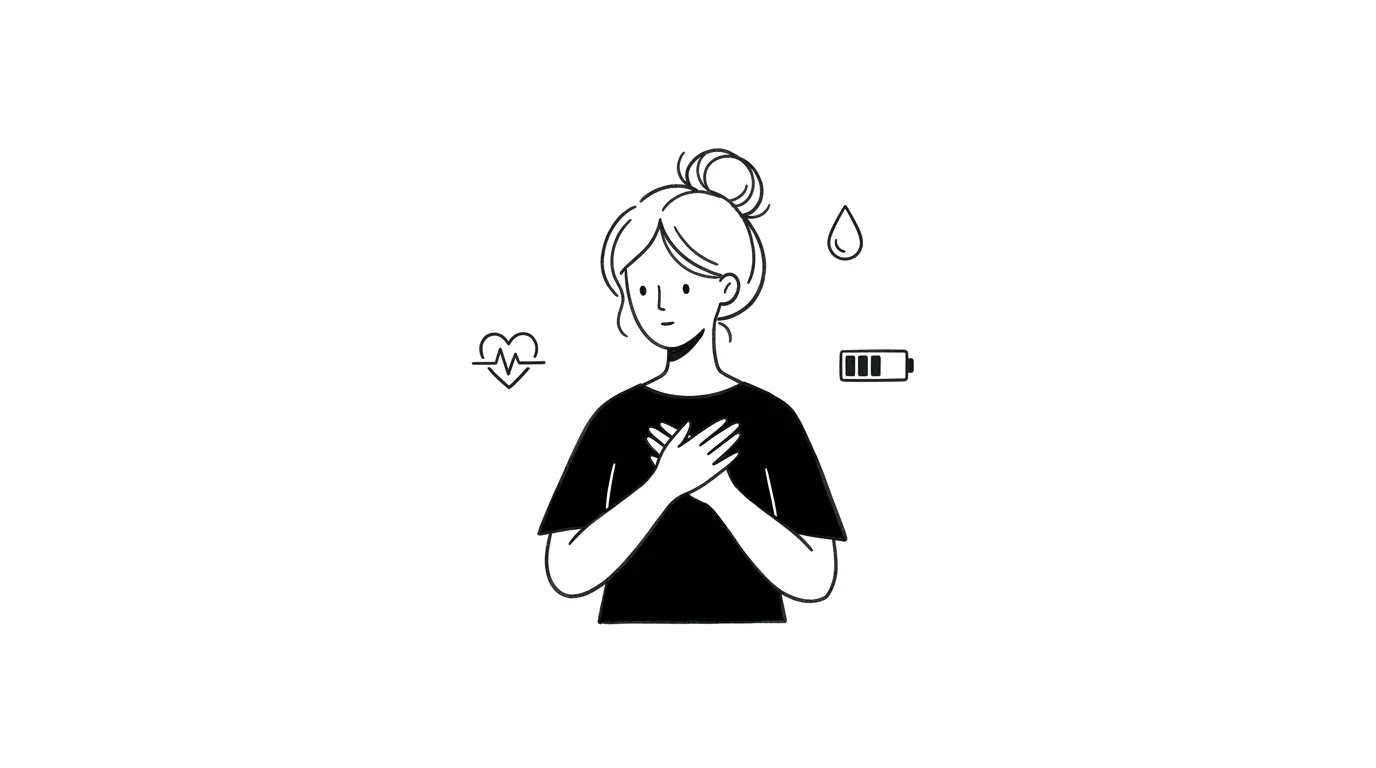
Do you sit down at your computer in the morning, lose track of time, stand up at night feeling intensely dizzy, and realize you haven’t had a sip of water, a bite of food, or used the restroom all day? Many autistic individuals experience hyposensitive interoception—the inability of the brain to receive timely distress signals from inside the body. Often, we only realize our limits when extreme stomach pain or dehydrating migraines set in. This guide will show you how to build a low-friction physical maintenance system using external feedback loops and “safe food” banks.
For most people, drinking when thirsty and eating when hungry are simple, automated physical reflexes.
But for those with autistic traits, these basic needs represent a major cognitive obstacle.
Beyond sight and sound, humans possess an eighth sensory system: Interoception.
Located in our organs, muscles, and blood vessels, interoceptive receptors report internal states—heart rate, temperature, hunger, thirst, fullness, and the need to urinate—directly to the brain.
In an autistic brain, however, the activation threshold for these internal signals is set exceptionally high.
Mild hunger or dehydration cues are simply filtered out as background noise. The brain only sounds the alarm at the absolute limit—when blood sugar drops enough to cause hand tremors, severe dehydration triggers a migraine, or stomach pain becomes unbearable.
Over time, this erodes your physical baseline, leaving you highly vulnerable to autistic burnout.
1. Externalizing Your Internal Feedback Loops
Since your internal sensors are unreliable, you must externalize your physical reminders:
⏰ Protocol 1: Physical Anchors (Not Thirst Cues)
Do not wait to feel thirsty. Anchor hydration to fixed daily activities:
- The Restroom Refill: Make it a rule: Every time you return from the restroom, you must fill and drink half a cup of water.
- The Hourly Level Marker: Keep a large, clear 2L water jug marked with time lines directly in your line of sight. If the water line hasn’t dropped to match the current hour, drink immediately. No thinking required.
⏰ Protocol 2: The 3-Hour Restroom Timer
Due to poor bladder sensation, autistic individuals frequently hold urine for dangerous lengths of time.
- Set a repeating alarm every 3 hours. When it rings, go to the restroom immediately, regardless of whether you feel the need. This prevents bladder strain and forces you out of prolonged, static postures.
2. Setting Up a “Safe Foods” Emergency Bank
In addition to forgetting to eat, autistic individuals often experience extreme sensory sensitivities to certain textures or flavors (e.g., mushy vegetables or complex mixed dishes).
When cognitive battery levels hit zero, the sensory friction of eating feels too high, causing us to starve instead.
To solve this, build a bank of Safe Foods:
- What is a Safe Food?: Foods you can eat in any state—even during severe burnout—without sensory revulsion, requiring zero cooking.
- Your Survival Stash: Choose texture-homogeneous, bland options like meal-replacement shakes, a specific brand of toast, smooth protein powder, or plain oatmeal.
- Frictionless Accessibility: Keep these stashed in abundance. In moments when standing up feels impossible, tearing open a meal shake to raise your blood sugar quickly is infinitely better than forcing yourself to cook.
3. Respecting Your Body: Minimum Baseline Survival
Caring for your body is not about achieving a flawless, aesthetic wellness lifestyle.
For neurodivergent individuals, the golden rule is minimum baseline preservation.
Eating instant noodles is better than starvation-induced ulcers; drinking a sweetened juice is better than severe dehydration.
Allow yourself to use the lowest-friction, lowest-stimulation methods to get basic nutrients into your body.
Quick Q&A
I get so absorbed in work that I ignore alarms and still forget to eat/drink. What should I do?
If software alarms fail, switch to physical interception. Place your water glass directly on your arm's path to the keyboard, forcing you to bump into it to type. Or paste a bright neon sticky note saying 'DRINK' right in the center of your screen. Turning reminders into physical obstacles makes them impossible to ignore.
Sometimes I don't feel hungry at all, and other times I overeat to the point of pain because I miss fullness cues. How do I fix this?
This is a common manifestation of delayed fullness signals. The most reliable fix is 'portioned eating.' Do not wait for your stomach to say it's full. Before eating, portion out a set amount into a separate plate or bowl. Once the bowl is empty, physically leave the table, replacing internal signals with visual portions.
Recommended Reading
Struggling with Unwritten Social Rules? Painless Workplace Communication Guide for ASD Adults
Struggling to decode coworkers double meanings or spending hours drafting basic status updates? Reclaim your energy with structured templates.
When the Brain Power Cuts Out: A Guide to Autistic Meltdown and Shutdown Recovery
Decoding the stress responses of autistic meltdowns and shutdowns. Learn the neurological triggers and implement low-friction SOS protocols for self-rescue and support.
No More Mind Reading: Establishing Direct Communication Agreements for Autistic Partners
How to navigate relationship subtext and non-verbal cues. Create clear, explicit communication agreements to replace guessing games and emotional friction.