 ADHD OS
Stuck Alone? How to Break ADHD Task Paralysis with Body Doubling and Dopamine Environments
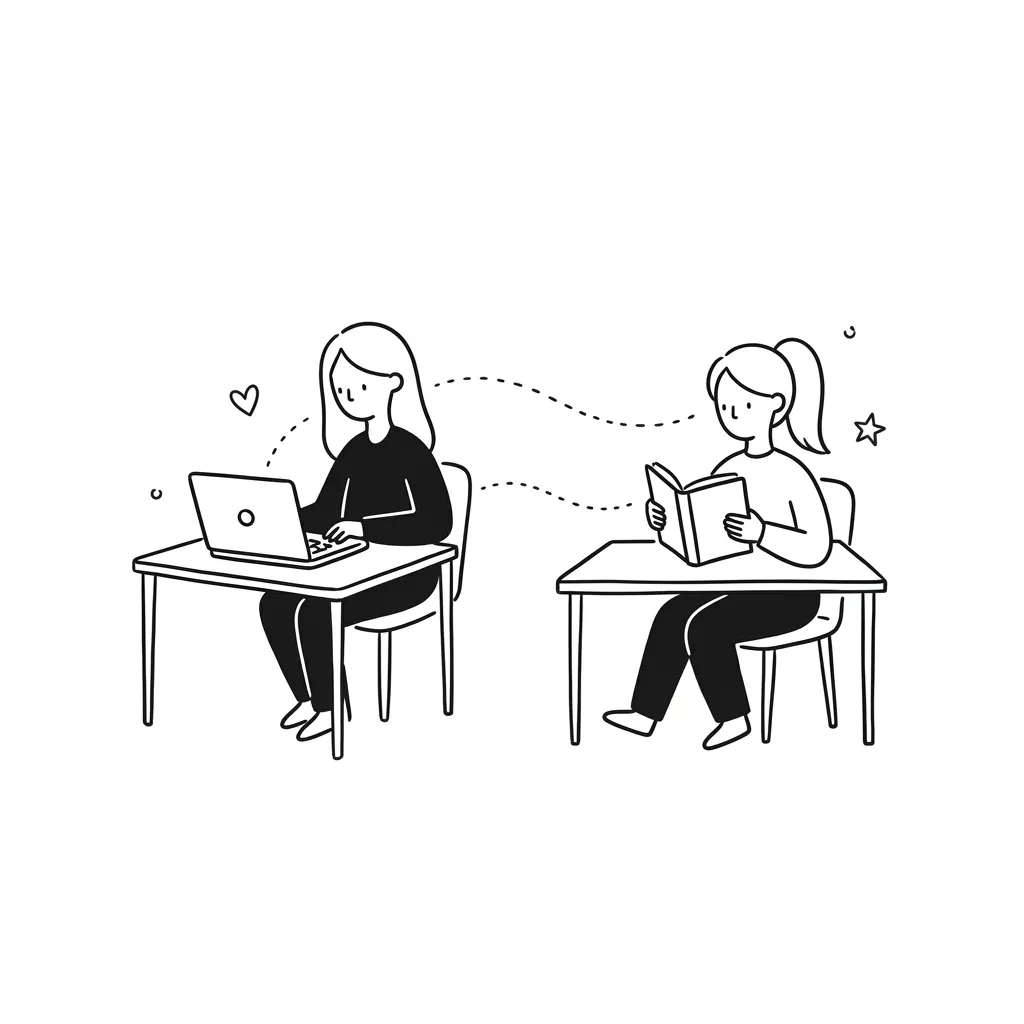
When you are completely alone, the silence in a room can feel heavy. This guide explains how to use “Body Doubling” and dopamine-optimized micro-environments to lower cognitive friction and regain your ability to take action.
1. Why Being Alone Can Feel Like a Trap for ADHD Brains
You probably had a clear plan for today. You wanted to clean your desk, reply to overdue emails, or finish that proposal. But the moment you are alone in your room, the silence turns into an invisible wall.
You fall into a frustrating loop: you know you need to get moving, yet you keep adjusting your chair, picking up your phone, putting it down, and staring blankly at the wall. This isn’t laziness—it is a lack of a crucial “environmental anchor.”
In clinical psychology and within the ADHD community, a highly effective coping strategy is known as Body Doubling.
Simply put, having another person in the same space—even if they are completely silent and working on their own things—tends to quiet the alarm systems in an ADHD brain.
To neurotypicals, this might sound counterintuitive: “Isn’t another person just a distraction?” But for us, starting a task in isolation often causes the prefrontal cortex to freeze due to a lack of baseline stimulation.
Another person’s presence provides a low-pressure external structure and a mirror effect. It acts as a temporary executive support system, anchoring you securely in the present moment.
2. Three Low-Friction Ways to Build Your Own “Doubling” Setup
You don’t need a friend physically sitting with you every single day. By designing your environment and leveraging digital tools, you can easily replicate this mechanism:
Try “Virtual Doubling” with Silent Streams
If you don’t have a study partner nearby, turn to online video communities. Look up live streams or recorded videos with tags like “Study With Me” or “Work With Me.” Seeing someone else on screen quietly reading or typing sends a strong visual cue to your brain: “Now is the time to focus, and you are not alone.”
Create a Dopamine-Optimized Micro-Space
For ADHD brains, “out of sight, out of mind” is a literal reality. If your desk is cluttered with old packaging, wires, and scrap paper, your brain will shut down from cognitive overwhelm. Take two minutes to clear a tiny visual zone—just your laptop and a cup of water. Place a single physical trigger related to your task right in front of you. Keep everything else out of your immediate line of sight.
Use Ambient Human Sounds
Complete silence can actually make an ADHD brain hyper-vigilant, causing you to distract yourself with minor background noises. Try listening to ambient cafe sounds, gentle rain, or white noise in your headphones. These low-level human activity sounds subtly mimic the comforting effect of body doubling without consuming your active attention.
3. Survival Baseline: Presence is Enough
Do not expect every “body doubling” session to turn you into a productivity machine.
There will be days when, even with someone sitting right next to you, you still cannot start. When that happens, accept it. Allow yourself to simply share the space without pressure. Letting go of the guilt protects you from slipping into Autistic Burnout.
Simply showing up and putting your feet on the floor is already a meaningful win.
Quick Q&A
What is body doubling and why does it help ADHD?
Body doubling is working on tasks in the presence of another person who is also working. For ADHD brains, the quiet presence of someone else provides a social mirror and a gentle external anchor, reducing startup anxiety in the prefrontal cortex and providing a reassuring sense of accountability.
How can I use this if I have to work completely alone?
You can use virtual body doubling by searching for 'Study With Me' videos online, or by joining digital focus rooms. Recreating the environment with cafe background noise and clearing your desk to leave only a single task-related object also helps simulate this effect.
References
- Barkley, R. A. (2015). Attention-Deficit Hyperactivity Disorder: A Handbook for Diagnosis and Treatment. Guilford Publications. PubMed Link - Discusses how external structures and social mirroring compensate for executive function deficits in ADHD.
- Kooij, J. J. S. et al. (2019). European Consensus Statement on Diagnosis and Treatment of Adult ADHD. BMC Psychiatry. BMC Psychiatry Reference - Emphasizes the importance of environmental modifications and non-pharmacological structures in adult ADHD.
- Nigg, J. T. (2006). What Causes ADHD? Understanding the Neurobiology and Psychology of the Disorder. Guilford Press. DSM-5 Related Research - Explores how low-level sensory inputs (like ambient noises) help regulate arousal and focus in neurodivergent individuals.
Recommended Reading
Waking Up in a Fog? How to Gently Boot Up Your ADHD Brain in the Morning
Stuck in heavy brain fog for hours after waking up, struggling to even get dressed? Learn how to align with your energy to boot up gently.
Time Blindness Messing Up Your Day? Visualizing Time for Chronically Late ADHD Brains
Cannot perceive how hours slip away? Or stuck in a painful "waiting mode" freeze before appointments? Discover hacks to tame ADHD time blindness.
Running Too Many Threads in Your Brain? Resolving ADHD Multitasking Paralysis
Brain spinning in multi-threaded overload while your body sits frozen doing nothing? Learn how to clear your prefrontal memory to break the freeze.