 ADHD OS
Stuck in Decision Overload with Household Chores? How to Break the Loop with an Energy Menu
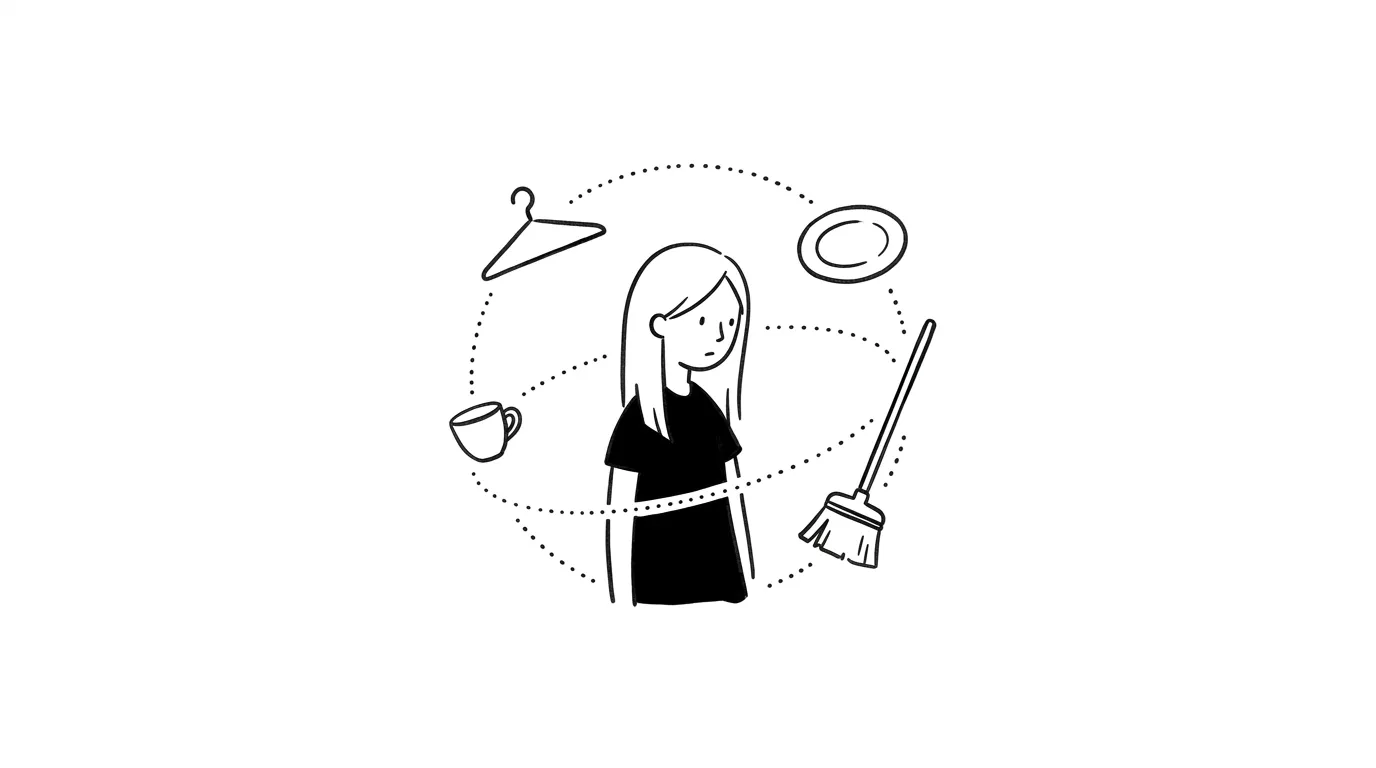
Ever stood in the middle of a messy room, staring at dirty dishes, laundry pile, and dusty floors, only to give up and lie back down? It is not laziness; it is executive dysfunction leading to acute decision overload. Too many choices overwhelm your prefrontal cortex. This guide offers a low-friction algorithm to dump cognitive load and get moving gently.
You look around your living room.
Dishes are piled in the kitchen sink, clean clothes are dumped on the chair waiting to be folded, there is dust on the floor, and three empty coffee cups are sitting on your desk.
You tell yourself: “I should clean this up.”
But the moment you try to start, a storm of tiny questions hits your brain: “Should I wash the dishes first, or start the laundry? If I do the laundry, do I need to sort light and dark colors first? But I really want to sweep the floor… Wait, maybe I should carry the coffee cups to the kitchen first?”
Dozens of steps and micro-choices clash in your mind. Eventually, your brain goes numb, and you feel physically dizzy. You give up, lie down on your bed, scroll your phone, and drown in a wave of self-blame.
This state is known as decision overload (or decision fatigue) caused by executive dysfunction.
For ADHD brains, the cognitive cost of making a decision often far outweighs the physical cost of the action. Keeping all these loose threads hanging in your active memory quickly burns out your prefrontal cortex.
We need proactive cognitive unloading and smart coping hacks.
Unload Your Brain: The First Dump
When you want to start tidying up, never plan inside your head. Active memory is a limited resource. We need to physically offload it.
You can directly use the Brain Dump tool in ADHDOS.
Find a place—whether a sheet of paper or the digital dump box inside ADHDOS—and empty every single micro-task out of your head:
- “Wash dishes”
- “Tie up garbage bag and throw it out”
- “Throw dark clothes in the washing machine”
- “Move coffee cups to the kitchen”
Once these items are cleared from your brain’s “RAM,” your cognitive load drops instantly. Your prefrontal cortex no longer has to hold multiple tasks at once and can focus on one single point.
The Low-Energy Chore Algorithm
Even with a list, starting can feel daunting. Use these three algorithm rules to bypass the brain’s resistance:
1. Practice “Good-Enoughism”
Discard the fantasy of a perfectly clean home. Don’t want to fold laundry? Toss them into open baskets. That’s good enough. Don’t want to wash all the dishes? Just wash one plate and fork you need for dinner, and leave the rest to soak. That’s good enough. Anything worth doing is worth doing poorly. Completion is far better than perfection.
2. The Three-Option Filter
Do not compare which task is more urgent. Pick the top three items from your dump list, roll a die, or toss a coin. Close your eyes and commit to the chosen task for just 30 seconds. Bypassing logical comparison tricks your brain’s reward predictor.
3. Rhythms Over Regimen: The Energy Menu
If your battery is at 10%, never attempt “laundry,” which requires five distinct steps. Open the Energy Menu in ADHDOS. Choose a micro-action that takes only 2% energy, such as “move coffee cups to the kitchen sink.” Once that single, low-barrier step is done, you are legally allowed to rest. Often, this tiny momentum is enough to gently carry you into the next action.
Next time your home gets messy, stop telling yourself you are lazy. Acknowledge that your brain is overloaded, dump your thoughts, and let yourself practice good-enoughism.
Quick Q&A
Why do chores feel physically heavy when I want to do them?
Because your brain treats 'cleaning' as a giant, vague, step-heavy monster. This cognitive weight triggers your fight-or-flight response, leading to task freeze. Breaking it down via a Brain Dump and lowering the startup cost removes this threat response.
Will my house become a complete mess if I adopt good-enoughism?
Actually, striving for perfection leads to complete avoidance, making your house messier. Good-enoughism ensures your home stays functional at a 60% level without draining your executive battery, making it a sustainable way to live.
Recommended Reading
Running Too Many Threads in Your Brain? Resolving ADHD Multitasking Paralysis
Brain spinning in multi-threaded overload while your body sits frozen doing nothing? Learn how to clear your prefrontal memory to break the freeze.
Shopping for Quick Dopamine Hits? How to Curb ADHD Impulsive Buying Without Self-Deprivation
Late-night online shopping leaving you with items you do not need and bills you regret? Understand ADHD impulsivity and align your dopamine.
Overwhelmed by a Tiny Setback? Emotional Dysregulation and Landing Techniques for HSP & ADHD
Does a minor frustration throw you into a catastrophic spiral? Understand neuro-divergent emotional dysregulation and learn somatic and cognitive landing tips.