 ADHD OS
Hoarding Hundreds of Bookmarks You’ll Never Read? Cognitive De-cluttering for ADHD Collectors
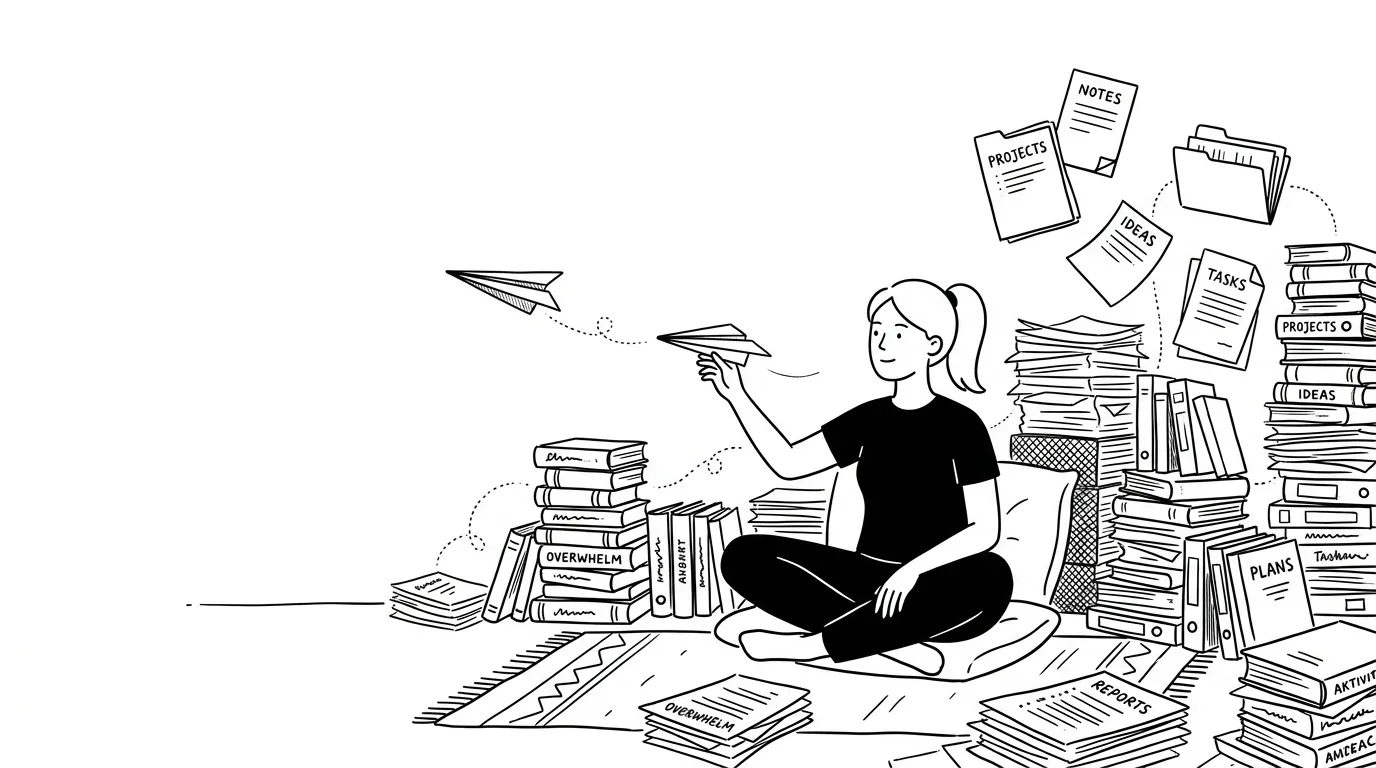
Do you have a bookmark folder crammed with thousands of “save for later” links, or a browser header overflowing with tabs shrunk to tiny icons? Out of fear of forgetting and distraction, ADHD brains easily fall into collecting loops. This isn’t self-improvement; it is a massive cognitive weight on your prefrontal cortex. Here is a guide to cognitive unloading.
“This tutorial is great, bookmark it.” “This tool looks amazing, save it.” “This essay is deep, I must read it when I have time.”
By nightfall, your bookmark list has grown by dozens of items. Yet, deep down, you know you will never click on 95% of these links again.
Ironically, these lists don’t make you wiser; they become a silent source of anxiety. Every time you open your browser, seeing that pile of unread materials triggers shame: “Why am I so distracted? Why can’t I finish my learning plans?”
In neurology, this is a “veiled defense mechanism.”
When faced with vast, complex knowledge, the ADHD brain anticipates a massive cognitive cost, leading to avoidance.
By clicking “Save,” your brain gets a cheap, instant hit of control: I have acquired this knowledge. But in reality, you are just pushing the learning pressure onto your future self.
We must practice cognitive unloading and apply good-enoughism to release bookmark pressure.
3 Rules to Unload Your Bookmarks Folder
Stop hoarding under perfectionism. Build a low-friction information buffer:
1. Close Your Tabs Physically
Do not treat browser tabs as your to-do list. Close all the tabs you have kept open for days “to read later.” If you are afraid to lose them, dump them into the Board in ADHDOS. The core of Board is “immediately usable without redirects”—transforming your “read later” into “use now.” It supports direct playback and contextual notes, reducing friction so you never have to play the painful “information manager.” Offloading this hoarding pressure drops anxiety instantly.
2. Practice “Good-Enoughism”
Stop trying to read everything you bookmark. Drop your expectations from 100% to 10%. For a massive, 10,000-word article, spend 30 seconds scanning the headings and intro, get the gist, and walk away. That is good-enoughism. Knowing where to find a resource when needed is far more efficient than trying to store it in your brain.
3. Setup a Monthly Purge
Declare a monthly “Tidy Day.” Spend 5 minutes bulk-deleting any link that has been sitting for over 30 days. If a resource hasn’t served you in a month, it will not serve you in a year.
Deleting isn’t losing; it is reclaiming your cognitive bandwidth. Offload your active load, clear your RAM, and focus on the immediate present.
Quick Q&A
If I don't bookmark a page, what if I cannot find it when needed?
Modern search engines and AI models make retrieving information effortless. You don't need to store the exact page; just remember the core concept. If you ever need it, an AI query will fetch the latest, most relevant data in 5 seconds—much faster than digging through messy bookmarks.
Why do I feel anxious and left behind if I stop buying courses and reading guides?
This is 'hoarding anxiety' pushed by meritocracy. You fear that stopping equals failure. However, passive consumption without practice has zero retention. Letting yourself slack on unnecessary learning keeps bandwidth free for what you do best.
Recommended Reading
Running Too Many Threads in Your Brain? Resolving ADHD Multitasking Paralysis
Brain spinning in multi-threaded overload while your body sits frozen doing nothing? Learn how to clear your prefrontal memory to break the freeze.
Shopping for Quick Dopamine Hits? How to Curb ADHD Impulsive Buying Without Self-Deprivation
Late-night online shopping leaving you with items you do not need and bills you regret? Understand ADHD impulsivity and align your dopamine.
Overwhelmed by a Tiny Setback? Emotional Dysregulation and Landing Techniques for HSP & ADHD
Does a minor frustration throw you into a catastrophic spiral? Understand neuro-divergent emotional dysregulation and learn somatic and cognitive landing tips.