 ADHD OS
Paralyzed by Perfection? How "Good-Enoughism" Beats Procrastination for ADHD Brains
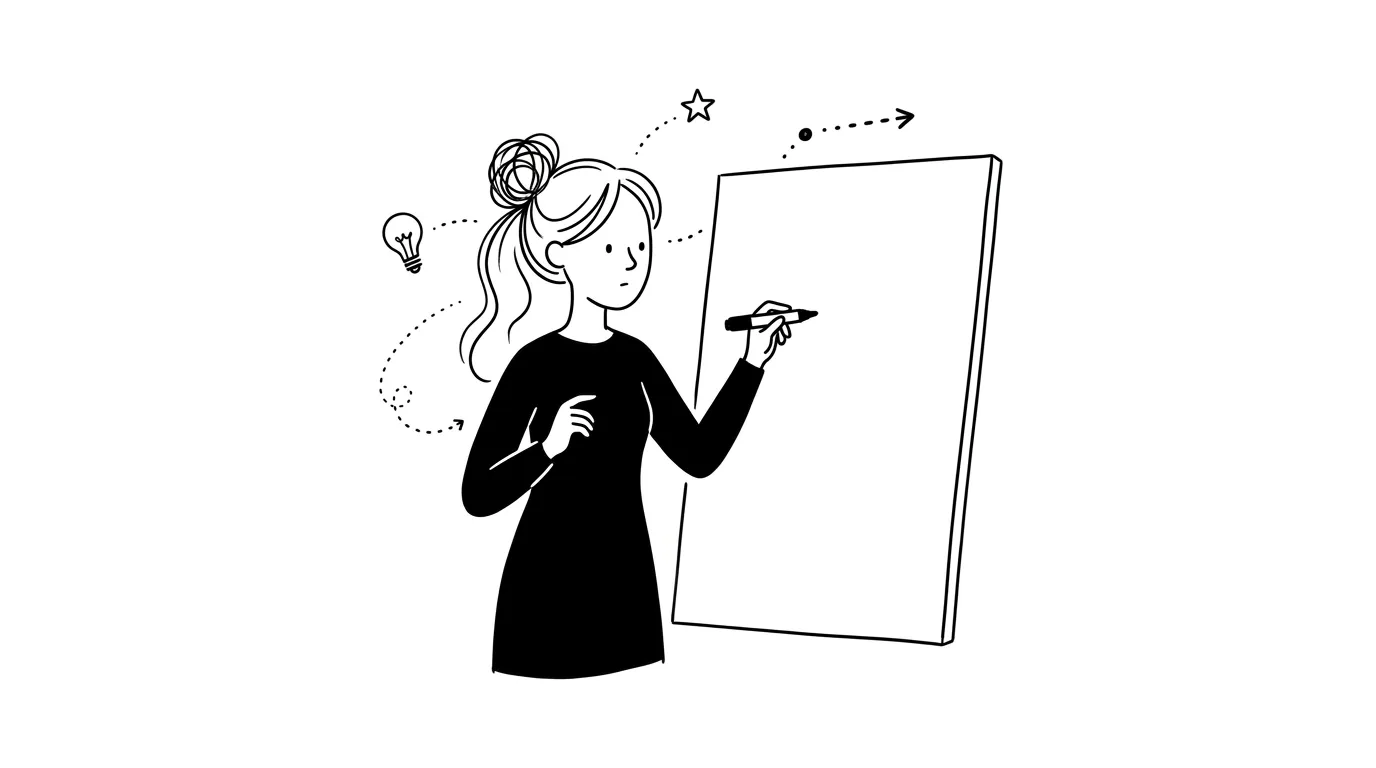
Do you ever find yourself staring at a blank screen for hours, unable to write a single line because you swore to produce a masterpiece? For those with ADHD, procrastination is rarely about caring too little—it is often about caring too much. This perfectionism jacks up the activation cost, freezing your brain. Here is how to use good-enoughism to unload the pressure.
You sit at your desk, hands hovering over the keyboard. The black cursor blinks steadily in the center of the blank white screen, acting as a silent judge of your failure. You have already constructed a dozen brilliant sentences in your mind, but as soon as they reach your fingers, they feel amateurish, full of gaps, and not good enough. You sigh, delete the half-sentence you just typed, and pick up your phone. Does this loop of guilt and paralysis feel painfully familiar?
Many label this behavior as “laziness” or “a lack of discipline.” However, what your brain is actually experiencing is an executive function deadlock triggered by perfectionism.
The Neurobiology of Perfectionist Deadlocks: Brain-Level Threat Response
From a neuroscientific perspective, when an ADHD brain is faced with a high-stakes task, the prefrontal cortex—the brain’s executive control center—builds a grand blueprint of what “excellence” should look like. In doing so, it automatically calculates the massive energy required, the threat of negative evaluation, and the pain of potential failure.
For an ADHD brain, which suffers from low baseline dopamine and is highly sensitive to negative feedback (known as Rejection Sensitive Dysphoria, or RSD), this overwhelming expectation is registered by the amygdala (the emotional threat detector) as an existential threat.
Once the amygdala sounds the alarm, it hijacks the prefrontal cortex. It signals your autonomic nervous system to enter a “fight-or-flight” state. In an office setting, you cannot fight or flee, so this tension manifests as a physical freeze. You sit frozen, seeking refuge in low-risk distractions like scrolling social media or rearranging files to escape the threat of the looming task.
You are not avoiding work because you do not care; your brain is freezing to protect you from the pain of failing.
3 Steps to Shatter Perfectionist Deadlocks: Cognitive Unloading
To break this cycle, you must bypass willpower. Pushing yourself only adds fuel to your already overwhelmed nervous system. Instead, practice active cognitive unloading to clear your brain’s occupied working memory.
1. Brain Dump: Force-Quit the Anxiety Threads
When you obsess over “doing it perfectly,” your brain’s background RAM is choked by hidden fears. Open the Brain Dump panel in ADHDOS. Ignore spelling, structure, or tone. Spend 2 minutes writing down every raw fear, worry, and messy idea running through your head. Converting these vague threats into physical text on a screen cools down your amygdala’s alarms.
2. Reframing: Dismantle the “Must Perform” Beliefs
Once you dump your thoughts, put your perfectionist assumptions into the ADHDOS Cognitive Reframer:
- Perfectionist Brain: “My first draft must be flawless, or it proves I am incompetent.”
- Reframed Reality: “The sole purpose of a first draft is to exist, not to be good. A messy draft can be edited; a blank page cannot.”
- Perfectionist Brain: “I must write all 3,000 words today, or I am procrastinating.”
- Reframed Reality: “Writing 50 words today is a victory. I can stop at any time. Any progress is better than sitting frozen.”
Embody “Good-Enoughism” to Lower Starting Friction
The core logic of good-enoughism is: “A completed draft of garbage is infinitely better than a non-existent masterpiece.”
During the initiation phase, you must separate your “creator brain” from your “editor brain.” Allow yourself to draft a mediocre, 60-point version that you will never show anyone.
- Turn off backspace: When typing your first draft, forbid yourself from editing. Even if you make typos or write incoherent sentences, keep moving forward.
- Hide the draft: If looking at raw text distresses you, change the font color to white (matching the background) or shrink the window so you can only blind-type.
Once you accept a messy draft, your brain’s threat alarm turns off. Having a messy page of draft text makes polishing 100x easier than trying to summon perfection from a blank screen.
Quick Q&A
If I write garbage using 'good-enoughism,' won't I get criticized for bad work?
Good-enoughism is an initiation hack, not a submission policy. Its sole purpose is to break your physical freeze. Once you have a rough, messy draft, you can edit it when your executive energy returns. Polishing a rough draft takes far less cognitive fuel than writing perfect prose from scratch.
Why do I constantly rewrite the first sentence of my reports?
Because you are running your creative output network and your critical editing network at the same time, causing a neural deadlock. Write forward without correcting spelling or grammar. Leave editing for a separate block of time.
How does good-enoughism apply if my job requires zero errors (e.g., finance or coding)?
Even with high-precision work, you need a rough draft to organize your logic. Treat your initial drafts as private sandboxes where mistakes are safe. Once the structure is built, turn on the Focus Clock to perform single-threaded, high-precision debugging. Hacking the initiation phase saves the executive energy you need for final quality control.
Recommended Reading
Running Too Many Threads in Your Brain? Resolving ADHD Multitasking Paralysis
Brain spinning in multi-threaded overload while your body sits frozen doing nothing? Learn how to clear your prefrontal memory to break the freeze.
Shopping for Quick Dopamine Hits? How to Curb ADHD Impulsive Buying Without Self-Deprivation
Late-night online shopping leaving you with items you do not need and bills you regret? Understand ADHD impulsivity and align your dopamine.
Overwhelmed by a Tiny Setback? Emotional Dysregulation and Landing Techniques for HSP & ADHD
Does a minor frustration throw you into a catastrophic spiral? Understand neuro-divergent emotional dysregulation and learn somatic and cognitive landing tips.