 ADHD OS
Why Unanswered Messages Hurt: A Science-Backed ADHD Guide to Calm Rejection Sensitive Dysphoria
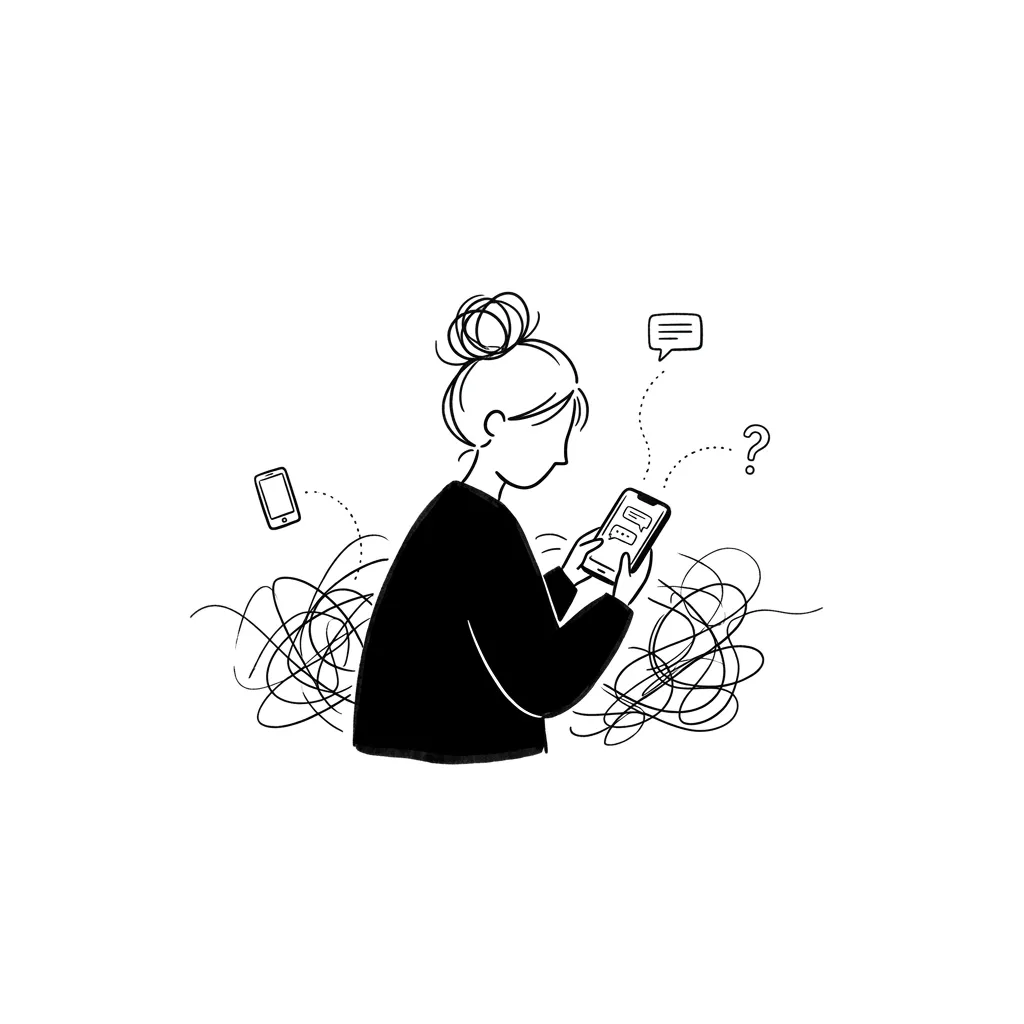
Does a slightly distant text message or an unanswered chat leave you feeling rejected and overwhelmed? This intense response is a common neurological experience in ADHD called Rejection Sensitive Dysphoria (RSD). Learn how to identify this false alarm and soothe your nervous system.
1. Why a Delayed Text Message Can Hurt So Deeply
You sent a message to a friend. One hour passes. Then two. Your screen remains empty.
A neurotypical person might think, “Oh, they must be busy.” But for you, the silence is filled with a spiraling inner drama. You replay your recent interactions, searching for where you went wrong. Your chest tightens, your palms sweat, and you experience a heavy sensation of grief and abandonment.
This is not because you are “too sensitive” or “dramatic.” It is your nervous system firing a false alarm.
In clinical terms, this response is called Rejection Sensitive Dysphoria (RSD).
RSD is an incredibly common emotional regulation challenge within the ADHD community.
Due to differences in neurotransmitter pathways, our amygdala reacts to perceived signals of exclusion, criticism, or coldness with severe, involuntary pain.
In fact, neuroimaging studies show that the emotional pain caused by RSD activates the exact same neural networks in the brain as actual physical pain (like breaking a bone or slamming your finger in a door).
The distress you feel is a real, physiological event. It cannot simply be reasoned away.
2. Three Steps to Calm the Emotional Storm
Because RSD is a physiological reflex, trying to ignore it rarely works. Instead, we must treat it like an acute allergic reaction, managing it with physical and cognitive tools:
Step 1: Pause and Sense the Physical Sensation
When a delayed response triggers your anxiety, immediately look away from your phone. Close your eyes and focus on your body for 10 seconds. Is your stomach knotting? Is your heart racing? Take a deep breath, place a hand over your chest, and say to yourself: “My nervous system has been triggered. This is a physiological false alarm. The pain is real, but it doesn’t mean something bad is actually happening.”
Step 2: Separate Facts from the Story
RSD is a master at weaving dramatic narratives to fill quiet spaces. Grab a piece of paper. On the left side, write “The Objective Facts.” On the right side, write “The Story in My Head.”
- The Objective Facts: They haven’t replied in 3 hours.
- The Story in My Head: They hate me, I ruined our friendship, I am a burden. By putting these lists side-by-side, you remind your brain that you only need to manage the objective facts. The dramatic script is just your amygdala overreacting.
Step 3: Retreat to a Low-Energy Social Boundary
When your emotional energy is drained, do not force yourself to socialize or act pleased. Allow yourself to go into a “low-energy mode.” Put your phone on Do Not Disturb, or communicate only with your closest, safest connections. You have the right to rest and let the storm pass before trying to prove your worth to anyone.
3. Survival Baseline: Your Worth Isn’t Tied to a Quick Reply
RSD acts like a sensitive smoke detector. It screeches at full volume even when someone just lights a candle in another room.
The next time that alarm sounds, try not to fight it. Simply wrap yourself in a blanket of self-compassion and wait for the air to clear.
Your worth is constant. It does not fluctuate based on how quickly someone replies to your text.
Quick Q&A
What is Rejection Sensitive Dysphoria (RSD) and how is it different from being overly sensitive?
RSD is a neurological emotional dysregulation linked to ADHD. While general sensitivity is a personality trait, RSD is an intense, involuntary physiological reaction in the brain's pain networks triggered by perceived rejection or failure, making the emotional distress feel as intense as physical pain.
How can I stop myself from spiraling when someone doesn't reply to my messages?
Use the three-step method: pause and acknowledge the physical pain as an amygdala false alarm; write down the objective facts to separate them from the stories your brain is inventing; and step away from your device to rest within a low-energy social boundary until your nervous system calms down.
References
- Dodson, W. (2016). Emotional Regulation in ADHD: The Rejection Sensitive Dysphoria Phenomenon. ADDitude Magazine. ADDitude Resource - Outlines the clinical definitions and neurological foundation of RSD in adults.
- Shaw, P. et al. (2014). Emotional Dysregulation in Attention Deficit Hyperactivity Disorder. American Journal of Psychiatry. PubMed Reference - Explores the structural connectivity issues between the prefrontal cortex and amygdala in ADHD individuals.
- Eisenberger, N. I. (2012). The Neural Bases of Social Pain: Evidence for Shared Somatosensory Substrates. Psychosomatic Medicine. PubMed Link - Demonstrates how social rejection activates the exact same somatic pain regions in the brain as physical injury.
Recommended Reading
Waking Up in a Fog? How to Gently Boot Up Your ADHD Brain in the Morning
Stuck in heavy brain fog for hours after waking up, struggling to even get dressed? Learn how to align with your energy to boot up gently.
Time Blindness Messing Up Your Day? Visualizing Time for Chronically Late ADHD Brains
Cannot perceive how hours slip away? Or stuck in a painful "waiting mode" freeze before appointments? Discover hacks to tame ADHD time blindness.
Running Too Many Threads in Your Brain? Resolving ADHD Multitasking Paralysis
Brain spinning in multi-threaded overload while your body sits frozen doing nothing? Learn how to clear your prefrontal memory to break the freeze.