 ADHD OS
When the World Is Too Loud: 3 Physical Cool-Downs for ADHD Sensory Overload
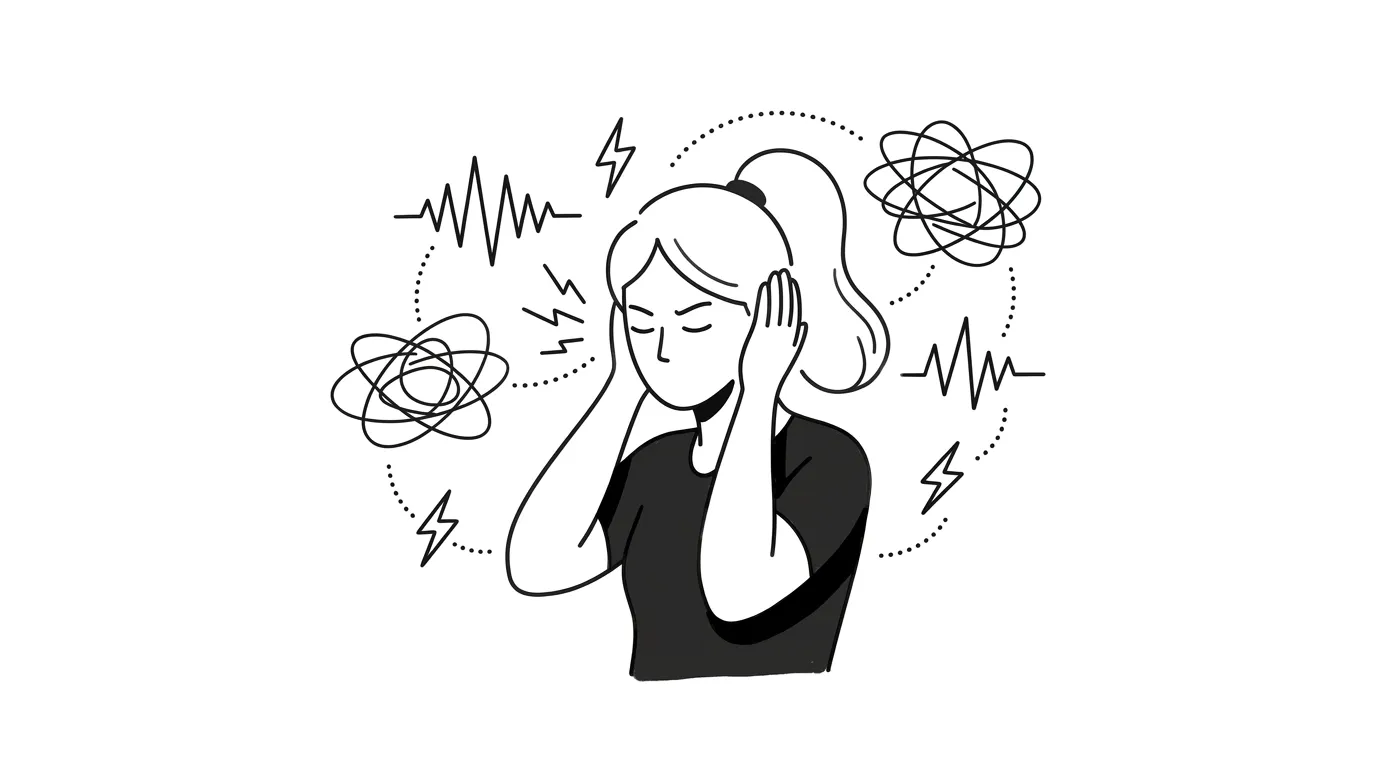
ADHD and Highly Sensitive People (HSP) often lack an internal sensory filter, making them highly vulnerable to sensory overload in noisy, bright, or crowded spaces. This guide provides three immediate physical cool-downs: creating a dim-lit sensory sanctuary, using physical barriers to block external inputs, and employing the “5-4-3-2-1 Grounding Method” to cool down an overheated brain.
You are standing in the middle of a bustling grocery store.
Harsh fluorescent lights glare from above, shopping carts screech against tile floors, loudspeaker announcements echo, cash registers beep constantly, and crowds of people press in from all directions.
Suddenly, a wave of intense irritability washes over you. You feel an overwhelming urge to drop your basket and run out of the store.
This isn’t a mood swing or a temper tantrum. Your brain is experiencing Sensory Overload.
A typical neurotypical brain uses an automatic filtering system called sensory gating. It easily blocks out background hums, distant chatter, and minor lights. For ADHD and HSP brains, however, this filter is porous. Every sound, light, scent, and texture floods your brain’s CPU without filter, causing the system to overheat and freeze.
When your brain begins to redline, don’t try to push through it. You need to retreat into a physical sensory cool-down chamber to block out inputs and let your nervous system reset.
Cool-Down 1: The 10-Minute Low-Stimulus Sanctuary
When overload strikes, the most effective immediate relief is to cut off the flow of incoming signals—especially visual data.
Set up a sensory sanctuary at home or in your office:
- Darken the room: Turn off harsh overhead lights. Use a dim, warm nightlight or a gentle candle. Pull down blackout curtains and close your eyes. Visual processing consumes nearly half of your brain’s processing capacity; shutting it down releases massive cognitive resources.
- Deep pressure therapy: Lie down under a weighted blanket. In neurology, deep pressure stimulation activates the parasympathetic nervous system, releasing calming chemical signals to soothe frayed nerves.
Cool-Down 2: Deploy Physical Firewalls
Don’t worry about looking unsocial or strange when wearing headphones or sunglasses in public. For neurodivergent minds, these are essential physical firewalls.
Carry a sensory emergency kit with you:
- Active Noise-Canceling (ANC) headphones/earplugs: Keep ANC headphones or high-quality silicone earplugs in your bag. When riding the subway, walking through a mall, or sitting in a noisy office, turning on ANC—even without music—blocks out up to 70% of low-frequency ambient noise.
- Dark sunglasses: If you must enter a brightly lit, visually busy area, wear dark sunglasses or blue-light blocking glasses. Reducing light intake directly slows down the rate of prefrontal cortex fatigue.
Cool-Down 3: The 5-4-3-2-1 Grounding Method
If you are stuck in a public space and cannot lie down, and anxiety is mounting, use the 5-4-3-2-1 Grounding Method. This shifts your focus away from the chaotic signals in your head and anchors your attention to physical reality.
Take a slow, deep breath, look around, and list:
- 5 things you can see: Find five specific items in your view. E.g., a wooden desk, a white piece of paper, a black mug, a green leaf outside, a tiny pebble on the ground.
- 4 things you can feel: Notice four physical sensations. E.g., the support of the floor under your feet, the fabric of your jeans against your thighs, the cool surface of the table, the breeze on your face.
- 3 things you can hear: Listen for three faint sounds. E.g., the distant hum of traffic, the low fan of the air conditioner, the sound of your own breathing.
- 2 things you can smell: Identify two scents. E.g., the aroma of coffee, the faint scent of laundry detergent on your sleeve.
- 1 thing you can taste: Notice one taste. E.g., the lingering taste of tea or the clean neutrality of fresh water.
This method acts as a physical anchor, dragging your overheated brain back to solid ground.
Survival Baseline: The 5-Minute Bathroom Reset
If all else fails and you feel completely overwhelmed, your survival baseline is:
Go to a restroom, lock the stall door, and sit with your eyes closed for 5 minutes.
A restroom stall is a natural isolation chamber. Free from social expectations and harsh, moving lights, it is a safe space to disconnect. Take ten deep breaths in absolute stillness. These five minutes are often enough to bring your brain CPU’s temperature back down below the danger zone.
Protecting your senses is protecting your energy.
Quick Q&A
How do I distinguish between regular fatigue and sensory overload?
Fatigue makes you feel weak and sleepy, whereas sensory overload manifests as intense irritability and physical anxiety. If minor background sounds (like typing, chewing, or air conditioning) suddenly make you feel furious, or if you feel a tight chest and a strong urge to flee, you are overloaded.
Wearing noise-canceling headphones at work might seem rude. How do I handle this?
Proactively set boundaries. Tell your colleagues: 'I use noise-canceling headphones to help me focus on deep tasks. If you need me urgently, feel free to tap my shoulder or ping me on Slack, and I'll jump right on it.' Most people respect this and it saves you from distraction.
Why do I feel completely exhausted for days after a sensory meltdown?
Sensory overload triggers an acute stress response: your adrenaline spikes, putting your body in 'fight or flight' mode. The exhaustion that follows is your nervous system's way of forcing a system reset. Give yourself permission to rest, sleep more, and lower your expectations during recovery.
Recommended Reading
Overwhelmed by a Tiny Setback? Emotional Dysregulation and Landing Techniques for HSP & ADHD
Does a minor frustration throw you into a catastrophic spiral? Understand neuro-divergent emotional dysregulation and learn somatic and cognitive landing tips.
Is Office Noise Driving You Crazy? Sensory Decompression and Noise Masking for HSP & ADHD
Keyboard clicks, colleague chatter, and bright overhead lights leaving you overwhelmed at your desk? Learn how to build a physical sanctuary to beat sensory overload.
Craving Routine or Seeking Novelty? 3 Ways to Balance the AuDHD Tug-of-War
Stuck between craving structure and seeking new dopamine hits? Discover how to balance the Autism and ADHD tug-of-war using flexible routines, dopamine menus, and baseline protocols.