 ADHD OS
Is Your Desk a War Zone? A Physical De-cluttering Guide for ADHD Minds
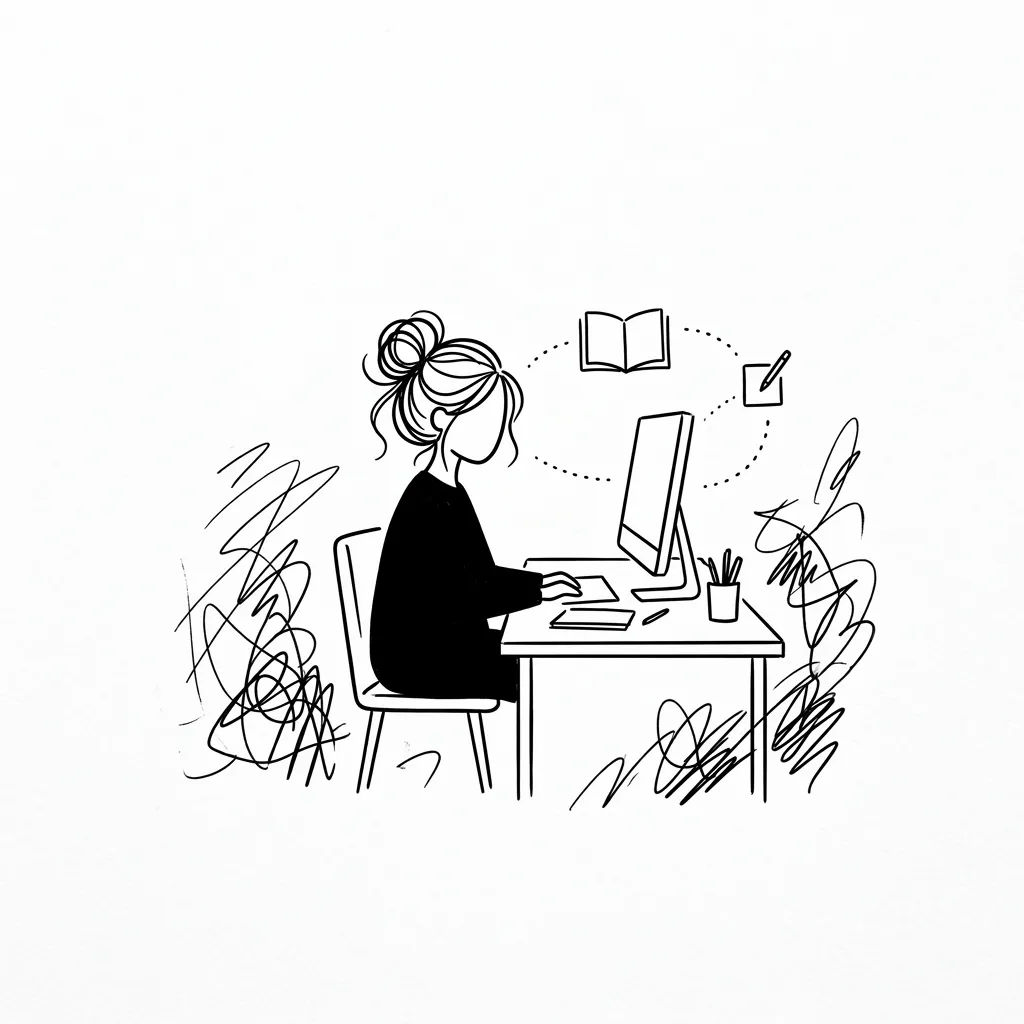
For those with ADHD, physical clutter is a silent killer of executive function. This guide provides a physical de-cluttering blueprint designed specifically for neurodivergent brains: minimize visual distractions in your line of sight, reduce sorting friction with a “one-step storage” bin, and establish a desk warmup ritual to kickstart momentum. Let go of perfectionism and design a workspace that is gentle on your brain.
You sat down with a simple goal: finish that report that is already three days overdue.
But as you look at your desk, your focus begins to dissolve. There is a half-empty coffee mug gathering dust, three shipping labels from last week, five uncapped pens, and a couple of half-read books. Your fingers reach for the shipping labels. You study the tracking numbers, pull out your phone to search where they came from, and ten minutes later, you find yourself lying on the couch scrolling through social media.
As for the report? You haven’t even opened the document.
This isn’t laziness. For the ADHD brain, “what is in sight is in mind.” Due to executive dysfunction, our brains struggle to filter out irrelevant environmental stimuli. Every piece of clutter on your desk is screaming for your limited supply of dopamine.
Since we can’t count on our brains to filter this noise, we have to do it physically. Let’s run a de-cluttering experiment.
Experiment 1: The 180-Degree “Visual Cleanse”
Traditional organization guides teach you to neatly arrange items on your desk. For ADHD minds, this is a trap. Even neatly organized items emit constant visual noise.
Our first step is radical visual de-cluttering:
- Clear the 180-degree view: When sitting at your chair, keep the 180-degree field in front of you—your main workspace—completely clear. Nothing should be there except your computer, keyboard, mouse, and a glass of water.
- Mute the colors: Colorful stationary and knick-knacks are distraction magnets. Opt for monochrome, wood, or neutral colors for essentials. Move bright sticky notes out of sight or switch to digital reminders.
- Create visual buffers: If something must stay on the desk, put it in a solid, opaque organizer box. Out of sight, out of mind.
Experiment 2: One-Step Storage (Forget Sorting)
For most people with ADHD, desks get messy because “sorting friction” is too high.
Organizing a receipt usually requires: picking it up, walking to the drawer, finding the receipt folder, filing it away, and closing the drawer. To an executive-impaired brain, this feels like a marathon. So, we dump it on the desk. Over time, the desk becomes a paper graveyard.
We need to lower sorting friction to zero with one-step storage:
- Put a trash can under your feet: Not across the room, not in the corner. Place it directly under your chair where you can drop things in effortlessly.
- The “Catch-All” bin: Place a large, open, lidless bin right next to you. Throw all incoming mail, receipts, loose cords, and random items into it.
- Zero sorting: Do not try to categorize things inside the bin. Just knowing that “everything I can’t find is in this bin” is a huge mental relief. Once a week, when your energy is high, spend five minutes clearing it out.
Experiment 3: The Desk Warmup Ritual
ADHD brains suffer from high transition inertia. Shifting abruptly from relaxation to work triggers instant mental resistance. A physical warmup ritual can send a clear startup signal to your brain.
Try this desk warmup ritual:
- Mindful wipe-down: Spend one minute wiping down your desk and screen with a wet wipe. This repetitive physical action acts as an anchor to bring your scattering thoughts back.
- Physical firewall: Put your phone in a drawer, or place it behind you where you have to stand up to reach it. Use focus mode on your computer.
- Cool-down sounds: Put on headphones and play a steady stream of white or brown noise. Avoid lyric-heavy music, which only prompts your hyperactive brain to sing along.
Survival Baseline: Don’t Organize for the Sake of Organizing
If your dopamine is entirely depleted today and your room is a mess, do not force yourself to do a deep clean.
Your survival baseline is simple: if you can clear a spot just big enough for your laptop, you have won. Push the clutter aside, take a double breath, and do your one most important task.
Clutter can wait. Your mental energy is your most valuable asset.
Quick Q&A
If I put everything away in drawers or boxes, I will forget they exist. How do I deal with this?
This is a classic ADHD trait: out of sight, out of mind. The solution is to use translucent or open-topped bins, or to label opaque drawers in big, bold letters (e.g., '常用文具' / 'Pens & Tools', '发票暂存' / 'Receipts'). Using text cues instead of visual clutter keeps your space clean while prompting your memory.
My work requires referring to multiple paper documents at once. How can I keep my desk clean?
Try using vertical document holders or desktop organizers. Standing papers upright instead of spreading them flat reduces their visual footprint and helps you focus on one page at a time.
My desk gets messy again three days after organizing it. I feel so defeated.
Please don't be discouraged. Relapsing into clutter is a natural physical law for ADHD brains, not a personal failure. We are designing a high-tolerance system, not a sterile cleanroom. Your catch-all bin is designed specifically to absorb this chaos. As long as your core 180-degree view remains clear, you are always ready to start.
Recommended Reading
“Stop Parenting Me”: Healing the Parent-Child Dynamic in ADHD Relationships
Forgetting chores, missed promises, and zoning out... How do ADHD couples break free from the exhausting parent-child dynamic? Discover the executive dysfunction behind relationship friction and practical, friction-free systems to rebuild partnership.
The Kitchen is an Executive Function Test: A Zero-Brainpower Guide to Meal Prep
Shopping, washing, chopping, multitasking, and washing dishes... cooking is a brutal test of executive function. Learn how to drop traditional cooking rules and feed yourself with a low-friction, zero-brainpower prep system.
Frozen on the Couch with a Looming Deadline? The Micro-Step SOS Guide for ADHD Task Paralysis
Looming deadlines leaving you frozen in your seat, scrolling for hours in guilt? Break out of ADHD task paralysis with these physical micro-steps.