 ADHD OS
No More Mind Reading: Establishing Direct Communication Agreements for Autistic Partners
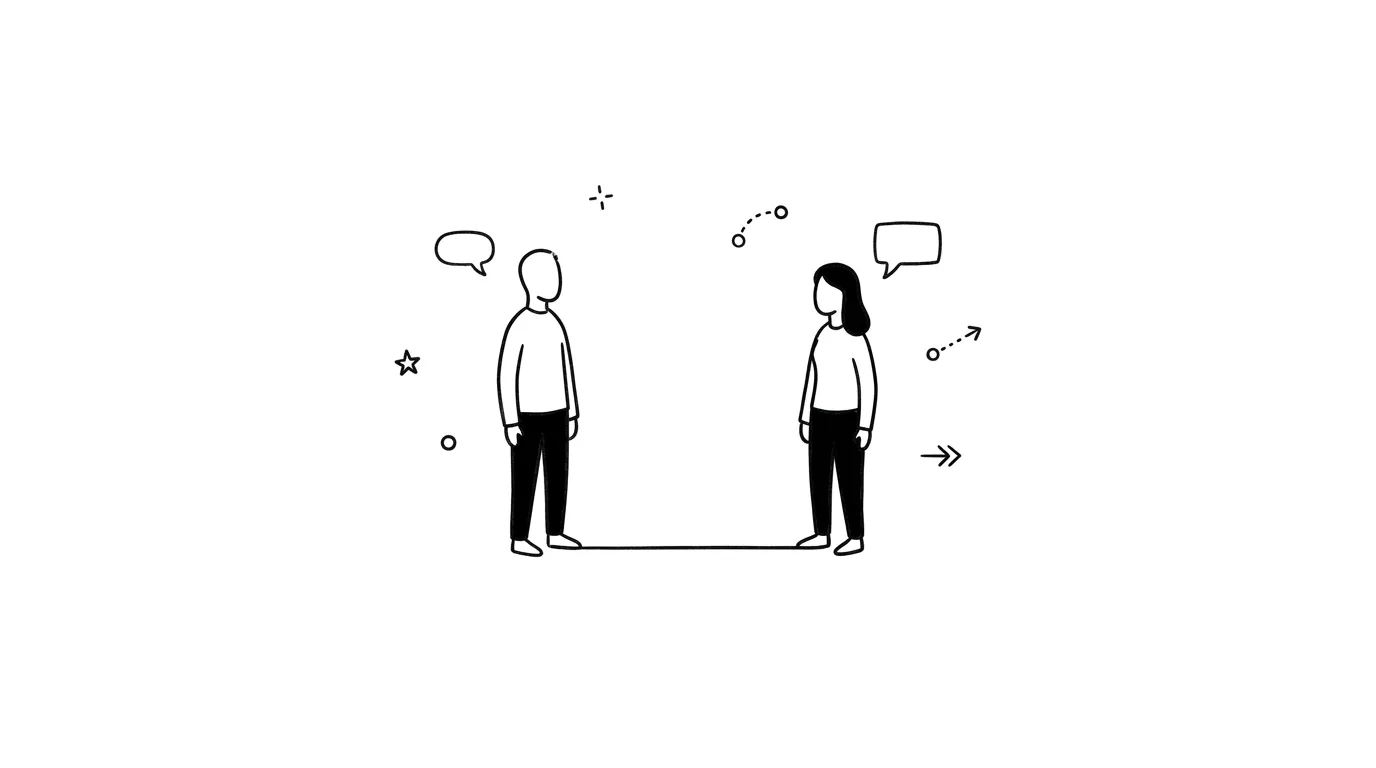
Have you ever heard a partner sigh and say, “Can’t you tell?” or “Do I really have to spell it out for you?” For autistic individuals, information processing is highly literal and direct. Subtle hints, micro-expressions, and eye rolls often register as blank space in our systems, which is frequently misread as coldness or selfishness. This guide provides a no-guesswork direct communication protocol for autistic partners and their loved ones, replacing emotional blind spots with clear APIs.
“I’m fine.” When a neurotypical partner says this, it might mean: “I am actually not fine. I want you to stop working, come over, hug me, and ask me what’s wrong.”
But when an autistic person hears it, their brain interprets it literally: “Oh, she said she’s fine. I can go back to what I was doing.”
What follows is deeper frustration from one partner, and confusion and guilt from the other.
This misalignment is a primary source of conflict in neurodiverse relationships.
The non-autistic partner feels the other is cold and robotic, while the autistic partner feels they are constantly taking an exam without being given the questions.
To bridge this gap, we don’t need to force ourselves to learn complex mind-reading tricks. Instead, we must establish a mutual double translation protocol.
1. Why We Miss Your Subtext
Autistic brains process language with a strong literal thinking bias.
Over millennia, human societies have developed complex layers of communication—conveying intent through tone, facial cues, gestures, and subtext.
However, autistic individuals lack the neurological wiring to automatically decode these multi-channel signals.
If communication is a network, neurotypicals transmit encrypted data that is decrypted subconsciously, whereas autistic people require plaintext.
When you drop hints, the information is simply lost in transit.
This is not a lack of caring; it is a difference in our receivers.
2. Setting Up a Relationship “API Protocol”
Since hinting fails, we must define explicit communication interfaces (APIs) just like software:
💬 Protocol 1: Explicit Demand Declaration
Both partners agree to abandon hints and use direct declarative communication:
“The floor is so dirty.”(Hint: Go sweep it) → “I am exhausted today. Could you please sweep the living room floor right now?” (Clear request & action)“The weather looks nice this weekend.”(Hint: Take me out) → “I want to walk by the beach this Saturday. Can you book the tickets by Thursday?”
💬 Protocol 2: Defining Red, Yellow, and Green States
When energy levels drop, use simple color codes to communicate cognitive bandwidth instantly, avoiding misunderstandings:
- 🔴 Red State: “I am in sensory overload/shutdown. Let me be. Do not ask questions.”
- 🟡 Yellow State: “I am tired and low on social energy. I can talk, but please keep sentences short.”
- 🟢 Green State: “I am regulated. Ready for deep conversations.”
3. The Empathy Mode Dial
When a partner complains about work stress, an autistic person’s natural response is to analyze the logic and offer quick fixes. Often, however, the partner just wants to be heard and comforted.
To prevent this mismatch, dial in your needs before starting the conversation:
“I am about to vent. Can you set your setting to one of these three modes?”
- Lurker Mode: Just listen and agree. No advice needed.
- Hug Mode: I am sad. Just hold me physically. No words.
- Advisor Mode: I am in trouble. Help me analyze and find a solution.
By setting the mode, the autistic partner can play their role perfectly, eliminating conflicts caused by guessing.
Directness is not the enemy of romance. Stating your love and needs clearly is the most authentic, stable romance in the neurodivergent world.
Quick Q&A
Doesn't speaking this way make relationships feel sterile, like business meetings rather than romance?
Unspoken默契 (tacit understanding) is a luxury built on trial and error. For neurodiverse couples, expecting mind-reading is a recipe for conflict. Clear, direct communication doesn't ruin romance; it eliminates exhausting anxiety. When you stop worrying about 'does he love me?' or 'why is she ignoring me?', you have more energy to enjoy actual connection.
My partner says, 'If I have to ask directly, it loses its meaning.' How do I respond?
This requires gentle education on neurodiversity. In a calm moment, explain: 'This is not laziness. My brain is physically blind to these indirect cues, and trying to guess causes me severe anxiety. I want to meet your needs, but direct instructions are the only pathway for me to love you accurately.' It is a process, but starting with one direct request a day helps build the habit.
Recommended Reading
Struggling with Unwritten Social Rules? Painless Workplace Communication Guide for ASD Adults
Struggling to decode coworkers double meanings or spending hours drafting basic status updates? Reclaim your energy with structured templates.
Disconnected from Your Body? Designing a Low-Friction Physical Maintenance OS for ASD
Struggling to feel hunger, thirst, or fatigue due to hyposensitive interoception. Set up simple external feedback loops and safe food systems to preserve basic physical health.
When the Brain Power Cuts Out: A Guide to Autistic Meltdown and Shutdown Recovery
Decoding the stress responses of autistic meltdowns and shutdowns. Learn the neurological triggers and implement low-friction SOS protocols for self-rescue and support.