 ADHD OS
When the Brain Power Cuts Out: A Guide to Autistic Meltdown and Shutdown Recovery
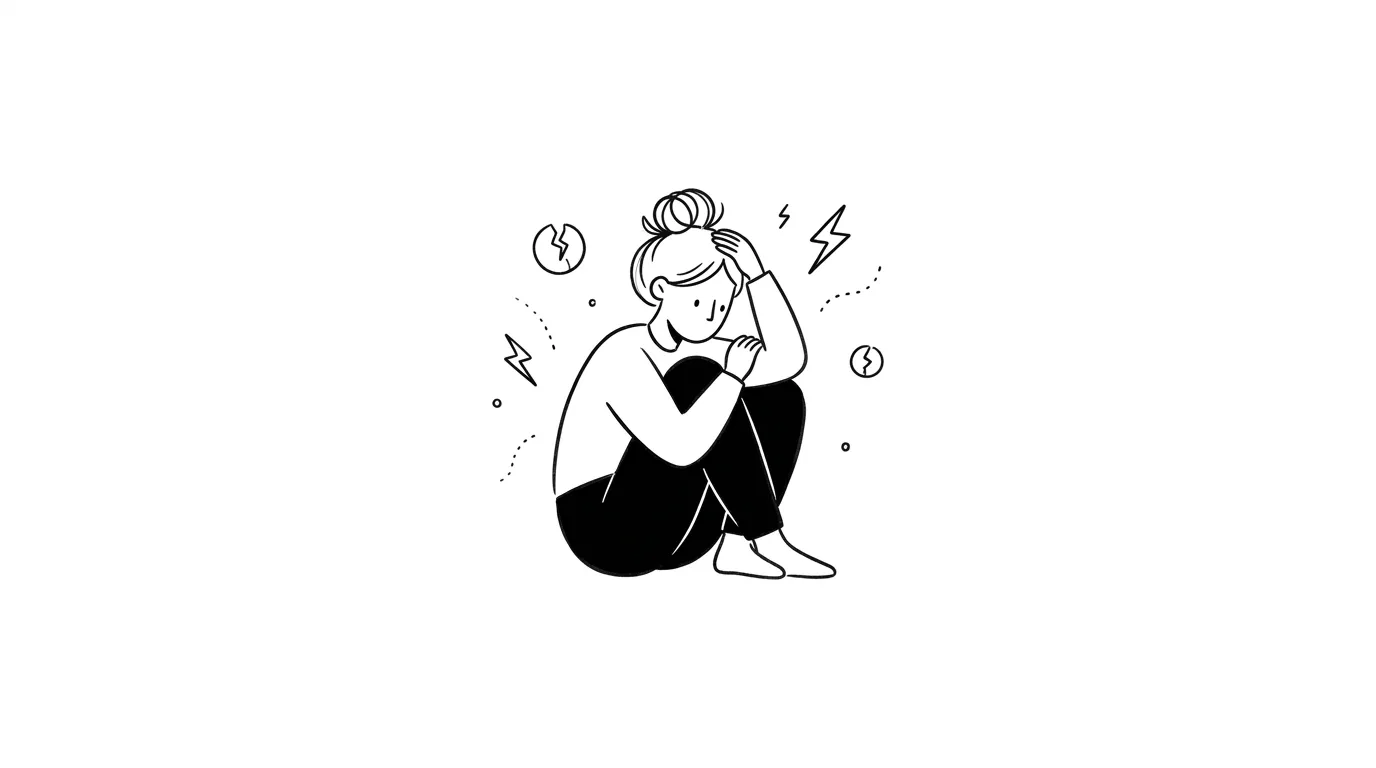
Have you ever had moments where, after a highly noisy event or a sudden change of plans, you lose control of your emotions and burst into tears or anger (meltdown)? Or perhaps you suddenly freeze, unable to speak, slumped in a chair, hearing others but unable to make a sound (shutdown)? This is not a character flaw. It is a protective neurological response to sensory or social overload in autistic brains. This guide will help you identify both states and provide a low-friction “reset” protocol.
Have you ever been rushing for a train, only to be disrupted by a sudden rerouting notice, or spent two hours in a bright, crowded mall, only to return home and burst into tears or shout when your partner gently asks, “What’s for dinner?”
Or maybe you didn’t blow up. Instead, you felt completely hollowed out—slumped on the couch, staring blankly, wanting to take a shower but feeling as if your body were physically cast in concrete, unable to utter a single word.
Many people with autistic traits spend their lives feeling guilty about these moments, mistakenly believing they are being “dramatic” or “emotionally unstable.”
In reality, the neurodiversity-affirming community calls these states Meltdown and Shutdown.
They are the biological results of an overloaded prefrontal cortex handing over control to the sympathetic nervous system when sensory, social, or cognitive friction exceeds capacity.
It is the biological equivalent of a household circuit breaker tripping to prevent a fire.
1. Demystifying “Meltdown”: The Volcanic Release
A meltdown is an externalized, high-energy release of pressure. When external stimuli accumulate beyond the prefrontal cortex’s capacity to process, the brain forces the body to discharge this energy to protect itself.
- How it looks: Sudden uncontrollable crying, shouting, throwing things, or an overwhelming urge to run away (Flight response).
- It is not a tantrum: A tantrum is goal-oriented (e.g., crying for a toy or attention) and subsides when the goal is met or the audience leaves. A meltdown is entirely involuntary and will continue even when completely alone, until the body’s stress chemicals are exhausted.
- The underlying biology: Extreme activation of the Fight-or-Flight response.
In this state, any rational soothing, explaining, or processing acts as new sensory input, making the meltdown worse. The brain does not need “logic”; it needs a cutoff of all stimulation.
2. Demystifying “Shutdown”: The Quiet System Freeze
If a meltdown is an explosion, a shutdown is an implosion. It is a low-energy, defensive state common among introverts or those who mask heavily.
- How it looks: Sudden loss of speech (selective mutism), avoiding eye contact, flat affect, and minimal response to external stimuli. You might desperately want to turn off a loud television, but the neural connection between your brain and muscles feels physically severed.
- It is not silent treatment: This is a deeply painful self-preservation response. The brain perceives the environment as highly hostile and suspends all non-essential functions (like social etiquette, complex language, and movement) to conserve energy.
- The underlying biology: The Freeze response or an active sensory-dampening mode.
During a shutdown, hearing “What’s wrong? Why aren’t you talking?” acts as noise pollution, only prolonging the time needed to reset.
3. Physical SOS Protocols for Autistic Overload
When a meltdown or shutdown occurs, we need a physical OS protocol that doesn’t rely on cognitive bandwidth:
🚀 Step 1: Cut the Input (Dampen & Isolate)
At the very first sign of overload, go into “Silent Mode”:
- Put on noise-cancelling headphones with white noise or absolute silence.
- Close your eyes and pull the shades to darken the environment.
- Leave the space (e.g., step away from a social gather, lock yourself in the bathroom).
🚀 Step 2: Non-Verbal Communication
When energy hits zero, verbalizing is a massive cognitive burden. Save a screenshot on your phone or keep a card on your desk to show to those around you:
“I am currently experiencing a nervous system overload (Shutdown). I am safe, but I temporarily cannot speak or make decisions. Please do not ask me questions or worry about me. I need to sit alone in a quiet, dark room for 1–2 hours to reset. Thank you.”
🚀 Step 3: Deep Sensory Reset
Once the peak stress begins to subside, use physical sensations to help the autonomic nervous system transition out of fight/freeze:
- Deep Pressure Therapy: Place a weighted blanket over yourself or curl up in a corner hugging your knees tightly. This physical boundary signals safety to the nervous system.
- Gentle Stimming: Allow yourself to rock slightly or squeeze a soft stress toy, using repetitive tactile input to ground your anxiety.
Be gentle with yourself. Do not try to force power back into a tripped circuit. Tripping is not weakness—it is your body’s way of saying: “Time to rest.”
Quick Q&A
How do I distinguish between ADHD task paralysis and an Autistic shutdown?
ADHD task paralysis is typically caused by a lack of dopamine motivation, where the brain resists starting a specific task. Often, switching to a new, interesting stimulus or moving physically can break the loop. An autistic shutdown, however, is a systemic freeze caused by cognitive/sensory overload. Any new stimulus—even something you normally enjoy—will make it worse. The only remedy is absolute rest, silence, and darkness.
What if my partner or family thinks I am giving them the silent treatment?
Do not try to explain during the shutdown, as you lack the verbal bandwidth. Instead, pick a calm, high-energy moment to explain: 'This is like a computer overheating and shutting down. If you force it to restart, the motherboard will fry. It is a biological safety mechanism, not emotional withholding.' Share your non-verbal communication card beforehand, agreeing that when they see it, they should give you quiet space.
Recommended Reading
The Autistic Sensory Shield: How to Navigate Overwhelming Environments Safely
Why supermarkets and transit exhaust your brain. Build a personal physical sensory shield with noise reduction, textures, and low-friction navigation strategies.
Struggling with Unwritten Social Rules? Painless Workplace Communication Guide for ASD Adults
Struggling to decode coworkers double meanings or spending hours drafting basic status updates? Reclaim your energy with structured templates.
Disconnected from Your Body? Designing a Low-Friction Physical Maintenance OS for ASD
Struggling to feel hunger, thirst, or fatigue due to hyposensitive interoception. Set up simple external feedback loops and safe food systems to preserve basic physical health.