 ADHD OS
The Golden Retriever Meets the Cat: Surviving the AuDHD Post-Social Hangover
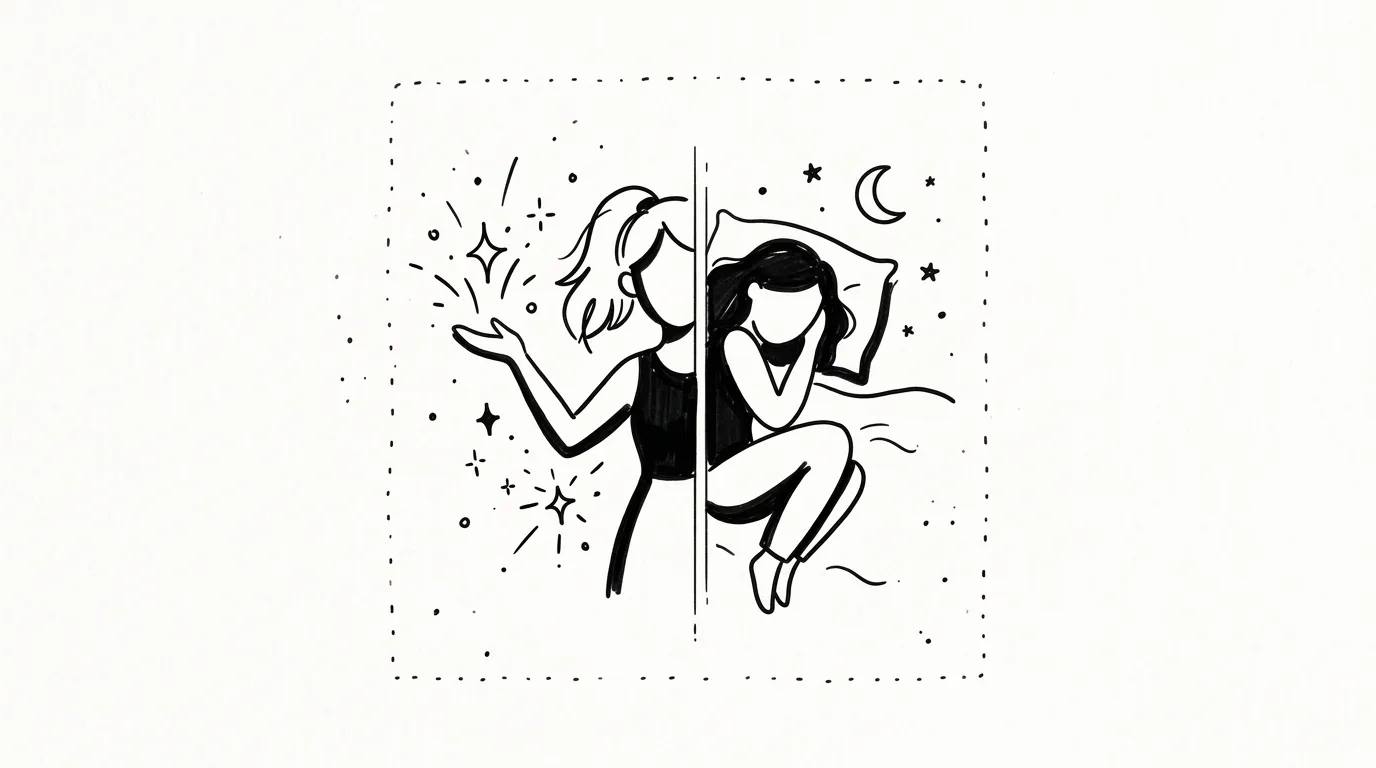
Have you ever experienced this: at a party or dinner, you are energetic like an outgoing golden retriever—venting, joking, and perhaps oversharing personal secrets. Yet, the moment you close your front door, your inner “cold cat” wakes up. Your senses are completely drained, your stomach knots, and your brain starts looping: “Did I talk too much?” “Did that look mean they hate me?” This mental dehydration and severe self-scrutiny is known as the AuDHD Social Hangover. Learn to build a social balance protocol to protect your energy firewall.
During social events, the AuDHD brain feels like split personalities.
In the first half, your ADHD (hyperactive traits) takes the wheel. Craving stimulation and dopamine, it pushes you to play the life of the party.
You talk fast, leap from topic to topic, and in a pulse of excitement, fall into oversharing—blabbing about your relationship secrets, finances, or embarrassing moments.
But in the second half, the moment you shut your front door and kick off your shoes, ASD (autistic traits) takes over, bringing a day’s worth of accumulated sensory exhaustion.
Suddenly, you feel completely hollowed out, lacking even the strength to speak.
Worse, your prefrontal cortex launches a high-speed program called “Rumination and Self-Trial.”
You examine every micro-expression and dissect every casual sentence under a microscope, concluding: “I was a loud, annoying clown.”
This mental torture can last for days, causing you to resist and retreat from future social connections.
1. Dissecting the Social Hangover Loop
Why do we experience such a violent psychological rebound?
- ADHD Dopamine Borrowing: The urge for dopamine and connection drives us to run on overdrive, borrowing energy from the upcoming days.
- ASD Delayed Sensory Overload: Amid the excitement, you might not notice the sensory toll of background noise and social masking. Once quiet returns, this accumulated neural stress explodes as a “social hangover.”
- Rejection Sensitive Dysphoria (RSD) Catalyst: Because neurodivergent individuals often grow up facing criticism for being “odd,” our alarm systems are hyper-sensitive to rejection. The brain automatically frames ambiguous cues as “they dislike me.”
2. Pre-Social Protocols: Leashing the Golden Retriever
To protect yourself, activate your social firewall before leaving the house:
🛑 Protocol 1: Rigorous Social Timeboxing
Do not wait until you are exhausted to leave. When energy drains, impulse control drops, making oversharing worse.
- Before the event, set a 2.5-hour silent alarm on your phone.
- When it vibrates, initiate a polite exit: “I have an early meeting tomorrow, I have to run. Have a great night!” Leaving while your battery is above the 30% safety line reduces post-social fallout.
🛑 Protocol 2: The “Quiet Observer” Persona
Give yourself permission to blend into the background. You do not need to be the center of attention or make everyone laugh. When ADHD pushes you to overshare, remind yourself:
“My role today is to be a quiet observer. I am here to listen, not to perform.”
3. Post-Social OS: Physically Interrupting Rumination
When you get home and your brain starts playing the “cringe movie,” do not try to use logic to convince yourself that “everyone likes you.” An overloaded brain makes distorted deductions.
Instead, use physical means to interrupt the cycle:
🛠️ Physical Brain Dump Sealing
Grab a notebook and write down the 3 most anxiety-inducing “things I said” or “awkward moments.” Once written, close the notebook and declare:
“All my social debris is offloaded onto this paper. It is sealed tonight. I am not allowed to look at it until tomorrow at noon.” By physically externalizing your thoughts, you reduce prefrontal cortex processing load.
🛠️ Non-Verbal Nervous System Decompression
Take a hot shower immediately or wrap yourself in a weighted blanket. Your brain needs non-verbal tactile input, not more verbal analysis. Play lyric-free ambient music and focus your attention on physical sensations.
Forgive the version of you that tried so hard to fit in. Your quirks are just your neurodivergent spark.
Quick Q&A
How do I tell healthy self-reflection apart from pathological post-social rumination?
Healthy reflection is objective and constructive (e.g., 'I interrupted X today, I should wait two seconds before speaking next time') and does not carry physical anxiety. Pathological rumination is emotional (e.g., looping a slight frown you saw, feeling your stomach tighten, and concluding 'I am a failure'). The moment it causes physical distress, activate the physical interruption protocol.
After socializing, I need 2-3 days of radio silence to recharge, but friends think I am ghosting them. What should I do?
Establish a 'recharge immunity declaration.' Send a quick text or post: 'Had a blast! I am going into quiet mode for a few days to recharge my battery, so I might not reply to messages immediately. Talk to you when my battery is full!' Giving friends a clear expectation relieves your social guilt.
Recommended Reading
Stuck Between Novelty and Stability: Breaking the AuDHD Career Burnout Cycle
Why AuDHDers shine early in their careers then hit a wall. Design a "multi-thread sideline" to feed ADHD curiosity while maintaining Autistic career security.
Hobbies Everywhere, Mind Overloaded: Managing AuDHD Material Clutter and Sensory Noise
Reconciling the ADHD urge to collect new hobbies with the Autistic need for visual minimalism. Set up low-friction physical barriers to isolate sensory noise.
The AuDHD Planning-Action Paradox: How to Break the Loop of Perfect Plans and Zero Action
When the need for ASD structure meets ADHD task paralysis. Break the cycle of over-planning and build a low-friction "warm-up" launch protocol for everyday tasks.