 ADHD OS
Brain Fog Peak Before Your Period? The Hormone Radar Survival Guide for Women with ADHD
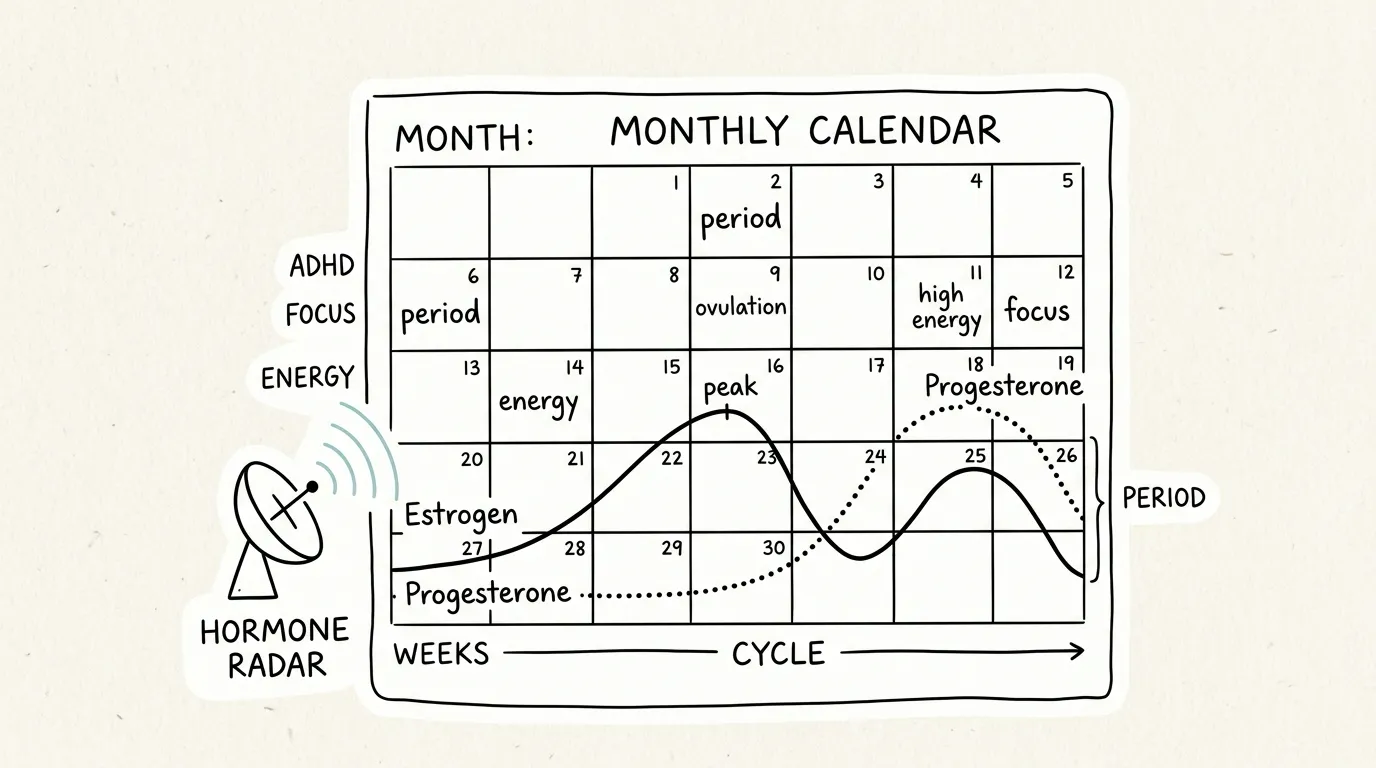
Do you have days every month when your ADHD medication seems to completely stop working, brain fog rolls in like a thick storm, and even washing a cup takes hours of effort? You haven’t failed or regressed; this is a biological link between estrogen and dopamine. Learn how to practice rhythm tracking, stop fighting your biology, and adapt to your shifting energy waves.
For many women with ADHD, there is an invisible mental black hole every month.
In the 7 to 10 days leading up to your period (the luteal phase), your entire routine might suddenly derail. Simple daily chores feel impossibly heavy, your working memory vanishes, and you might spiral into shame, thinking: “I am a complete failure.”
Worse, if you take stimulant medication, you might find its effectiveness completely evaporates during this time.
Many feel panic and frustration, believing the life order they built has crumbled.
But please remember: this is not your fault. You did not fail.
This happens because estrogen is a key modulator of dopamine. When premenstrual estrogen drops, your brain’s dopamine levels plunge with it. During this phase, you need gentle energy-flow adaptation, not forcing yourself to run like an invariant machine.
The Hidden Link Between Estrogen and Dopamine
Medical studies show that estrogen helps synthesize, release, and increase the sensitivity of dopamine receptors in the brain.
- The Follicular Phase (Post-period to ovulation): Estrogen rises steadily, boosting dopamine. This is usually your “power week” when you feel clear, creative, and ready to tackle complex challenges.
- The Luteal Phase (Post-ovulation to pre-period): Estrogen plunges while progesterone rises. Dopamine drops, causing executive dysfunction to worsen and brain fog to settle in.
This is why standard, 24-hour self-discipline plans are toxic to women with ADHD. Our baseline fluctuates. We need cycle-aware rhythm tracking.
Building Your Hormone Radar Strategy
Learn to forecast your mental weather and prepare for the low-dopamine storm:
1. Forecast Your Brain Energy
Don’t wait until you crash to realize why. Use the Hormone Radar tool in ADHDOS to track your menstrual cycle, and cross-reference it on your Calendar. Knowing your fog days are coming lets you tell yourself: “I will be sluggish soon, and that is biologically normal.”
2. Lower Luteal Phase Density
During your dopamine golden weeks, push the hard tasks that require heavy focus, social output, or complex decisions. During your pre-period week, cut your to-do lists by 70%. Focus on maintenance and push heavy workloads to the following week.
3. Acceptance of the Medication Drop
If your meds feel less effective before your period, do not increase your dose without talking to your doctor. Acknowledge the biological dip, prioritize sleep, hydrate well, and let yourself practice good-enoughism.
Hormonal waves are our biological nature, not our weakness. Ride the tides of your cycles: rest when you must, and flow when you can.
Quick Q&A
Why does my ADHD medication feel useless before my period, and why are side effects worse?
During the luteal phase, rising progesterone increases your body's stress response, while dropping estrogen reduces your dopamine pathway sensitivity. Increasing your dosage might not clear the fog but could increase physical side effects like heart palpitations or jitters. The best path is physical rest and lowering expectations.
How can I explain this premenstrual drop to my partner or manager?
Try using a weather metaphor: 'Before my period, my neurobiology experiences a predictable drop in dopamine, meaning my executive bandwidth temporarily shrinks. It is a physical rhythm, not a lack of effort. I will focus on single, low-friction tasks for a few days, and my normal speed will return next week when my estrogen levels rebound.'
Recommended Reading
Invisible Chores & Brain Overload: The Anti-Decision Fatigue Household Guide for ADHD Women
Struggling with piles of laundry and dirty dishes but unable to move? Learn how invisible household labor overloads the ADHD brain, and find actionable steps to simplify chores.
When Perimenopause Meets ADHD: Rebuilding Executive Function After the Estrogen Decline
As estrogen drops during perimenopause, the protective scaffolding that once allowed women to mask their ADHD symptoms crumbles. This article explores the link between estrogen and dopamine and offers low-friction strategies to rebuild your scaffolding.
Waking Up in a Fog? How to Gently Boot Up Your ADHD Brain in the Morning
Stuck in heavy brain fog for hours after waking up, struggling to even get dressed? Learn how to align with your energy to boot up gently.