 ADHD OS
When Perimenopause Meets ADHD: Rebuilding Executive Function After the Estrogen Decline
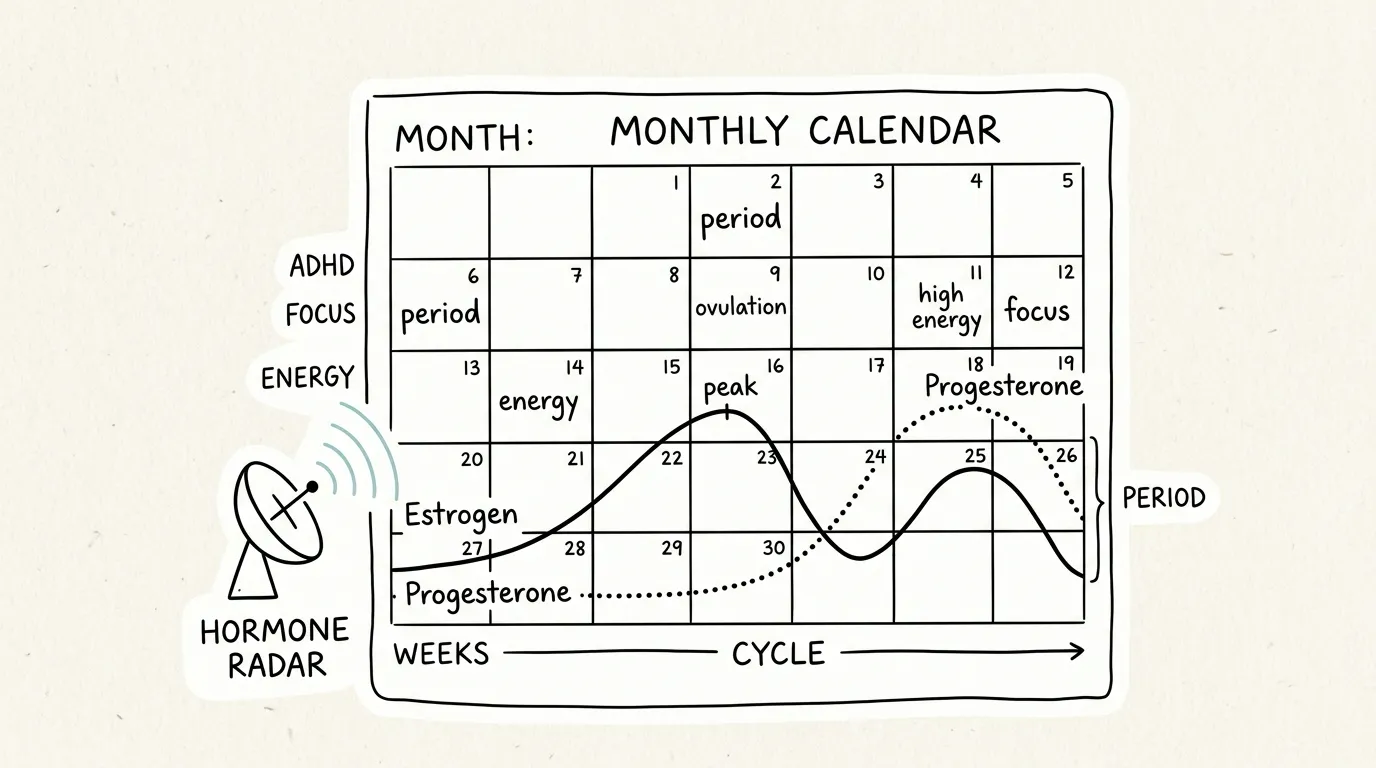
When perimenopause collides with ADHD, declining estrogen strips away the dopamine levels that previously sustained cognitive masking, triggering a double-whammy of brain fog and executive dysfunction. This isn’t “accelerated aging” or a failure of willpower; it is a profound shift in neural neurotransmitter regulation. This article breaks down the science of the estrogen-dopamine link and shares a gentle, low-friction framework to rebuild daily scaffolding through HRT (hormone replacement therapy) and low-cognitive-load external aids like Brain Dumps, Boards, and calendars.
As we reach midlife, many women suddenly find themselves spiraling into a terrifying state of cognitive chaos.
You might stand in the kitchen holding a dishcloth, staring blankly, unable to recall what you were about to wipe. You might lose your keys, forget appointments, or miss crucial meetings. Even when faced with a mountain of urgent work, you might find yourself paralyzed on the couch, trapped in task paralysis.
This thick brain fog and loss of agency often lead women to fear they are developing early-onset dementia.
However, this isn’t accelerated aging or a moral failing. It is the silent retreat of estrogen during perimenopause, stripping away the ADHD masking mechanisms that kept your life afloat for decades.
Many women with ADHD are never diagnosed in early adulthood. We survive by relying on anxiety, perfectionism, and high-adrenaline crisis management. But as perimenopause arrives, the sudden drop in estrogen causes these exhausting, high-energy coping systems to instantly collapse.
The Hidden Link Between Estrogen and Dopamine
Why does perimenopause trigger such a severe flare-up of ADHD symptoms? The explanation lies in our neurochemistry.
Estrogen is far more than a reproductive hormone; it acts as a key sensitizer of neurotransmitters in the brain. For the ADHD brain, estrogen functions as a backstage amplifier for dopamine:
- Promoting Synthesis and Release: Estrogen facilitates the creation and release of dopamine.
- Enhancing Receptor Sensitivity: By binding to receptors in the prefrontal cortex, estrogen makes the brain more responsive to available dopamine.
During the follicular phase of the menstrual cycle, when estrogen levels are high, we often feel sharper, more creative, and better equipped to handle complex tasks. Conversely, during the premenstrual luteal phase, estrogen drops, dopamine plunges, and brain fog creeps in.
During perimenopause, however, this hormonal decline is not a temporary monthly dip—it is a permanent, steep drop. Without the protective shield of estrogen, the brain’s dopamine efficiency bottoms out, exposing the underlying deficits of the ADHD nervous system. This is the biological reality behind the midlife resurgence of executive dysfunction.
The Double Whammy of Executive Dysfunction
When perimenopausal brain fog collides with underlying ADHD traits, it triggers a perfect storm of cognitive challenges:
- Vanishing Working Memory: Your mental workspace feels permanently overloaded. Forgetting everyday items or losing track of a conversation becomes the norm. Keeping more than three things in mind at once feels impossible.
- Exacerbated Time Blindness: Your perception of time stretches or shrinks unpredictably. A simple email might swallow two hours of your day, or waiting for a minor task to finish might trigger intense anxiety.
- Prefrontal Lock and Task Paralysis: Faced with even simple chores like doing the laundry or sorting mail, your brain freezes, unable to prioritize. You remain stuck on the couch, consumed by shame and rejection sensitive dysphoria.
Trying to force your way through these moments with sheer willpower is a form of cognitive bullying against an already depleted battery. We need physical, external scaffolding, not self-criticism.
Rebuilding Scaffolding with Low Cognitive Friction
To manage your brain when internal dopamine is low, stop relying on fragile working memory. We must build reliable, low-cognitive-load systems outside our minds.
1. Consult a Medical Professional about HRT
This is fundamentally a biological shift in neurotransmitters. Under medical supervision, discuss whether Hormone Replacement Therapy (HRT) can help stabilize your estrogen levels. Stabilizing estrogen can ease physical perimenopause symptoms and restore dopamine sensitivity in the prefrontal cortex. If you are already taking stimulant medication, you may need to adjust your dosage during this transition.
2. Practice Gentle Brain Dumps
When brain fog rolls in and your thoughts become chaotic, do not try to plan or organize in your head. Take a blank sheet of paper and perform a raw Brain Dump. Without worrying about structure or priority, write down every single thought cluttering your mind: “buy cat food,” “reply to boss,” “do laundry.” By clearing these items out of your working memory, you immediately free up cognitive bandwidth.
3. Use a Visual Board Over Mental Tracking
Convert the items from your Brain Dump into individual, physical cards or post-it notes, and place them on a low-friction Board. Organize the board into simple columns: “To Do,” “In Progress,” and “Done.” Focus on only one card at a time. Keeping these tasks visible externalizes your memory; your brain relaxes, knowing the task won’t be forgotten, which reduces the constant anxiety of mental tracking.
4. Keep Your Calendar Focused on the Baseline
Avoid filling your calendar with dense, hyper-structured schedules. Instead, reserve it only for fixed appointments and hard deadlines. Leave the rest blank. On low-energy days, give yourself permission to do only what is necessary to maintain your survival baseline, honoring your biological energy waves.
Quick Q&A
How do I distinguish between standard perimenopause brain fog and perimenopause-triggered ADHD?
If you were generally organized in your twenties and thirties but struggled primarily with physical symptoms and a general slowing of thoughts during perimenopause, it is likely standard hormonal brain fog. However, if you look back at your life and realize you have always struggled with chronic procrastination, time blindness, clutter, and losing items—but managed to cope using high anxiety and pressure—the drop in estrogen has likely stripped away your ability to mask, revealing long-standing ADHD. A consultation with a psychiatrist can help clarify this.
If HRT helps with brain fog, can it replace my ADHD stimulant medications?
HRT (Hormone Replacement Therapy) can restore estrogen levels and improve dopamine receptor sensitivity, which helps manage the hormonal drop in executive function. However, it does not cure the baseline neurodevelopmental dopamine deficit of ADHD. For many women, HRT and ADHD stimulants work best in tandem—HRT stabilizes the biological foundation, while stimulants target specific dopamine pathways. Any medication adjustments should be managed by your physician.
Recommended Reading
Invisible Chores & Brain Overload: The Anti-Decision Fatigue Household Guide for ADHD Women
Struggling with piles of laundry and dirty dishes but unable to move? Learn how invisible household labor overloads the ADHD brain, and find actionable steps to simplify chores.
“Stop Parenting Me”: Healing the Parent-Child Dynamic in ADHD Relationships
Forgetting chores, missed promises, and zoning out... How do ADHD couples break free from the exhausting parent-child dynamic? Discover the executive dysfunction behind relationship friction and practical, friction-free systems to rebuild partnership.
The Kitchen is an Executive Function Test: A Zero-Brainpower Guide to Meal Prep
Shopping, washing, chopping, multitasking, and washing dishes... cooking is a brutal test of executive function. Learn how to drop traditional cooking rules and feed yourself with a low-friction, zero-brainpower prep system.