 ADHD OS
Invisible Chores & Brain Overload: The Anti-Decision Fatigue Household Guide for ADHD Women
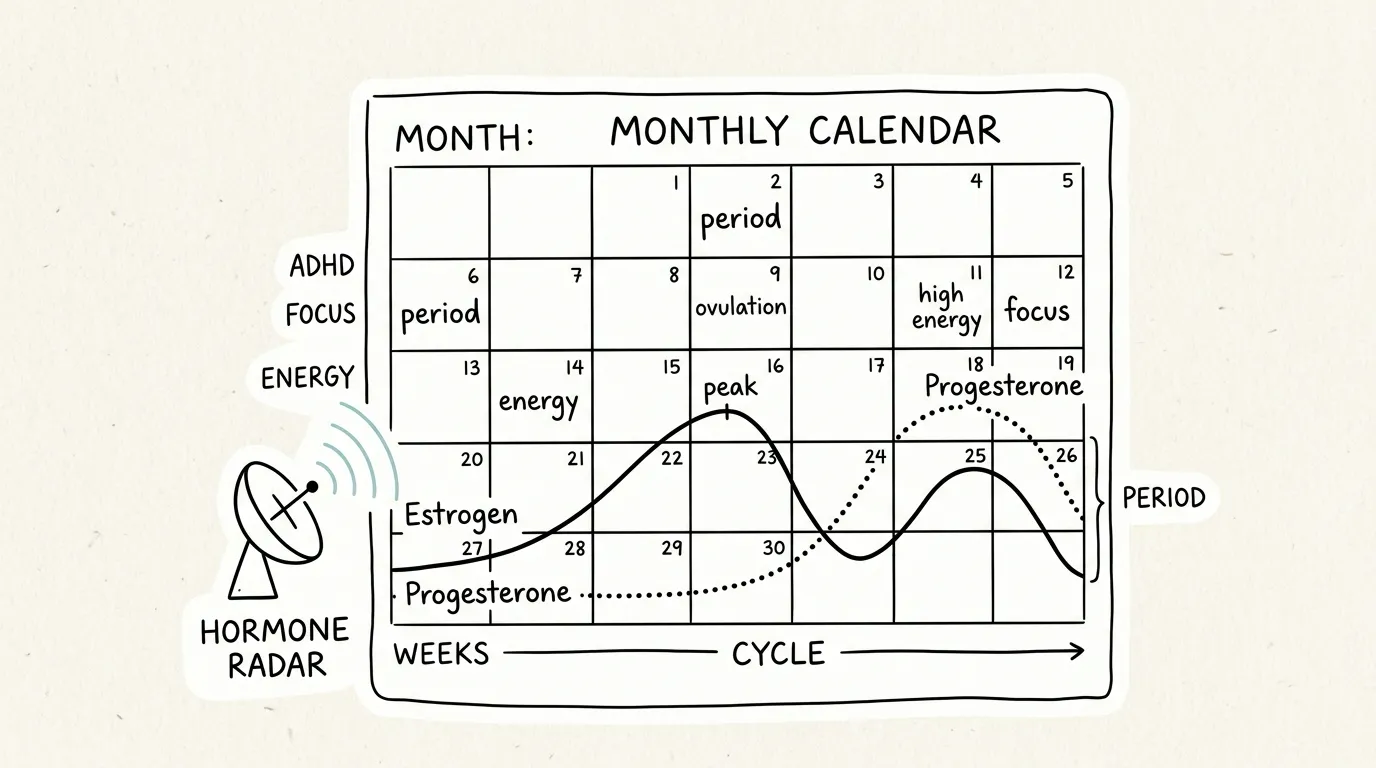
Why do women with ADHD struggle so much with simple household chores? Because keeping house is not just physical labor—it is a continuous series of invisible sorting, prioritizing, and planning decisions. When closets are shut and objects are hidden, our brains lose track of them, leading to clutter. This guide offers an anti-decision fatigue approach to simplifying chores through physical visual openness, decision-free scheduling, and guilt-free standard-lowering.
Staring at a sink piling up with dirty dishes and a wardrobe overflowing with clothes, you know exactly what you need to do. Yet you find yourself paralyzed on the sofa, unable to move, swallowed by an overwhelming wave of guilt.
For many women with ADHD, this scene is all too familiar.
What seems like a simple, mindless cleanup to others feels like a mountain to us. It is not because we are lazy, and it is certainly not because we do not care about cleanliness.
It is because our brains are experiencing a silent storm of executive dysfunction. Housework has never been just physical labor; it is a mentally exhausting game of decision-making.
The Invisible Decision Costs Behind Chores
Traditional gender expectations often assume that women can naturally and effortlessly manage household chores. But few recognize that keeping house is, at its core, a series of high-frequency decisions and logical planning.
Take “doing the laundry” as an example. To an outsider, it is a single action. To our brains, however, it is broken down into a complex sequence of micro-decisions:
- Sorting: Do I need to separate darks from lights? Can this garment go into the dryer? Does this delicate silk need to be hand-washed?
- Prioritizing: Should I wash the bedsheets first or my underwear? While the washing machine is running, should I sweep the floor or wash the dishes?
- Planning: Where will I hang these clothes to dry? Is the weather good today? What if I run out of hanger space?
For a brain with weaker prefrontal cortex function, this invisible sorting, prioritizing, and planning demands an enormous amount of cognitive energy. Before our bodies even begin to move, our brains have already drained their dopamine reserves on these tiny choices, leading directly to task paralysis.
Closed Storage: Out of Sight, Out of Mind
In the world of home organization, the mainstream aesthetic is “clutter-free minimalism.” Organizers teach you to pack everything into matching, opaque storage bins, stack them neatly inside cabinets, and label them.
But for women with ADHD, this is a recipe for disaster.
Our brains suffer from severe time blindness and spatial memory deficits, making us highly susceptible to the “out of sight, out of mind” trap.
The moment a cabinet door closes, the items inside disappear from our working memory. When we need a pair of scissors or some medicine, we experience friction and anxiety trying to recall which box they are hidden in. Over time, those closed cabinets and opaque bins become black holes that swallow our belongings.
To avoid this frustration, we subconsciously keep all high-frequency items out on tables and chairs, until they pile up and take over our living space.
The “Anti-Decision Fatigue” Survival Guide
To tackle chore overload, we must stop trying to force ourselves to have more willpower. Instead, we need to redesign our physical environments and household routines to create an anti-decision fatigue system:
1. Embrace “Physical Visual Openness”
Remove cabinet doors, or swap opaque containers for transparent bins and wire baskets.
- Sight is Memory: Keep all frequently used items directly in your line of sight. No guessing, no remembering—just look and see.
- One-Step Storage: Stop over-classifying. Throw socks into an open basket, and hang coats on big hooks. Shorten the path of putting things away to a single, effortless motion.
2. Establish a Decision-Free Schedule
Do not wake up and ask yourself, “What should I clean today?” That question triggers decision fatigue instantly.
- Single-Track Routine: Set ultra-simple, non-negotiable days. For example: laundry only on Tuesday nights, trash only on Friday nights. At any other time, even if you see dust on the floor, give yourself permission to ignore it.
- Let Tasks Expire: If you do not have the energy to do laundry on Tuesday, do not try to make up for it on Wednesday. Skip it, and wait until the next Tuesday. Do not carry accumulated chore debt into tomorrow.
3. Lower Your Standards Guilt-Free
Let go of perfectionism and embrace “good-enoughism.”
- Baseline Survival: Your home does not need to look like a hotel. As long as the kitchen is free of mold, you have clean clothes to wear, and the trash is thrown out, your home is functioning perfectly.
- Outsource and Use Disposable Tools: During low-energy phases like the premenstrual week, use disposable wipes, paper plates, or run the robot vacuum. This is not wasteful; it is a necessary investment in protecting your mental energy.
Chores exist to make our lives comfortable, not to serve as a report card on our worth. Allow yourself to have a messy corner, and give yourself permission to take the path of least resistance.
Quick Q&A
Why does looking at a messy room make me feel physically suffocated, yet I still can't bring myself to clean it?
This is a classic case of task paralysis caused by prefrontal cortex overload. To an ADHD brain, a messy room is not just a room to clean—it is hundreds of tiny, screaming decisions. Your brain crashes trying to process all these signals at once. The best remedy is to physically narrow your focus: cover the surrounding clutter with a sheet or box, and clean only an area the size of your hand. Stop immediately when that tiny spot is done.
Open, transparent storage looks cluttered and dusty. How do I balance visual peace with ADHD functionality?
Compared to a bit of dust, the mental exhaustion of executive dysfunction is a much more urgent problem. We must prioritize mental peace over absolute neatness. You can limit open storage to high-use areas (like the bathroom vanity, desk, and daily clothes rack), while keeping low-use items behind closed doors. Keep one or two 'emergency clutter baskets' so you can sweep miscellaneous items out of sight in seconds if guests visit.
Recommended Reading
When Perimenopause Meets ADHD: Rebuilding Executive Function After the Estrogen Decline
As estrogen drops during perimenopause, the protective scaffolding that once allowed women to mask their ADHD symptoms crumbles. This article explores the link between estrogen and dopamine and offers low-friction strategies to rebuild your scaffolding.
Stuck in Decision Overload with Household Chores? How to Break the Loop with an Energy Menu
Do options overload leave you frozen in a messy room? Learn how to use low-energy algorithms and cognitive unloading to reclaim your space.
Brain Fog Peak Before Your Period? The Hormone Radar Survival Guide for Women with ADHD
Losing your focus and executive function in the week before your period? Understand how estrogen drives dopamine and how to adapt your neurodivergent schedule.